
Circinaria
Circinaria Link, 1809
| Common name | Sunken Disk Lichens; Vagabond Lichens |
 |
|---|---|---|
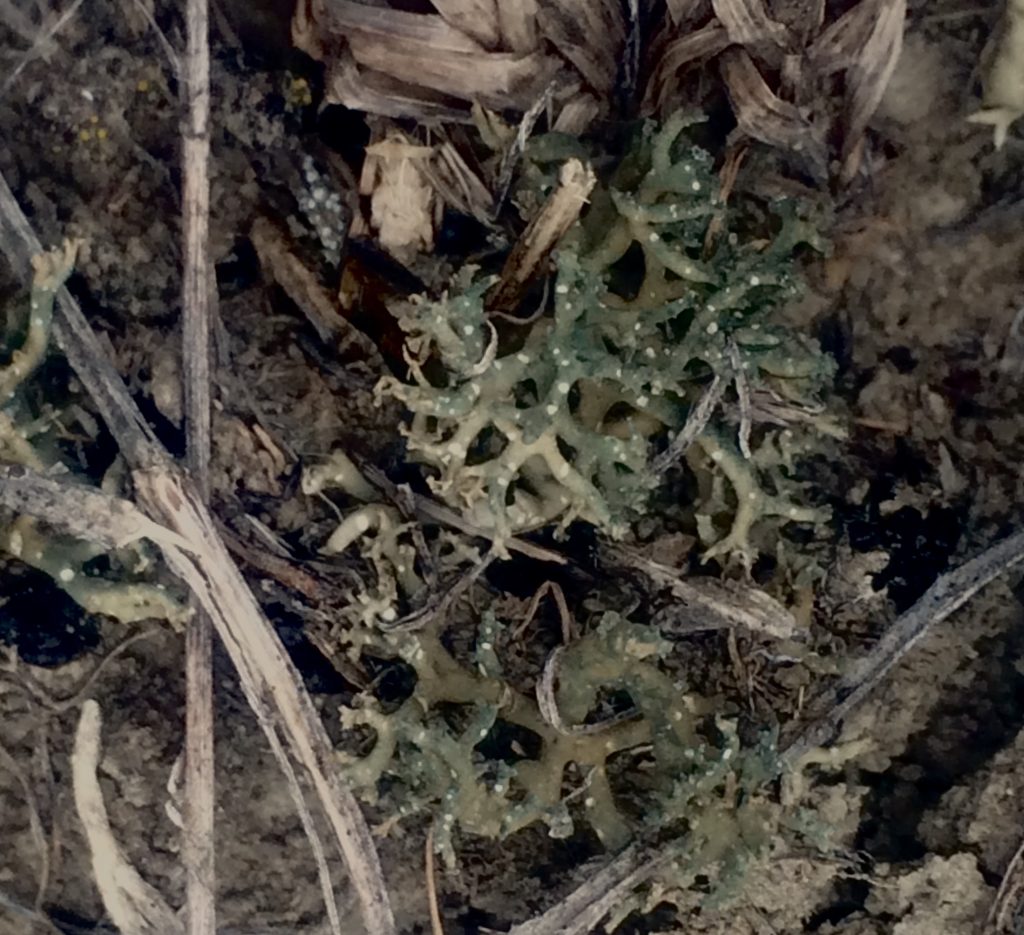
| Field Characters | Fruticose, foliose, or crustose chlorolichens (here we deal only with the fruticose species). Thalli small, grey, with rounded branches, forming small tumbleweeds, sometimes anchored by indistinct holdfasts. Medulla white and chalky. Pseudocyphellae round, white, conspicuous on branches. | |
| Similar genera & species |
Aspicilia: different authors have adopted different generic limits, and there are no traits that can be used to reliably separate Aspicilia and Circinaria outside of phylogenetic placement. | |
| Ecology | Terricolous, on litter and calcareous soils in the prairie region of Alberta, becoming more common in the eastern part of the province. | |
| Chemistry | None detected by TLC, all spot tests negative. | |
| Molecular support |
The name was resurrected and segregated from Aspicilia in Nordin et al. 2010 based on phylogenetic analyses. Other authors continue to use Aspicilia in the broad sense (McCune and Di Meglio 2021). | |
| Links |
Species recorded in Alberta: 2
- C. contorta (Hoffm.) A. Nordin, Savić & Tibell
- C. hispida (Mereschk.) A. Nordin, Savić & Tibell Syns.: Agrestia hispida, A. cyphellata, Aspicilia hispida
Key to the species: No dedicated key, Click here for a doc Key to the Fruticose Lichen Genera v.2025-2
RENR students: Know Circinaria hispida – be able to key this species out or recognize it (it is also covered in Brodo et al. 2001 and Goward 1999).
Key resources
McCune, B. & J. Di Meglio. 2021. Revision of the Aspicilia reptans group in western North America, an important component of soil biocrusts. Monographs in North American Lichenology Vol. 5, Northwest Lichenologists.
Sohrabi, M., S. Stenroos, F. Högnabba, A. Nordin & B. Owe-Larsson. 2011. Aspicilia rogeri sp. nov. (Megasporaceae) and other allied vagrant species in North America. The Bryologist 114: 178-189.
Sohrabi, M., S. Stenroos, L. Myllys, U. Sochting, T. Ahti & J. Hyvönen. 2013b. Phylogeny and taxonomy of the ‘manna lichens.’ Mycological Progress 12(2): 231-269.