
Recruitment and Selection

.
Recruitment and selection are two essential processes in human resource management. Recruitment refers to the process of identifying and attracting qualified candidates to fill job vacancies within an organization. It involves developing job descriptions and specifications, advertising job openings, receiving and reviewing applications, and identifying suitable candidates for further consideration.
Selection, on the other hand, refers to the process of assessing and evaluating candidates to determine the best fit for the job and the organization. It involves conducting interviews, assessments, reference checks, and background checks to identify the most suitable candidate.
The recruitment and selection process is crucial for any organization to ensure that they hire the right people for the job. It is essential to have a well-designed recruitment and selection process that is fair, transparent, and objective, to ensure that the organization attracts and hires the best talent available. By hiring the right people, organizations can improve their performance, increase productivity, and achieve their goals and objectives.
Human Resource Planning
Strategic human resource planning is the process of developing a plan for satisfying an organization’s human resources (HR) needs. A strategic HR plan lays out the steps that an organization will take to ensure that it has the right number of employees with the right skills in the right places at the right times. HR managers begin by analyzing the company’s mission, objectives, and strategies.
Job Analysis
To develop an HR plan, HR managers must be knowledgeable about the jobs that the organization needs to perform. A job analysis in human resources (HR) is a systematic process used to collect and document detailed information about a job. This process involves identifying the job’s duties, responsibilities, necessary skills, outcomes, and work environment. The purpose of job analysis is multifaceted, serving as the foundation for several key HR functions.
Managers also use the information collected for the job analysis to prepare two documents:
- A job description, which outlines the job’s main duties and responsibilities, specifying what tasks the job holder is expected to perform. It provides clarity on the job’s purpose, its key functions, and how it fits into the organizational structure.
. - A job specification, which lists the skills, education, experience, and other qualifications required to perform the job effectively. It may also include physical requirements and personal attributes deemed necessary for the job.
HR Supply and Demand Forecasting
Once they’ve analyzed the jobs within the organization, HR managers must forecast future hiring (or firing) needs. This is the three-step process summarized below:
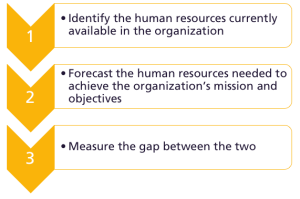
Figure 7.2: How to Forecast Hiring (and Firing) Needs
After calculating the disparity between supply and future demand, HR managers must draw up plans for bringing the two numbers into balance. If the demand for labour is going to outstrip the supply, they may hire more workers, encourage current workers to put in extra hours, subcontract work to other suppliers, or introduce labour-saving initiatives. If the supply is greater than the demand, they may deal with overstaffing by not replacing workers who leave, encouraging early retirements, laying off workers, or (as a last resort) firing workers.
Labour Supply and Demand [1]
Recruiting Qualified Employees
Armed with information on the number of new employees to be hired and the types of positions to be filled, the HR manager then develops a strategy for recruiting potential employees. Recruiting is the process of identifying suitable candidates and encouraging them to apply for openings in the organization.
Before going any further, we should point out that in recruiting and hiring, managers must comply with anti-discrimination laws; violations can have legal consequences. Discrimination occurs when a person is treated unfairly on the basis of a characteristic unrelated to ability. Under Section 3 of the Canadian Human Rights Act, it’s illegal to discriminate on the basis of “race, national or ethnic origin, colour, religion, age, sex, sexual orientation, gender identity or expression, marital status, family status, genetic characteristics, disability or conviction for an offense for which a pardon has been granted or in respect of which a record suspension has been ordered.”
The Canadian Human Rights Commission and Canada’s Charter of Rights and Freedoms protects and enforces a number of federal employment laws and protects each Canadian’s right to equal treatment under the law, including the following:
- Equal Pay – Section 11 of the CHRA protects male and female employees who do substantially equal work from a difference in wages.
. - Other Factors – Section 15(1) of the Charter protects every Canadian’s right to equal treatment with respect to employment regardless of race, national or ethnic origin, colour, religion, sex, age, or mental or physical disability.
In Canada, each jurisdiction (3 territories and 10 provinces) is governed by its own Human Rights Code or a version of it that offers its citizens an additional layer of protection against discriminatory practices. For example, in Ontario, it is the Ontario Human Rights Act.
The Employment Equity Act of 1986 identifies specific populations that are protected from discrimination (women, visible minorities, indigenous peoples, and people with disabilities). Individuals who feel that they have been discriminated against can take their case to the Canadian Human Rights Tribunal. Other legislation includes the Canadian Human Rights Act and the Canadian Labour Code.
Methods of Recruitment
There are two principal ways to recruit workers: internally and externally. Most companies will actively use both methods, ensuring opportunities for existing employees to move up in the organization while at the same time finding new talent. Depending on the time frame and the specialization of the position to fill, some methods will be more effective than others. In either case, the establishment of a comprehensive job description for every position the company seeks to fill will help to narrow the scope of the search and attract more qualified candidates—which contributes to search efficiency.
Internal recruitment is often the most cost-effective method of recruiting potential employees, as it uses existing company resources and talent pool to fill needs and therefore may not incur any extra costs. This is done in two principal ways:
- Advertising job openings internally – This is a method of using existing employees as a talent pool for open positions. It carries the advantage of reallocating individuals who are qualified and familiar with the company’s practices and culture while at the same time empowering employees within the organization. It also shows the company’s commitment to, and trust in, its current employees taking on new tasks.
. - Using networking – This method can be used in a variety of different ways. First, this recruitment technique involves simply posing the question to existing employees about whether anyone knows of qualified candidates who could fill a particular position. Known as employee referrals, this method often includes giving bonuses to the existing employee if the recommended applicant is hired. Another method uses industry contacts and membership in professional organizations to help create a talent pool via word-of-mouth information regarding the needs of the organization.
External recruitment focuses on searching outside the organization for potential candidates and expanding the available talent pool. The primary goal of external recruitment is to create diversity and expand the candidate pool. Although external recruitment methods can be costly to managers in terms of dollars, the addition of a new perspective within the organization can bring many benefits that outweigh the costs. External recruitment can be done in a variety of ways:
- Online recruitment – The use of the Internet to find a talent pool is quickly becoming the preferred way of recruiting, due to its ability to reach such a wide array of applicants quickly and cheaply. First, the use of the company Web site can enable a business to compile a list of potential applicants who are very interested in the company while at the same time giving them exposure to the company’s values and mission. To be successful using this recruitment method, a company must ensure that postings and the process for submitting résumés are as transparent and simple as possible. Another popular use of online recruiting is through career Web sites (e.g., Monster.com or Careerbuilder.com). These sites charge employers a set fee for a job posting, which can remain on the Website for a specified period. These sites also carry a large database of applicants and allow clients to search their database to find potential employees.
. - Traditional advertising – This often incorporates one or many forms of advertising, ranging from newspaper classifieds to radio announcements. Before the emergence of the Internet, this was the most popular form of recruitment for organizations, but the decline of newspaper readership has made it considerably less effective. [2]
. - Job fairs and campus visits – Job fairs are designed to bring together a comprehensive set of employers in one location so that they may gather and meet with potential employees. The costs of conducting a job fair are distributed across the various participants and can attract an extremely diverse set of applicants. Depending on the proximity to a college or university, campus visits help to find candidates who are looking for the opportunity to prove themselves and have the minimum qualifications, such as a college education, that a firm seeks.
. - Headhunters and recruitment services – These outside services are designed to compile a talent pool for a company; however they can be extremely expensive. Although these services can be extremely efficient in providing qualified applicants for specialized or highly demanded job positions, the rate for the services provided by headhunters can range from 20 percent to 35 percent of the recruit’s annual salary if the individual is hired. [3]
No matter how a company decides to recruit, the ultimate test is the ability of a recruitment strategy to produce viable applicants. Each manager will face different obstacles in doing this. It is important to remember that recruiting is not simply undertaken at a time of need for an organization but rather is an ongoing process that involves maintaining a talent pool and frequent contact with candidates.
The Selection Process
 Recruiting gets people to apply for positions, but once you’ve received applications, you still have to select the best candidate—another complicated process. The selection process entails gathering information on candidates, evaluating their qualifications, and choosing the right one. At the very least, the process can be time-consuming—particularly when you’re filling a high-level position—and often involves several members of an organization.
Selective hiring helps prevent the costly turnover of staff and increases the likeliness of high employee morale and productivity. To evaluate the fit, managers need to create a list of relevant criteria for each position before beginning the recruitment and selection process. Each job description should be associated with a list of critical skills, behaviors, or attitudes that will make or break the job performance. When screening potential employees, managers need to select based on cultural fit and attitude as well as on technical skills and competencies. After determining the most important qualifications, managers can design the rest of the selection process so that it aligns with the other human resource processes.
Screening
During the initial screening, an applicant completes an application form and/or submits a résumé, and has a brief interview of 30 minutes or less. The job application includes information about educational background, previous work experience, and job duties performed.
Interviews
It is important to first define the skills and attributes necessary to succeed in the specified position, then develop a list of questions that directly relate to the job requirements. The best interviews follow a structured framework in which each applicant is asked the same questions and is scored with a consistent rating process. Having a common set of information about the applicants to compare after all the interviews have been conducted helps hiring managers avoid prejudice and ensure that all interviewees are given a fair chance. Structured interviews also help managers avoid illegal questions, such as asking a woman whether she is pregnant.
Many companies choose to use several rounds of screening with different interviewers to discover additional facets of the applicant’s attitude or skill as well as develop a more well-rounded opinion of the applicant from diverse perspectives. Involving senior management in the interview process also acts as a signal to applicants about the company culture and value of each new hire. There are two common types of interviews: behavioral and situational.
In a behavioral interview, the interviewer asks the applicant to reflect on his or her past experiences. After deciding what skills are needed for the position, the interviewer will ask questions to find out if the candidate possesses these skills. The purpose of behavioral interviewing is to find links between the job’s requirements and how the applicant’s experience and past behaviors match those requirements.
“Describe a time when you were faced with a stressful situation. How did you handle the situation?”
“Give me an example of when you showed initiative and assumed a leadership role.”
A situational interview requires the applicant to explain how he or she would handle a series of hypothetical situations. Situational-based questions evaluate the applicant’s judgment, ability, and knowledge. Before administering this type of interview, it is a good idea for the hiring manager to consider possible responses and develop a scoring key for evaluation purposes.
“You and a colleague are working on a project together; however, your colleague fails to do his agreed portion of the work. What would you do?”
“A client approaches you and claims that she has not received a payment that supposedly had been sent five days ago from your office. She is very angry. What would you do?”
Selection Tests
For some companies, understanding the applicant’s personality, values, and motivation for wanting the job is a critical part of the hiring decision. For some positions, although technical aptitude is required, the candidate’s attitude is often just as important. Under these circumstances, companies may use behavioural assessments and personality profiles. The goal of these assessments is to predict how the individual will interact with their coworkers, customers, and supervisors. Tests such as the IPIP (International Personality Item Pool) and Wonderlic are popular tools that provide an analysis of an applicant’s personality, attitudes, and interpersonal skills; however, the tests must be administered, scored, and interpreted by a licensed professional. Other selection tests used in hiring may include cognitive tests, which measure general intelligence, work sample tests, which demonstrate the applicant’s ability to perform specific job duties, and integrity tests, which measure honesty.
Background checks / Reference Check
Background checks are a way for employers to verify the accuracy of information provided by applicants in résumés and applications. Information gathered in background checks may include employment history, education, credit reports, driving records, and criminal records. Employers must obtain written consent from the applicant before conducting a background check, and the information gathered in a background check should be relevant to the job.
Evaluation
Employers may choose to use just one or a combination of the screening methods to predict future job performance. Companies need to use metrics to assess the effectiveness of their selective hiring process. This provides a benchmark for future performance as well as a means of evaluating the success of a particular method. Companies can continuously improve their selection practices to ensure that they hire people who will successfully meet job requirements as well as fit into the organizational culture. If companies are not successful in their hiring practices, high turnover, low employee morale, and decreased productivity will result. Research shows that the “degree of cultural fit and value congruence between job applicants and their organizations significantly predicts both subsequent turnover and job performance.” Thus, companies need to assess their hiring in terms of technical success as well as cultural fit. Evaluating the hiring process will help ensure continuing success because human capital is often a company’s most important asset.
Interview Preparation
Tips to help you prepare for your next job interview:
- Research the company before your interview – A thorough understanding of the company signals to the hiring manager that you are interested in the opportunity and that you are able to take initiative. To prepare, spend time on the company’s website and learn about the products or services the company offers, the company’s history, and the company’s culture.
- Present yourself well – Your clothing choice speaks volumes about you, particularly during a first meeting. When interviewing for a job, it’s important to present yourself well. If your interview is remote, not only do you need to dress well, but also be sure that the lighting is good, your background is neutral, the internet connection is reliable, and that your won’t be disturbed during your interview.
- Prepare to answer common and industry specific interview questions – While all job interviews are different, many hiring managers will ask similar questions. Take some time to consider how you would answer the common questions below.
- Body language matters – Good body language in a job interview can set you apart from other candidates. Confidence is key! Start with a firm, friendly handshake if appropriate. Smile to show your enthusiasm, maintain good posture with your chin up and shoulders back, and keep eye contact to improve communication and build a connection with the interviewer.
- Follow up after your interview – Before leaving your job interview, thank the hiring manager for their time and express your anticipation of hearing from them. If you haven’t received a response after five business days, follow up with a brief and respectful email. In the email, thank them again for the opportunity and convey your hope to hear back soon.
How would you answer the following interview question? [4]
- Tell me about yourself.
- What interests you about this role?
- What type of work environment do you prefer?
- Can you tell me know you overcame a stressful work situation?
- When you’re balancing multiple projects, how do you keep yourself organized?
- What did you do in the last year to improve your knowledge?
How AI Changes The Way We Apply For Jobs [5]
- Bank of Canada. (2020, August 28). Labour supply and demand [Video]. YouTube. https://www.youtube.com/watch?v=L86sIoSk5tk ↵
- Heathfield, Use the Web for Recruiting: Recruiting Online ↵
- Heathfield, Recruiting Stars: Top Ten Ideas for Recruiting Great Candidates ↵
- Oliver, V. (2021). 10 common job interview questions and how to answer them. Harvard Business Review. https://hbr.org/2021/11/10-common-job-interview-questions-and-how-to-answer-them ↵
- CNBC. (May 24, 2018). How AI Changes The Way We Apply For Jobs. You Tube. https://www.youtube.com/watch?v=JmF-SUiMWV4&t=1s ↵
Refers to the process of identifying and attracting qualified candidates to fill job vacancies within an organization.
Refers to the process of assessing and evaluating candidates to determine the best fit for the job and the organization.
The process of developing a plan for satisfying an organization's human resources (HR) needs. A strategic HR plan lays out the steps that an organization will take to ensure that it has the right number of employees with the right skills in the right places at the right times.
A systematic process used to collect and document detailed information about a job.
Outlines the job's main duties and responsibilities, specifying what tasks the job holder is expected to perform.
Lists the skills, education, experience, and other qualifications required to perform the job effectively.
Uses existing company human resources and talent pool to fill needs.
Focuses on searching outside the organization for potential candidates and expanding the available talent pool.