How Organizations Influence Ethical Conduct
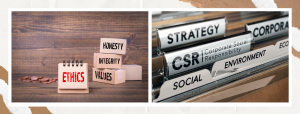
Organizations can influence ethical conduct and behaviour in several ways:
Establishing a Code of Conduct
An organization can set ethical standards and expectations by creating a code of conduct that outlines the values, principles, and behaviours that employees are expected to follow. The code of conduct can provide guidance on topics such as conflicts of interest, bribery, harassment, and discrimination.
Most large companies and thousands of smaller ones have created, printed, and distributed codes of ethics, or conduct. In general, a code of conduct provides employees with the knowledge of what their firm expects in terms of their responsibilities and behaviour towards fellow employees, customers, and suppliers. Some ethical codes offer a lengthy and detailed set of guidelines for employees, while others are not really codes, but rather a summary of statements of goals, policies, and priorities.
Here are some examples of company codes of conduct for you to explore:
Starbucks: Business Ethics and Compliance: Starbucks Coffee Company
Costco: About Us | Costco
Apple: Ethics and Compliance – Apple
In addition to establishing a code of conduct, organizations can also establish programs and processes to monitor compliance with ethical standards and identify potential violations. This can include conducting internal audits, risk assessments, and monitoring third-party vendors and suppliers.
Providing Ethics Training
Organizations can offer training and education programs to employees that focus on ethical decision-making, recognizing and resolving ethical dilemmas, and compliance with laws and regulations. Training can help employees understand the organization’s expectations for ethical conduct and develop the skills necessary to make ethical decisions.
Many companies have some type of ethics training program. The ones that are most effective, like those created by Levi Strauss, American Express, and Campbell Soup Company, begin with techniques for solving ethical dilemmas.
Creating Ethical Cultures in Business [1]
Promoting a Speak-Up Culture
Organizations can create an environment where employees feel comfortable reporting ethical concerns or violations without fear of retaliation. This can include establishing reporting channels, providing whistleblower protections, and ensuring that all reports are investigated thoroughly and in a timely manner.
Whistleblowing was defined in 1972 by Ralph Nader as “an act of a man or a woman who, believing in the public interest overrides the interest of the organization he serves, publicly blows the whistle if the organization is involved in corrupt, illegal, fraudulent or harmful activity”.
Whistleblower at Boeing
Early in 2024 a Boeing engineer claimed that “its 787 Dreamliner planes have structural failings and could eventually cause them to break apart.”
Read the full article: Boeing faces newly revealed whistleblower claims
While there are increasing incentives from governments and regulators for whistleblowers to go public about corporate misconduct, protections for whistleblowers are still very limited. Few Canadian laws pertain directly to whistleblowing and therefore whistleblowers are mostly unprotected by statute.
There is, however, a patchwork of protection provisions for whistleblowers under the Canadian Criminal Code, Public Servants Disclosure Protection Act (PSDPA), the Public Service of Ontario Act, 2006 as well as the Securities Act.
Section 425.1 of the Criminal Code, for example, states that employers may not threaten or take disciplinary action against, demote, or terminate an employee in order to deter her/him from reporting information regarding an offense she/he believes has or is being committed by her/his employer to the relevant law enforcement authorities.
An employer cannot threaten an employee with negative repercussions to deter them from contacting law enforcement with information about the employer’s offense. Punishment for employers who make such threats or reprisals can include up to five years of imprisonment and/or fines.
In early 2018, a Canadian whistleblower received worldwide recognition for disclosing the amount and kinds of data harvested by Cambridge Analytica through personal Facebook accounts.
Explore
Click here to explore some other prominent Canadian whistleblowers.
Leading by Example
The leaders of an organization can model ethical behavior and demonstrate a commitment to ethical conduct. By setting a positive example and holding themselves accountable for their actions, leaders can inspire employees to act with integrity and uphold ethical standards. Employees often follow the examples set by their managers. That is, leaders and managers, establish patterns of behavior that determine what’s acceptable and what’s not within the organization.
BMO Named One of the World’s Most Ethical Companies for the Seventh Time
BMO has been recognized at one of the 2024 World’s Most Ethical Companies for the seventh consecutive year by Ethisphere Institute, a global leader in defining and advancing the standards of business practices.
- Tedx Talks. (2012, September 11). Creating ethical cultures in business. Brooke Deterline at TedxPresidio [Video]. YouTube. https://www.youtube.com/watch?v=wzicXbnmllc ↵
Provides employees with the knowledge of what their firm expects in terms of their responsibilities and behaviour towards fellow employees, customers, and suppliers.
An act of a man or a woman who, believing in the public interest overrides the interest of the organization he serves, publicly blows the whistle if the organization is involved in corrupt, illegal, fraudulent or harmful activity.