
Corporate Social Responsibility

Corporate social responsibility (CSR) refers to the approach that an organization takes in balancing its responsibilities toward different stakeholders when making legal, economic, ethical, and social decisions. Remember that stakeholders were previously defined as those with a legitimate interest in the success or failure of the business and the policies it adopts. The term social responsibility refers to the approach that an organization takes in balancing its responsibilities toward its various stakeholders.
What motivates companies to be “socially responsible”? We hope it’s because they want to do the right thing, and for many companies, “doing the right thing” is a key motivator. The fact is, it’s often hard to figure out what the “right thing” is: what’s “right” for one group of stakeholders isn’t necessarily “right” for another. One thing, however, is certain: companies today are held to higher standards than ever before. Consumers and other groups consider not only the quality and price of a company’s products but also its character. If too many groups see a company as a poor corporate citizen, it will have a harder time attracting qualified employees, finding investors, and selling its products. Good corporate citizens, by contrast, are more successful in all these areas.
What is Corporate Social Responsibility (CSR)? [1]
The Pyramid of Social Responsibility
The basis of our modern understanding of corporate social responsibility is greatly influenced by Archie Carroll’s work and his creation of the CSR pyramid.
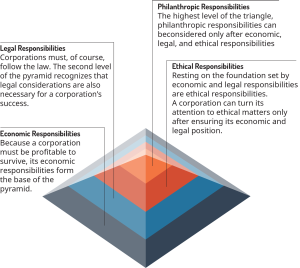
Figure 3.1: The Pyramid of Corporate Social Responsibility
Economic Responsibilities
As a fundamental condition or requirement of existence, businesses have an economic responsibility to society that permits them to be created and sustained. At first, it may seem unusual to think about an economic expectation as a social responsibility, but this is what it is because society expects, indeed requires, business organizations to be able to sustain themselves and the only way this is possible is by being profitable and able to incentivize owners or shareholders to invest and have enough resources to continue in operation. In its origins, society views business organizations as institutions that will produce and sell the goods and services society needs and desires. As an inducement, society allows businesses to take profits. Businesses create profits when they add value, and in doing this they benefit all the stakeholders of the business.
Legal Responsibilities
Society has not only sanctioned businesses as economic entities, but it has also established the minimal ground rules under which businesses are expected to operate and function. These ground rules include laws and regulations and in effect reflect society’s view of “codified ethics”. They articulate fundamental notions of fair business practices as established by lawmakers at federal, state, and local levels. Businesses are expected and required to comply with these laws and regulations as a condition of operating. It is not an accident that compliance officers now occupy an important and high-level position in company organization charts. While meeting these legal responsibilities, important expectations of business include their
- Performing in a manner consistent with expectations of government and law
- Complying with various federal, state, and local regulations
- Conducting themselves as law-abiding corporate citizens
- Fulfilling all their legal obligations to societal stakeholders
- Providing goods and services that at least meet minimal legal requirements
Ethical Responsibilities
In addition to what is required by laws and regulations, society expects businesses to operate and conduct their affairs in an ethical fashion. Taking on ethical responsibilities implies that organizations will embrace those activities, norms, standards, and practices that even though they are not codified into law, are expected nonetheless. Part of the ethical expectation is that businesses will be responsive to the “spirit” of the law, not just the letter of the law. Another aspect of the ethical expectation is that businesses will conduct their affairs in a fair and objective fashion even in those cases when laws do not provide guidance or dictate courses of action. Thus, ethical responsibilities embrace those activities, standards, policies, and practices that are expected or prohibited by society even though they are not codified into law. The goal of these expectations is that businesses will be responsible for and responsive to the full range of norms, standards, values, principles, and expectations that reflect and honor what consumers, employees, owners, and the community regard as consistent with respect to the protection of stakeholders’ moral rights.
Philanthropic Responsibilities
Corporate philanthropy includes all forms of business giving. Corporate philanthropy embraces a business’s voluntary or discretionary activities. Philanthropy or business giving may not be a responsibility in a literal sense, but it is normally expected by businesses today and is a part of the everyday expectations of the public. Certainly, the quantity and nature of these activities are voluntary or discretionary. They are guided by a business’s desire to participate in social activities that are not mandated, not required by law, and not generally expected of business in an ethical sense. Having said that, some businesses do give partially out of ethical motivation. That is, they want to do what is right for society. The public does have a sense that businesses will “give back,” and this constitutes the “expectation” aspect of the responsibility. When one examines the social contract between business and society today, it typically is found that the citizenry expects businesses to be good corporate citizens just as individuals are. To fulfill its perceived philanthropic responsibilities, companies engage in a variety of giving forms – gifts of monetary resources, product and service donations, volunteerism by employees and management, community development, and any other discretionary contribution to the community or stakeholder groups that make up the community.
Social Responsibility at The Hershey Company
The Hershey Company is a leading global manufacturer of chocolate, candy, and other sweet treats. The company has a longstanding commitment to social responsibility and applies the pyramid of social responsibility to guide its actions and decisions. [2]
The pyramid of social responsibility is a model that describes four levels of corporate responsibility: economic, legal, ethical, and philanthropic. Here’s how The Hershey Company applies each level:
Economic Responsibility: The Hershey Company focuses on generating profits and creating value for its shareholders. This involves producing high-quality products that meet the needs and preferences of its customers while also managing costs and maximizing efficiencies in its operations.
Legal Responsibility: The Hershey Company is committed to complying with all relevant laws and regulations in the countries where it operates. This includes ensuring the safety and quality of its products, adhering to labor laws and human rights standards, and following environmental regulations.
Ethical Responsibility: The Hershey Company places a strong emphasis on ethical conduct and corporate citizenship. This involves upholding high ethical standards in its business practices and decision-making, promoting diversity and inclusion in its workforce, and engaging in responsible sourcing of its ingredients.
Philanthropic Responsibility: The Hershey Company has a long history of philanthropic giving and community engagement. The company’s Milton Hershey School Trust provides funding for the Milton Hershey School, a private boarding school for underprivileged children. The company also supports various charitable organizations and initiatives focused on education, health and wellness, and community development.
Overall, The Hershey Company’s commitment to social responsibility is demonstrated through its efforts to create value for its stakeholders while being a responsible and ethical corporate citizen. By applying the pyramid of social responsibility, the company is able to align its actions and decisions with its values and vision for a better world.
Another Lens of Social Responsibility
While the Pyramid of Social Responsibility is a well-respected resource for situating corporate social responsibility, another view of corporate social responsibility is from the perspective of a company’s relationships with its stakeholders. In this model, the focus is on managers—not owners—as the principals involved in these relationships. Owners are the stakeholders who invest risk capital in the firm in expectation of a financial return. Other stakeholders include employees, suppliers, and the communities in which the firm does business. Proponents of this model hold that customers, who provide the firm with revenue, have a special claim on managers’ attention. The arrows indicate the two-way nature of corporation-stakeholder relationships. All stakeholders have some claim on the firm’s resources and returns, and management’s job is to make decisions that balance these claims. [3]
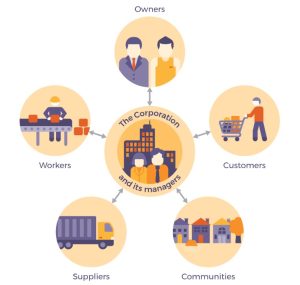
Figure 3.2: Management’s relationship with stakeholders
Owners
Owners invest money in companies. In return, the people who run a company have a responsibility to increase the value of owners’ investments through profitable operations. Managers also have a responsibility to provide owners (as well as other stakeholders having financial interests, such as creditors and suppliers) with accurate, reliable information about the performance of the business.
Managers
Managers have what is known as a fiduciary responsibility to owners: they’re responsible for safeguarding the company’s assets and handling its funds in a trustworthy manner. Yet managers experience what is called the agency problem; a situation in which their best interests do not align with those of the owners who employ them. To enforce managers’ fiduciary responsibilities for a firm’s financial statements and accounting records, Ontario’s Keeping the Promise for a Strong Economy Act (Budget Measures) 2002, also known as Bill 198, (Canadian equivalent to Sarbanes-Oxley Act of 2002 in the United States) requires CEOs and CFOs to attest to their accuracy. The law also imposes penalties on corporate officers, auditors, board members, and any others who commit fraud.
Employees
Companies are responsible for providing employees with safe, healthy places to work—as well as environments that are free from sexual harassment and all types of discrimination. They should also offer appropriate wages and benefits. In the following sections, we’ll take a closer look at these areas of corporate responsibility.
- Wages and Benefits
.
At the very least, employers must obey laws governing minimum wage and overtime pay. A minimum wage is set by the provincial government. As of October 1, 2018, the Alberta rate is $15.00 for most employees, while that rate for students under the age of 18 years is $13.00. By law, employers must also provide certain benefits—Canadian Pension Plan (CPP -retirement funds), unemployment insurance (protects against loss of income in case of job loss), and depending on the industry, workers’ compensation (covers lost wages and medical costs in case of on-the-job injury). Most large companies pay most of their workers more than minimum wage and offer broader benefits, including medical, dental, and vision care, as well as savings programs, in order to compete for talent.
. - Health and Safety
.
The Globe and Mail’s 2017 article, “Statistics Canada looks to close data gap on workplace death, injuries” examines the different, Canadian landscape on health and safety.Currently, responsibility for workers’ compensation and occupational health and safety issues falls largely to provinces or territories – and each jurisdiction has different approaches to capturing data. As a result, there’s an “uneven landscape” of health and safety research capacity. The last time Statistics Canada produced a national analysis was in 1996.Responsibility for fatality and injury counts, which are based on accepted workers’ compensation claims, shifted over to the Association of Workers’ Compensation Boards at that time. Detailed data must be purchased, and researchers say these counts don’t represent the whole workforce, partly because not all sectors or types of workers are included in the workers’ compensation system.Available workers’ compensation numbers show about 350 Canadians die each year from an on-the-job injury at work. If longer-term work-related illnesses (such as mesothelioma from asbestos exposures, or lung cancers from silica dust) are factored in, this number climbs to about 1,000 deaths a year.
. - Sexual Harassment
.
Sexual harassment occurs when an employee makes “unwelcome sexual advances, requests for sexual favours, and other verbal or physical conduct of a sexual nature” to another employee. It’s also considered sexual harassment when “submission to or rejection of this conduct explicitly or implicitly affects an individual’s employment, unreasonably interferes with an individual’s work performance or creates an intimidating, hostile or offensive work environment.” Sexual harassment rocketed to the top of news reports and social media when on October 5, 2017, The New York Times broke the story of Harvey Weinstein’s decades of harassment in Hollywood. In March 2018, CBC News collated the allegations of sexual harassment against prominent Canadians. The list, including only those allegations reported by CBC, highlights the prevalence of this issue. To prevent sexual harassment—or at least minimize its likelihood—a company should adopt a formal anti-harassment policy describing prohibited conduct, asserting its objections to the behaviour, and detailing penalties for violating the policy. Employers also have an obligation to investigate harassment complaints. Failure to enforce anti-harassment policies can be very costly. At the end of 2017, 353 women had submitted and finalized sexual harassment, discrimination, or intimidation claims against the RCMP with as many as another 650 expected to file. To settle these claims, the government of Canada has set aside $100 million. [4]
- Workplace Diversity | Inclusive Workplaces
.
In addition to complying with equal employment opportunity laws, many companies make special efforts to recruit employees who are underrepresented in the workforce according to sex, race, or some other characteristic. In helping to build more inclusive workforces, such initiatives contribute to competitive advantage for two reasons: People from diverse backgrounds bring new talents and fresh perspectives to an organization, typically enhancing creativity in the development of new products.
By more accurately reflecting the demographics of the marketplace, a diverse workforce improves a company’s ability to serve an ethnically diverse population. Each year The Globe and Mail, reports on Canada’s Top 100 Employers. Peruse the list of industry winners and follow through to highlights detailing why the company topped the list.
Customers
The purpose of any business is to satisfy customers, who reward businesses by buying their products. Sellers are also responsible—both ethically and legally—for treating customers fairly. This means customers have:
- The right to safe products. A company should sell no product that it suspects of being unsafe for buyers. Thus, producers have an obligation to safety-test products before releasing them for public consumption. The automobile industry, for example, conducts extensive safety testing before introducing new models (though recalls remain common).
. - The right to be informed about a product. Sellers should furnish consumers with the product information that they need to make an informed purchase decision. That’s why pillows have labels identifying the materials used to make them, for instance.
. - The right to choose what to buy. Consumers have a right to decide which products to purchase, and sellers should let them know what their options are. Pharmacists, for example, should tell patients when a prescription can be filled with a cheaper brand-name or generic drug. Telephone companies should explain alternative calling plans.
. - The right to be heard. Companies must tell customers how to contact them with complaints or concerns. They should also listen and respond.
In Canada, consumer complaints are regulated by different levels of government, as well as non-government organizations. Finding the right place to direct your complaint is not always easy, but understanding your rights as a consumer is an important part of the complaint-filing process.
Communities
For obvious reasons, most communities see getting a new business as an asset and view losing one—especially a large employer—as a detriment. After all, the economic impact of business activities on local communities is substantial: they provide jobs, pay taxes, and support local education, health, and recreation programs. Both big and small businesses donate funds to community projects, encourage employees to volunteer their time, and donate equipment and products for a variety of activities. Larger companies can make greater financial contributions.
Philanthropy
Many large corporations support various charities, an activity called philanthropy. Some donate a percentage of sales or profits to worthwhile causes. Tim Horton’s Children’s Foundation sends 19,000 kids to camp each summer, who would otherwise not have the resources to attend [5]. Its Timbits Minor Sports Program supports the participation of 300,000 kids in their pursuit of hockey, soccer, lacrosse, softball, baseball, and ringette [6]. In 2017, Loblaw Companies and its President’s Choice Children’s Charity pledged $150 million over the next decade to address childhood hunger in Canada [7]. These are just two examples of Canadian companies giving back at the local and national levels.
- Harvard Business School Online. (2022, March 25). What is Corporate Social Responsibility (CSR)? | Business: Explained [Video]. YouTube. https://www.youtube.com/watch?v=ZoKihFLCY0s ↵
- TDB Media Group. (2019, September 12). Sustainability at The Hershey Company [Video]. YouTube. https://www.youtube.com/watch?v=XF8GrPIcGsY ↵
- Baron, D. P. (2003). Business and Its Environment (4th ed.). Upper Saddle River, NJ: Prentice Hall. ↵
- CBC News: The National. (2020, November 19). 'Shocking' accounts of harassment, violence within RCMP detailed in report [Video]. YouTube. https://www.youtube.com/watch?v=m1Mo9_rCWow ↵
- Tim Hortons Foundation Camps. (2015). Camps. Retrieved from: https://www.timhortons.com/ca/en/childrens-foundation/camps.php. ↵
- Tim Hortons Corporate. (2018). Timbits Minor Sports Program. Retrieved from: https://www.timhortons.com/ca/en/corporate/timbits-minor-sports-program.php ↵
- Loblaw Companies Limited. (2017). Loblaw’s President’s Choice Children’s Charity committed $150 million to childhood hunger and nutrition. Retrieved from: https://www.newswire.ca/news-releases ↵
The approach that an organization takes in balancing its responsibilities toward different stakeholders when making legal, economical, ethical, and social decisions.