
Quality Management

What do you do if your brand-new phone doesn’t work when you get it home? What if you were late for a test because it took you twenty minutes to get a burger and fries at a drive-through window? Like most people, you’d probably be more or less disgruntled. As a customer, you’re constantly assured that when products make it to market, they’re of the highest possible quality, and you tend to avoid brands that have failed to live up to your expectations or producers’ claims.
But what is quality? The term quality refers to “the characteristics of a product or service that bear on its ability to satisfy stated or implied needs.” When you buy a mobile phone, you expect it to be able to easily connect and communicate. When you go to a drive-through window, you expect to be served in a reasonable amount of time. If your expectations are not met, you’ll conclude that you’re the victim of poor quality.
Quality Management
Total quality management (TQM), or quality assurance, includes all the steps that a company takes to ensure that its goods or services are of sufficiently high quality to meet customers’ needs. Generally speaking, a company adheres to TQM principles by focusing on three tasks:
- Customer satisfaction – Companies that are committed to TQM understand that the purpose of a business is to generate a profit through customer satisfaction. Thus, they let their customers define quality by identifying desirable product features and then offering them. They encourage customers to tell them how to offer services that work the right way.
.
Armed with this knowledge, they take steps to make sure that providing quality is a factor in every facet of their operations—from design to product planning, and from control to sales and service. To get feedback on how well they’re doing, many companies routinely use surveys and other methods to monitor customer satisfaction. By tracking the results of feedback over time, they can see where they need to improve.
. - Employee involvement – Successful TQM requires that everyone in the organization, not simply upper-level management, commits to satisfying the customer. When customers wait too long at a drive-through window, it’s the responsibility of several employees, not the manager alone. A mobile phone isn’t solely the responsibility of the manufacturer’s quality control department; it’s the responsibility of every employee involved in its design, production, and even shipping. To get everyone involved in the drive for quality assurance, managers must communicate the importance of quality to subordinates and motivate them to focus on customer satisfaction. Employees have to be properly trained not only to do their jobs but also to detect and correct quality problems.
.
In many companies, employees who perform similar jobs work as teams, sometimes called quality circles, to identify quality, efficiency, and other work-related problems, propose solutions, and work with management in implementing their recommendations.
. - Continuous improvement – An integral part of TQM is continuous improvement: the commitment to making constant improvements in the design, production, and delivery of goods and services.
.
Improvements can almost always be made to increase efficiency, reduce costs, and improve customer service and satisfaction. Everyone in the organization is constantly on the lookout for ways to do things better.
Inside LEGO’s Secretive Factory [1]
Statistical Process Control
Companies can use a variety of tools to identify areas for improvement. A common approach in manufacturing is called statistical process control. This technique monitors production quality by testing a sample of output to see whether goods in the process are being made according to predetermined specifications. An example of a statistical process control method is Six Sigma. A Six Sigma process is one in which 99.99966% of all opportunities to operate are free of defects. This percentage equates to only 3.4 defects per million opportunities.
Assume for a moment that you work for Kellogg’s, the maker of Raisin Bran cereal. You know that it’s the company’s goal to pack two scoops of raisins in every box of cereal.
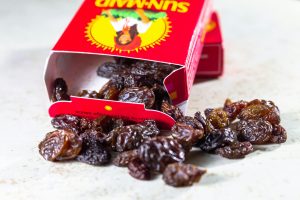 How can you test to determine whether this goal is being met? You could use a statistical process control method called a sampling distribution. Periodically, you would take a box of cereal off the production line and measure the amount of raisins in the box. Then you’d record that amount on a control chart designed to compare actual quantities of raisins with the desired quantity (two scoops). If your chart shows that several samples in a row are low on raisins, you’d take corrective action.
Outsourcing
The Challenge: Producing Quality Jetboards
The product development process can be complex and lengthy. It took sixteen years for Bob Montgomery and others at his company to develop the PowerSki Jetboard, and this involved thousands of design changes. It was worth it, though: the Jetboard was an exciting, engine-propelled personal watercraft – a cross between a high-performance surfboard and a competition water ski/wakeboard that received extensive media attention and rave reviews. It was showered with honours, including Time magazine’s “Best Invention of the Year” award.[1] Stories about the Jetboard appeared in more than fifty magazines around the world, and it was featured in several movies, over twenty-five TV shows, and on YouTube.[2]
Montgomery and his team at PowerSki enjoyed taking their well-deserved bows for the job they did designing the product, but having a product was only the beginning for the company. The next step was developing a system that would produce high-quality Jetboards at reasonable prices. Before putting this system in place, PowerSki managers had to address several questions.
- What kind of production process should they use to make the Jetboards?
- How large should their production facilities be, and where should they be located?
- Where should they buy needed materials?
- What systems will be needed to control the production process and ensure a quality product?
Answering these and other questions helped PowerSki set up a manufacturing system through which it could accomplish the most important task that it had set for itself: efficiently producing quality Jetboards.
PowerSki’s website states that “PowerSki International has been founded to bring a new watercraft, the PowerSki Jetboard, and the engine technology behind it, to market.” [7] That goal was reached in May 2003, when the firm emerged from a lengthy design period. Having already garnered praise for its innovative product, PowerSki was ready to begin mass-producing Jetboards. At this juncture, the management team made a strategic decision; rather than producing Jetboards in-house, they opted for outsourcing: having outside vendors manufacture the engines, fiberglass hulls, and associated parts. Assembly of the final product took place in a manufacturing facility owned by All American Power Sports in Moses Lake, Washington. This decision doesn’t mean that the company relinquished control over quality; in fact, every component that goes into the PowerSki Jetboard is manufactured to the exact specifications set by PowerSki. One advantage of outsourcing its production function is that the management team can thereby devote its attention to refining its product design and designing future products.
Outsourcing in the Manufacturing Sector
Outsourcing has become an increasingly popular option among manufacturers. For one thing, few companies have either the expertise or the inclination to produce everything needed to make a product. Today, more firms, like PowerSki, want to specialize in the processes that they perform best—and outsource the rest. Like PowerSki, they also want to take advantage of outsourcing by linking up with suppliers located in regions with lower labour costs. Outsourcing can be local, regional, or even international, and companies can outsource everything from parts for their products, like automobile manufacturers do, to complete manufacturing of their products, as Nike and Apple do.
Outsourcing in the Service Sector
Outsourcing is by no means limited to the manufacturing sector. Service providers also outsource many of their non-core functions. Some universities, for instance, outsource functions such as food services, maintenance, bookstore sales, printing, groundskeeping, security, and even residence operations. For example, there are several firms, like RGIS, that offer inventory services. They will send a team to your company to count your inventory for you. As RGIS puts it, “Our teams deliver the hands-on help needed to complete a wide variety of retail projects of all sizes, allowing your team to keep customer service as the number one priority.” [8] Some software developers outsource portions of coding as a cost-saving measure. If you’ve ever had to get phone or chat assistance on your laptop, there’s a good chance you spoke with someone in an outsourced call center. The center itself may have even been located offshore. This kind of arrangement can present unique challenges in quality control as differences in accents and the use of slang words can sometimes inhibit understanding. Nevertheless, in this era of globalization, expect the trend towards outsourcing offshore to continue.
- 60 Minutes Australia. (November 15, 2018). Inside LEGO's Secretive Factory. You Tube. https://www.youtube.com/watch?v=fozBzQRZEGI ↵
Also referred to as quality assurance, includes all the steps that a company takes to ensure that its goods or services are of sufficiently high quality to meet customers' needs.