
9 Chapter 9: Digital Media History and Contemporary Issues
Amanda Williams
Introduction
The digital revolution has fundamentally transformed how we communicate, consume media, and interact with information. From the early mechanical calculating machines of the 19th century to today’s AI-powered social media platforms, digital technology has not merely supplemented traditional media, it has created entirely new forms of communication and challenged existing power structures within the media landscape. This transformation is particularly evident in contemporary developments such as the rise of artificial intelligence in content creation, ongoing debates over platform regulation, and the emergence of new social media paradigms that continue to reshape global communication patterns.
Digital media, as both a form and part of an overall revolutionary shift, represents more than technological advancement; it embodies a move from centralized, one-to-many communication models to decentralized, many-to-many networks where audiences have become active participants rather than passive consumers. Recent events, including regulatory challenges surrounding major platforms, the transformation of established social media companies, and the integration of generative AI across digital platforms, demonstrate how rapidly the digital media landscape continues to evolve.
This chapter explores the historical development of digital media through both global and Canadian perspectives, examines the concept of media convergence with contemporary examples, and analyzes current challenges and opportunities in our increasingly digital media environment, with particular attention to recent legislative developments and emerging technologies.
Learning Objectives
By the end of this chapter, you will be able to:
- Analyze the historical development of computing and digital media, from mechanical calculators to AI-driven platforms, highlighting key global and Canadian milestones
- Evaluate current digital technologies’ personal and societal impacts, including AI integration, algorithmic changes, and platform regulation
- Examine Canadian digital media policy within a global context, focusing on recent legislation and its international effects
The Global History of Computing and Digital Media
Foundational Mechanical Computing (1800s-1940s)
The origins of digital media trace back to mechanical computing innovations of the 19th century, when inventors and theorists began envisioning machines that could process and manipulate information. Among the most influential was Charles Babbage (1791–1871), who designed the Analytical Engine in the 1830s (Ceruzzi, 2012; Swade, 2000). Though never fully constructed due to technological and financial limitations, this machine was revolutionary in concept. It featured key components of modern computers: an input mechanism (punched cards), memory (the “store”), a central processing unit (the “mill”), and an output device (printer). Babbage’s design was not just a calculator but a programmable machine, laying the conceptual groundwork for the programmable computation systems that underpin today’s digital media platforms.
Ada Lovelace (1815–1852) worked alongside Charles Babbage and is often credited as the world’s first computer programmer (Toole, 1992; Essinger, 2014). In her notes on Babbage’s proposed Analytical Engine, Lovelace wrote what is widely considered the first algorithm intended for implementation on a machine. She also speculated on the broader implications of programmable technology, famously suggesting that the machine could go beyond numerical calculation to manipulate symbols and potentially compose music or produce graphics. Lovelace’s vision of creative and computational processes foreshadowed the current landscape of AI-generated media, where machines now assist in writing, visual art, music composition, and video production. Her foresight demonstrates that the creative and communicative potential of computing has been part of its conceptual foundation from the beginning.
The evolution from theoretical mechanical designs to functional electronic computing accelerated in the mid-20th century, particularly during World War II, when urgent military needs drove rapid innovation. Alan Turing (1912–1954), a British mathematician and logician, made pivotal contributions to the theoretical basis of computing with his 1936 paper describing what is now called the Turing Machine (Hodges, 2012). This abstract machine provided a model for how any logical process could be automated. During the war, Turing also played a critical practical role at Bletchley Park, where he helped develop machines to break the German Enigma code. This work shortened the war and demonstrated how computational thinking could be applied to real-world problems, including secure communication and data processing (Copeland, 2004).
Together, Babbage, Lovelace, and Turing’s contributions illustrate that digital media’s roots are deeply embedded in a long historical trajectory of technological innovation and conceptual breakthroughs. These early visions and wartime innovations created the foundation for the digital revolution, transforming how humans generate, store, share, and interact with information in the 21st century.
The Electronic Computing Revolution (1940s–1960s)
A decisive turning point in the history of digital media emerged through the development of early electronic computers, which transformed the foundations of computation and information processing. One of the earliest breakthroughs came from physicist John Atanasoff (1903–1995) and his graduate student Clifford Berry, who built the Atanasoff–Berry Computer (ABC) between 1937 and 1942 at Iowa State College (Ceruzzi, 2012). The ABC was the first computing device to use binary representation and electronic vacuum tubes instead of mechanical switches, making it a foundational precursor to modern digital computing. This use of purely electronic components allowed for faster processing and laid the groundwork for scalable, high-speed computing, an essential feature of digital media environments where real-time communication and complex data processing are standard.
Wartime demands drove further advancements. The U.S. military funded the development of the Electronic Numerical Integrator and Computer (ENIAC), completed in 1945, with a public unveiling in 1946, by John Mauchly and J. Presper Eckert at the University of Pennsylvania (McCartney, 1999). ENIAC, which occupied more than 1,800 square feet and contained nearly 18,000 vacuum tubes, could perform thousands of operations per second, orders of magnitude faster than any previous machine. Notably, the programming of ENIAC was conducted by a team of six women, including Jean Jennings Bartik and Frances Elizabeth Holberton, who translated mathematical instructions into machine-readable code using plugboards and switches (Kleiman, 2022). Despite their vital role, their contributions remained unacknowledged for decades. Their work demonstrated the technical complexity of early programming and highlighted the gendered dynamics of computing history, underscoring the need to recognize women’s foundational contributions to digital technologies.
Another crucial conceptual development occurred at Bell Telephone Laboratories, where mathematician George Stibitz was conducting research on relay-based calculators in the early 1940s. Stibitz developed several innovative relay computers and contributed to the terminology of digital computing (Hally, 2005). His work with binary arithmetic and switching circuits helped establish foundational concepts for digital systems. This naming convention reflected the central characteristic of digital systems: their reliance on binary digits (bits) to represent information. Unlike analog systems, which rely on continuous signals, digital systems encode data into binary form, enabling reproducibility, error correction, and complex manipulations essential for contemporary media technologies.
These innovations in electronic computing from the 1940s to the 1960s established the technical architecture of the digital age. They laid the foundation for digital networks, data storage, and real-time processing capabilities that would later underpin the internet, multimedia platforms, and the digital media systems we rely on today. Importantly, this period also reveals the collaborative and often under-acknowledged contributions of women and diverse actors to computing history, demonstrating that the rise of digital media is not only a story of machines but of people and institutions shaping the future of communication.
The Personal Computer Era (1970s-1990s)
The development of integrated circuits during the 1960s catalyzed the personal computing revolution by significantly reducing computers’ size, cost, and power consumption, making them suitable for individual ownership (Ceruzzi, 2012). This transformation began with the release of the Altair 8800 in 1975, a do-it-yourself microcomputer kit based on the Intel 8080 microprocessor. Though rudimentary by today’s standards, the Altair generated immense excitement among hobbyists and is widely credited with launching the personal computer industry (Freiberger & Swaine, 2000). Its impact was profound: it inspired a young Bill Gates and Paul Allen to write software for the platform, leading to the creation of Microsoft and the development of early programming tools like Altair BASIC.
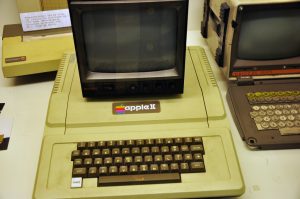
Around the same time, Apple Computer was founded in 1976 by Steve Jobs, Steve Wozniak, and Ronald Wayne. The company’s second product, the Apple II, released in 1977, was the first personal computer to achieve commercial success outside hobbyist circles. Unlike the Altair, the Apple II came pre-assembled and included features such as color graphics, a keyboard, and expandability, making it attractive to schools, small businesses, and the broader public (Isaacson, 2011). It marked the beginning of personal computing as a mass-market phenomenon.
In 1981, IBM entered the personal computing market with the release of the IBM PC. This model used off-the-shelf components and an open architecture that allowed third-party manufacturers to create compatible software and hardware. It established key technical standards, such as the x86 processor architecture and MS-DOS operating system, that dominated the market well into the 1990s (Campbell-Kelly & Aspray, 2004). The IBM PC’s success made personal computers a staple in corporate and institutional environments, accelerating their mainstream adoption.
The graphical user interface (GUI) was another watershed moment in the evolution of personal computing. Though pioneered at Xerox PARC in the 1970s, Apple popularized the GUI with the Lisa (1983) and later the Macintosh (1984). These systems replaced text-based command lines with intuitive interfaces featuring windows, icons, menus, and pointing devices like the mouse (Levy, 1994). This innovation made computers far more accessible to non-specialist users and paved the way for their integration into creative, educational, and media-rich contexts.
As personal computers became more powerful, affordable, and user-friendly, their function expanded from technical and business tasks to media production and consumption. By the late 1980s and into the 1990s, computers could support a wide range of multimedia applications, including word processing, desktop publishing, music composition, digital image editing, and early video production, turning them into true digital media platforms (Manovich, 2013).
The personal computer era thus laid the technological, cultural, and institutional groundwork for the digital media revolution. It familiarized a generation of users with digital interfaces and workflows, creating the conditions for widespread digital literacy and participatory media production. Without the advances of this period, the rapid growth of digital culture and communication in the 21st century would not have been possible.
The Global History of the Internet
ARPANET and Early Networking (1960s-1980s)
The Internet’s origins trace back to the ARPANET (Advanced Research Projects Agency Network), a project initiated by the U.S. Department of Defense in 1962. Spearheaded by ARPA (later DARPA), the project aimed to develop a decentralized communication network resilient enough to survive potential Cold War disruptions. In contrast to earlier hierarchical systems, ARPANET was designed so that no single node controlled the network, a principle that became foundational for the modern Internet’s distributed architecture.
The first successful ARPANET transmission occurred on October 29, 1969, between the University of California, Los Angeles (UCLA) and Stanford Research Institute (SRI). The system crashed after just two letters—”LO”—were typed, a truncated version of the intended “LOGIN” command. Despite this inauspicious beginning, ARPANET rapidly grew, connecting more institutions and expanding its technical capabilities. By 1971, 15 nodes were online, and the network served as a platform for real-time experiments in remote computing and communication (Leiner et al., 2009).
Email became ARPANET’s unexpected breakthrough application. Introduced by Ray Tomlinson in 1971, it quickly dominated network activity, accounting for about 75% of usage by 1973 (Hafner & Lyon, 1996). ARPA administrators had not anticipated how strongly users would embrace email and discussion lists, showing that social interaction was a key driver of engagement (Ryan, 2010). This shift redefined computers as tools for interpersonal, group, and mass communication, anticipating the Internet’s evolution into a socially oriented medium.
During the 1970s, foundational communication protocols were developed that still structure the Internet today. The Transmission Control Protocol and Internet Protocol (TCP/IP), developed by Vint Cerf and Robert Kahn between 1973 and 1974, allowed diverse computer systems to interconnect reliably. TCP/IP was officially adopted as ARPANET’s standard in 1983, marking the technical birth of the modern Internet (Leiner et al., 2009). In the same year, the introduction of the Domain Name System (DNS) further simplified Internet navigation by replacing numeric IP addresses with readable domain names.
Although ARPANET was officially decommissioned in 1990, its design principles, such as decentralized control, packet switching, and standardized protocols, continue to underpin the Internet’s infrastructure. The project illustrates how military goals, academic research, and early user practices collectively shaped today’s digital communication systems. The trajectory from a Cold War-era government experiment to a global communications platform underscores the layered social, technical, and institutional dynamics that gave rise to one of the most significant media technologies of the 20th century.
The World Wide Web (1990s)
The invention of the World Wide Web by Tim Berners-Lee between 1989 and 1991 marked a critical evolution in the history of digital communication. While working at CERN, Berners-Lee proposed and developed a system for organizing and accessing information using hypertext links, which allowed users to navigate between documents via a browser interface (Berners-Lee, 1999). This system created a hyperlinked network of documents presenting visual and textual information, as well as the opportunity to connect users to powerful information retrieval capabilities. Berners-Lee’s decision not to patent the Web ensured it would remain open and accessible, removing barriers to innovation and enabling a globally distributed model of content creation and dissemination.
The first website, info.cern.ch, went live in 1991 and served as a basic guide to the World Wide Web project. The launch of the Mosaic web browser in 1993, developed by Marc Andreessen and Eric Bina at the National Center for Supercomputing Applications (NCSA), made the Web accessible to the general public. Mosaic was the first browser capable of displaying both images and text in the same window, creating a more intuitive user experience (Gillies & Cailliau, 2000). As a result, Web use exploded: there were only about 130 websites in 1993, but this number had grown to over 100,000 by the end of 1996 (Leiner et al., 2009).

The Web’s architectural principles, openness, interoperability, and decentralization, were foundational to the culture of digital media that followed. Unlike traditional media systems controlled by centralized institutions, the Web enabled any user with basic technical knowledge to publish content. This capacity to create and share content significantly influenced the media landscape and contributed to the emergence of today’s participatory digital culture. The rise of personal blogs, online forums, and eventually social media platforms can all be traced back to this early shift toward user-driven content production and information sharing (O’Reilly, 2005; Jenkins, 2006).
Internet Commercialization and Expansion (1990s-2000s)
The commercialization of the Internet began in earnest in 1995, when the National Science Foundation (NSF) lifted restrictions on commercial use of the NSFNET backbone, which until then was reserved primarily for research and education institutions (Mueller, 2010). This deregulation catalyzed the rapid expansion of Internet-based businesses and services, commonly known as the dot-com boom.
During this period, several key digital commerce platforms emerged that have since shaped e-commerce. Amazon, founded in 1994 by Jeff Bezos, started as an online bookstore but rapidly expanded into a vast marketplace offering numerous products (Stone, 2013). Similarly, eBay, launched in 1995, pioneered consumer-to-consumer auctions and online sales (Levinson, 2009). The search engine Google, founded in 1998 by Larry Page and Sergey Brin, revolutionized information discovery with its innovative PageRank algorithm, which ranked web pages by relevance rather than just keywords, fundamentally improving search accuracy (Brin & Page, 1998). PayPal, established in 1998, introduced secure, convenient digital payment solutions that helped build consumer confidence in online transactions.
The widespread adoption of broadband Internet in the early 2000s dramatically transformed digital media consumption. Broadband technology provided significantly higher data transfer speeds compared to dial-up, enabling the efficient streaming of video content, large file downloads, and interactive multimedia experiences. This infrastructural advancement laid the groundwork for the emergence of streaming platforms and social media platforms that incorporated rich media content, enhancing user engagement and interactivity (Napoli, 2011).
The commercialization era of the Internet also established foundational economic models that continue to support today’s digital media environment. Content monetization strategies, such as advertising-supported content, subscription services, and integrated e-commerce platforms, became standard features across digital services. These revenue streams enabled continuous content creation and technological innovation by funding infrastructure, software development, and media production (Shapiro & Varian, 1999; Evans, 2009).
Canadian Computing and Internet History
Early Canadian Computing Innovation (1950s–1970s)
Canada made notable contributions to early computing innovation despite having a smaller population and economy compared to the United States. One of the country’s pioneering achievements was the University of Toronto Electronic Computer (UTEC), completed in 1951 under the leadership of Josef Kates. UTEC was one of the world’s earliest electronic computers and demonstrated Canada’s capability in advanced computing technology (Campbell-Kelly, 2003). UTEC was primarily designed to perform scientific calculations, illustrating early academic and governmental support for computer research in Canada.
During the 1960s, the Canadian firm Ferranti-Packard developed the FP-6000 series of computers, which competed internationally against major players like IBM. These systems were widely adopted by Canadian government agencies, universities, and research institutions, establishing a domestic computing presence and reducing reliance on foreign suppliers. The FP-6000 was notable for its modular design and influenced the architecture of subsequent computers.
Universities such as the University of Toronto, University of Waterloo, and McGill University emerged as critical centers for computing education and research. The University of Waterloo, in particular, gained a reputation for its rigorous computer science and mathematics programs, producing graduates who later founded successful tech companies and contributed significantly to global technology innovation.
Canadian Internet Pioneers (1980s–1990s)
Canada’s early Internet contributions include Alan Emtage, a McGill University student who developed Archie in 1989, recognized as the world’s first search engine. Archie indexed FTP (File Transfer Protocol) archives, making file searching on the early Internet more accessible well before the advent of the World Wide Web and popular search engines like Yahoo and Google (Bawden & Robinson, 2012). This innovation underlined Canada’s leadership in making digital information more accessible and searchable.
The establishment of CAnet in 1990, Canada’s national research and education network, further accelerated the country’s participation in the global Internet ecosystem. CAnet connected Canadian universities and research institutions domestically and internationally, providing a crucial infrastructure backbone that enabled Canadian researchers to engage with Internet developments worldwide.
In 1998, the Canadian Internet Registration Authority (CIRA) was created to manage the .ca top-level domain. CIRA’s governance model reflects Canadian values of multi-stakeholder participation and democratic oversight, ensuring Canadian control over domestic Internet addresses while promoting the growth of Canadian online content and digital services.
A pivotal moment in Canada’s digital innovation history came with the development of the BlackBerry smartphone by Mike Lazaridis and Douglas Fregin, co-founders of Research In Motion (RIM), based in Waterloo, Ontario. The first BlackBerry device, released in 1999, introduced secure, mobile, push-based email, reshaping how business professionals accessed the Internet and communications on the go (McQueen, 2012). Its robust encryption and enterprise integration made it a global leader in mobile communication, especially among government and corporate users. BlackBerry’s early success positioned Canada as a leader in wireless innovation, laying the groundwork for today’s smartphone-dominated digital economy.
Expansion and Digital Infrastructure Development (2000s–Present)
Internet adoption in Canada has reached impressive levels in recent years. Major Canadian telecommunications providers—Bell, Rogers, and Telus—have invested significantly in fiber optic and 5G networks, aiming to deliver faster, more reliable Internet services nationwide. These companies’ investments have positioned Canada as a leader in high-speed broadband infrastructure. However, concerns remain about limited competition within the telecommunications sector, resulting in relatively high prices for consumers compared to other developed countries.

Despite broad connectivity, a digital divide persists in Canada, particularly affecting rural, remote, and Indigenous communities. This divide encompasses not only the lack of physical access to broadband infrastructure but also issues related to affordability, digital literacy, and inconsistent service quality. Indigenous communities face particularly severe challenges, with many continuing to experience limited or unreliable Internet access, which impacts vital sectors such as education, healthcare, and economic development. Geographic isolation, high infrastructure costs, and regulatory hurdles contribute to ongoing disparities.
The Canadian government has recognized these gaps and launched initiatives like the Universal Broadband Fund to extend high-speed Internet access to underserved and remote areas, including Indigenous communities (Innovation, Science and Economic Development Canada, 2023). This initiative represents a significant policy effort to address digital equity and ensure that all Canadians can participate in the digital economy. However, critics suggest that more funding, faster deployment, and targeted support for vulnerable populations are necessary to bridge the divide fully.
The evolution of digital infrastructure in Canada reflects broader global trends in media convergence, where traditional telecommunications, broadcasting, and digital services increasingly integrate into unified platforms and services. This convergence has created new opportunities for innovation while also raising complex regulatory challenges about how to govern converged digital ecosystems.
The Web 2.0 Revolution (2004–2010)
Web 2.0 emerged around 2004 as a new paradigm that marked a significant shift in how the Internet was used and experienced. Rather than merely serving as a repository of static information, the web became a dynamic, interactive space enabling more interaction between users and servers, more engaging ways to display web pages and applications, and more direct, interactive user-to-user interactions (O’Reilly, 2005).
The launch of key platforms exemplified this transformation:
- Facebook began in 2004 as a Harvard-only social network and expanded globally by 2006, emphasizing real identity and social connections, which set the standard for social networking sites (boyd & Ellison, 2007).
- YouTube (launched in 2005) enabled users to upload, share, and comment on videos, pioneering the user-generated video content model. Google’s acquisition of YouTube for $1.65 billion in 2006 highlighted the commercial potential of these platforms (Burgess & Green, 2018).
- Twitter, launched in 2006, introduced microblogging, a format emphasizing brevity and real-time information sharing, which transformed news dissemination and public discourse globally (Kwak et al., 2010).
- Wikipedia, started in 2001, demonstrated the power of crowdsourced, collaborative content creation at scale, showcasing how digital platforms could harness collective intelligence to build comprehensive and constantly updated knowledge resources (Jemielniak, 2014).
Together, these platforms contributed to dramatic changes in how media functions, shifting from traditional, centralized media production toward decentralized, user-driven content creation and dissemination. This era laid the foundation for participatory culture in digital media, where users were no longer passive consumers but active creators and collaborators (Jenkins et al., 2013).
Web 3.0 and the Rise of Decentralization (2014–Present)
Web 3.0, a term gaining traction around 2014, refers to the ongoing evolution of the Internet toward decentralization, semantic understanding, and enhanced user agency. Unlike the participatory but platform-controlled Web 2.0, Web 3.0 emphasizes peer-to-peer technologies such as blockchain, decentralized applications (dApps), and token-based governance. This shift aims to redistribute power from centralized tech corporations to individual users and communities (Buterin, 2014; Tapscott & Tapscott, 2016).
In this era, platforms like Ethereum (launched in 2015) enabled smart contracts and decentralized finance (DeFi), marking a foundational moment for Web 3.0 infrastructure. Meanwhile, the rise of non-fungible tokens (NFTs) in 2021 and the mainstreaming of decentralized autonomous organizations (DAOs) signaled growing interest in web ecosystems that prioritize ownership, transparency, and interoperability.
Web 3.0 also incorporates semantic technologies and AI to create more meaningful interactions between users and data, aiming to move beyond keyword-based search toward context-aware systems (Sheth & Thirunarayan, 2013). While Web 4.0 remains speculative, scholars and technologists envision it as the “symbiotic web”—an era of seamless interaction between humans and intelligent machines in real time. Often linked to AI advancements, ambient computing, and the Internet of Things (IoT), Web 4.0 imagines hyper-personalized, predictive, and integrated digital environments where interconnected devices embedded with sensors and software collect and exchange data continuously.
This evolution toward Web 3.0 and potential Web 4.0 represents a fundamental shift in how we conceptualize digital media and the internet. Rather than simply consuming content through centralized platforms, users increasingly participate in platform economies where digital platforms facilitate exchanges between multiple user groups, fundamentally altering traditional business models and market structures (Evans, 2009). These platform economies have become central to understanding contemporary digital media, as they reshape how value is created, distributed, and captured in digital ecosystems.
Mobile Phone Policy and Pricing in Canada
The rapid adoption of mobile phones and smartphones in Canada has been accompanied by evolving policies and regulations to protect consumers, ensure fair competition, and expand network access nationwide. The Canadian Radio-television and Telecommunications Commission (CRTC) is the primary regulatory authority overseeing telecommunications services, including mobile phone providers. To safeguard consumer interests, the CRTC introduced the Wireless Code in 2013, a mandatory set of rules that wireless service providers must follow. The Code ensures contract clarity, caps cancellation fees, requires free unlocking of devices after contract expiry, and mandates transparent billing practices.
Privacy concerns are also central to Canadian mobile phone policy. The Personal Information Protection and Electronic Documents Act (PIPEDA) governs how companies collect, use, and protect personal data gathered through mobile devices and applications (Office of the Privacy Commissioner of Canada, 2021). This federal privacy legislation establishes standards for data handling that affect how digital media platforms and mobile applications can collect and use personal information from Canadian users.
Despite these regulatory frameworks, Canadians often pay some of the highest mobile phone prices globally. Several factors contribute to this phenomenon:
- Market Concentration: The Canadian wireless market is dominated by three major carriers (Rogers, Bell, and Telus) which control most of the market. This oligopolistic structure limits competition, reducing pressure to lower prices.
- Geographic Challenges: Canada’s vast territory and dispersed population mean infrastructure costs for building and maintaining wireless networks are significantly higher than in many other countries.
- Regulatory and Spectrum Costs: Carriers often bear the costs associated with acquiring spectrum licenses through government auctions, which can be reflected in consumer prices.
Mobile and Social Media Integration (2010s)
The introduction of smartphones, notably the iPhone in 2007 and Android devices from 2008, revolutionized digital media consumption by shifting it from desktop-based to mobile-first experiences. These devices combined powerful processors, high-resolution cameras, and constant internet connectivity, enabling new forms of media creation and sharing anytime, anywhere (West & Mace, 2010).

Key platforms and trends emerged during this mobile-centric era:
- Instagram (launched in 2010) capitalized on smartphone photography and introduced visual social networking, prioritizing image and video content. Instagram’s format influenced many platforms and reshaped how users engage visually on social media (Hu et al., 2014).
- Snapchat (launched in 2011) popularized ephemeral content that disappears after being viewed, challenging the persistent and permanent nature of earlier digital content. This innovation reflected growing concerns about privacy and digital permanence while enabling more spontaneous, informal communication (Bayer et al., 2016). Ephemeral content has since become a standard feature across social media platforms, fundamentally changing how users think about digital permanence and privacy.
- Discord (launched in 2015) expanded its user base well beyond gaming communities. Originally designed for real-time voice and text chat among gamers, it has since evolved into a multi-purpose communication hub for hobbyist groups, educators, political organizations, and creators. Discord supports vibrant community servers and represents a shift toward niche community-based social interaction.
- The rise of influencer culture during this period transformed marketing and celebrity culture by allowing individuals to amass large social media followings and monetize content directly on social platforms. This democratization of fame disrupted traditional media gatekeepers and created new economic opportunities for creators but also raised questions about authenticity, commercial pressures, and social influence (Abidin, 2018; Marwick, 2015). Influencer culture represents a professionalized industry where individuals build large social media followings to monetize their brand through sponsorships, partnerships, and direct audience engagement, fundamentally altering traditional advertising and celebrity models.
Mobile integration fundamentally altered digital media consumption habits: short-form, visual content optimized for mobile viewing became dominant. This trend influenced platform design, content creation strategies, and user engagement models, establishing mobile-first design as a core principle across the digital media landscape.
Contemporary Digital Media Developments (2020-2025)
The digital media landscape between 2020 and 2025 has been reshaped by rapid advances in artificial intelligence (AI), the emergence of new social platforms, and mounting regulatory scrutiny. The integration of generative AI into mainstream digital communication has been particularly transformative, with platforms rapidly adopting AI-powered features for content creation, recommendation, and user interaction. Artificial Intelligence now represents computer systems designed to perform tasks that typically require human intelligence, increasingly integrated into digital media platforms for content generation, curation, and moderation.

Major technology firms have moved quickly to embed generative AI across their ecosystems. Meta has introduced AI features across its major products—Facebook, Instagram, WhatsApp, and Messenger—allowing users to create images, generate messages, and receive conversational assistance. Google has deepened its use of AI in both Search and YouTube, enhancing content discovery through advanced recommendation systems. These AI-driven enhancements deliver measurable business benefits, allowing brands to respond to customer inquiries at scale while tailoring messaging in real time. However, this hyper-personalization raises concerns about the formation of filter bubbles, where users are algorithmically exposed to information and opinions confirming their beliefs, potentially limiting exposure to diverse viewpoints (Pariser, 2011).
Alongside the evolution of dominant platforms, several new social applications have emerged to challenge the status quo:
- Threads was launched by Meta as a text-based alternative to Twitter/X, quickly gaining significant user adoption by capitalizing on public interest in Twitter alternatives.
- BeReal carved out a niche with its emphasis on unfiltered authenticity, requiring users to post simultaneous front-and-back camera photos at randomized times to prevent curation. Initially embraced by younger audiences, BeReal represented a reaction against the highly curated nature of traditional social media.
- TikTok continued its remarkable growth, with its AI recommendation algorithm creating highly personalized content feeds that made it one of the most engaging platforms among younger demographics. TikTok’s success demonstrated the power of algorithmic curation: the automated process by which platforms use algorithms to select, filter, and prioritize content that users see, profoundly influencing information consumption and public discourse (Gillespie, 2018).
A significant development in this period has been Elon Musk’s acquisition of Twitter in October 2022 for $44 billion, transforming it into “X” and implementing significant changes, including AI integration and creator monetization, while generating considerable controversy about content moderation and platform governance.
Amid these technological advances, platform governance and geopolitical tensions have intensified. Digital platforms face increasing scrutiny over their role in information dissemination, content moderation practices, and market concentration. These shifting dynamics reflect broader tensions in digital media governance: balancing free expression with content moderation, ensuring user privacy, regulating misinformation, and responding to the concentration of platform power.
Canada’s Online News Act and Platform Regulation
The immense influence of algorithmic curation on news visibility has catalyzed calls for governmental intervention to address power imbalances between global digital platforms and traditional news producers. Canada’s Online News Act (Bill C-18), enacted in June 2023, attempts to address these economic and informational asymmetries (Canadian Radio-television and Telecommunications Commission, 2024). This Canadian legislation requires digital platforms to compensate news organizations for using their content, representing a landmark effort in platform regulation.
This legal intervention directly responds to the dramatic decline in advertising revenues for Canadian news media, much of which has shifted to platforms that aggregate and display news without adequately remunerating the original creators. The Act empowers the Canadian Radio-television and Telecommunications Commission (CRTC) to oversee negotiations and impose binding arbitration if parties cannot reach agreements (Canadian Radio-television and Telecommunications Commission, 2024). The CRTC serves as the primary regulatory authority overseeing telecommunications services in Canada, including mobile phone providers and digital platform policies. By enforcing fair compensation, the legislation aims not only to support the financial sustainability of Canadian journalism but also to reinforce a more balanced digital news ecosystem.
The responses of major digital platforms to the Online News Act reveal the tensions and complexities of regulating powerful tech companies. Meta chose a confrontational approach, removing Canadian news content from Facebook and Instagram in August 2023, arguing that the law misunderstands how news functions on its platforms (Canadian Radio-television and Telecommunications Commission, 2024). Conversely, Google took a more compliant stance, striking a deal with the Canadian government to provide substantial annual payments to Canadian news outlets.
Canada’s legislative approach is part of a broader global trend toward regulating digital platforms to address their market dominance and social influence. It draws inspiration from Australia’s News Media Bargaining Code, which also requires compensation agreements between platforms and news publishers (Dolber & Helberger, 2022). The divergence in international regulatory frameworks and their varied outcomes reveal the inherent difficulties in governing transnational tech giants within fragmented national jurisdictions.
The controversy surrounding the Online News Act encapsulates deeper tensions at the intersection of digital technology, media economics, and democracy. It highlights the challenge of asserting national sovereignty in regulating global platforms, the urgent question of sustaining high-quality journalism in a platform-dominated landscape, and the fundamental dilemma between market forces and government intervention to preserve democratic discourse.
Digital Platforms and Algorithmic Curation
In today’s digital landscape, platforms like Facebook, TikTok, and YouTube hold unprecedented power in shaping the public’s access to information. These platforms do not simply host content; their algorithms actively curate and filter what billions of users see, profoundly influencing public understanding of current events, social issues, and news. This power rests in part on opaque algorithmic processes designed to optimize user engagement but which often lack transparency and accountability.

The consequences of this algorithmic curation are far-reaching. Facebook’s 2018 algorithm update, which prioritized posts from friends and family over news organizations, exemplifies how platform-driven changes can reshape news consumption patterns and impact the economic viability of journalism. Likewise, TikTok’s For You page offers a highly personalized stream of content that can foster discovery but also reinforces filter bubbles, limiting exposure to diverse viewpoints and potentially amplifying biases. YouTube’s recommendation algorithm demonstrates these risks further; responsible for a significant portion of total viewing time, it wields enormous influence but has been criticized for steering viewers toward problematic content by prioritizing engagement metrics over content quality or factual accuracy.
Collectively, these examples underscore a core challenge: algorithmic systems that govern information flow operate largely behind the scenes with limited public insight. This lack of transparency complicates efforts to evaluate their societal impacts, regulate harmful effects, and ensure platforms serve the democratic public interest rather than solely commercial imperatives.
Closely linked to algorithmic curation is the growing role of artificial intelligence in moderating the vast volume of content generated daily on digital platforms. AI-enabled content moderation tools automatically scan and flag posts, images, and videos to identify harmful or policy-violating material at scale. While these systems enable platforms to manage content volumes far beyond human capability, they face significant limitations, especially when interpreting context, cultural nuance, or satire. The consequences of misjudgments by AI moderators can be severe, ranging from the inappropriate removal of legitimate speech to the overlooking of genuinely harmful content, raising questions about fairness, bias, and cultural sensitivity.
Beyond moderation, AI technologies extend into recommendation systems that dictate what content users encounter, as well as targeted advertising engines that leverage user data to personalize ads. AI is also increasingly involved in content creation—generating captions, translations, and even original media—which further blurs lines between human and machine in digital communication ecosystems. These AI systems, largely invisible to users, make consequential decisions affecting billions worldwide while operating without transparent oversight or meaningful accountability.
Social Networks and Digital Communication Evolution
boyd (2010) identified four foundational properties of social networks: persistence, searchability, replicability, and invisible audiences. These properties continue to influence digital communication and have evolved significantly in today’s landscape.
Persistence, originally referring to the enduring nature of digital content online, has become more nuanced with the rise of ephemeral content formats. Platforms like Snapchat and Instagram Stories introduced features where posts disappear after a set time, allowing users to share moments that are less permanent and thus encourage more spontaneous and authentic communication. At the same time, evolving privacy rights have introduced legal mechanisms such as the “right to be forgotten,” enabling users to request the removal of personal data from platforms, further complicating notions of digital persistence.
Searchability, the ability to locate digital content easily, has increased exponentially with advancements in platform algorithms and artificial intelligence. Users benefit from powerful search functions and personalized recommendation systems, yet these capabilities come with trade-offs. Algorithms often prioritize engagement metrics, surfacing content that maximizes time spent on the platform rather than relevance or accuracy. This opacity in how search results and recommendations are generated raises concerns about transparency and user autonomy in controlling their information environments (Gillespie, 2018).
Replicability has expanded beyond simple copying and sharing. Contemporary digital networks facilitate easy remixing, transformation, and redistribution of content across multiple platforms. Viral memes, mashups, and user-generated derivatives flourish, fostering creativity and participatory culture but also posing challenges for intellectual property, attribution, and the spread of misinformation. The ease with which content can be duplicated and modified makes controlling narratives more difficult and complicates efforts to combat false or harmful information (Jenkins et al., 2013).
Invisible audiences have become increasingly complex due to algorithmic curation. Where once users could roughly estimate who might view their posts (friends, followers), AI-driven feeds and recommendation engines now obscure the composition and size of actual audiences. Content creators often do not know who ultimately sees their work or how it is prioritized, which complicates decisions about self-presentation and communication strategies. This invisibility contributes to the precariousness of digital identities and heightens the strategic considerations users must make to engage effectively online (Marwick & boyd, 2011).
Each social media platform cultivates unique communicative norms and user cultures shaped by its technological design and user base. The need for cross-platform strategies has become critical for influencers, brands, and organizations. Success requires tailoring content to platform-specific algorithms, cultural norms, and audience expectations while maintaining a coherent digital identity. This multi-platform literacy demands technical knowledge, creativity, and strategic acumen to navigate the complex and often shifting logics that govern visibility and engagement online (Abidin, 2021).
Influencer Culture and Parasocial Relationships
Influencer culture has evolved into a sophisticated and professionalized industry characterized by systematic measurement, strategic content production, and monetization models. This data-driven approach legitimizes influencer marketing as a mainstream advertising strategy, integrating it into corporate marketing plans and advertising budgets worldwide.
Influencers now operate with business-like rigor, planning content calendars, employing professional production teams, engaging with audiences strategically, and diversifying revenue streams through sponsorships, affiliate marketing, merchandise, and paid subscriptions. The rise of influencer marketing reflects broader shifts in advertising from traditional media to socially embedded, personalized communication that leverages trust and relatability (Abidin, 2018).
Parasocial relationships (one-sided emotional bonds audiences form with media figures) have intensified in the digital age due to the interactive affordances of social media platforms. Platforms like Instagram create a “simulated intimacy” by allowing followers to engage via likes, comments, direct messages, and behind-the-scenes content, fostering a sense of closeness and accessibility despite the inherent asymmetry. This illusion of direct connection deepens emotional investment and brand loyalty, making parasociality a powerful tool for engagement and monetization.
New trends in influencer culture include the emergence of micro-influencers with smaller but highly engaged niche followings, offering brands targeted access to specialized communities. These shifts highlight how digital branding now hinges on a delicate balance of authenticity, accessibility, and strategic communication to cultivate meaningful parasocial connections that drive commercial outcomes.
Summary
As this chapter has shown, digital media is not simply a set of tools or platforms, it is a dynamic and evolving system shaped by historical innovation, cultural practices, regulatory debates, and the convergence of multiple technologies. From early computing and the rise of the internet to the transformative impact of AI and platform economies, digital media continues to reconfigure how we communicate, engage with information, and understand the world around us. In both global and Canadian contexts, it is vital to examine the forces that shape our media environment to navigate it critically and ethically.
Key Takeaways
Key takeaways from this chapter include:
- The evolution of digital media is grounded in long-standing technological and cultural innovations, from 19th-century mechanical computing and Ada Lovelace’s algorithms to Canadian milestones like the UTEC computer and Archie search engine, which shape today’s complex digital environment.
- Media convergence and platform evolution have transformed communication, shifting from one-to-many models to interactive many-to-many networks, enabling users to become creators, influencers, and entrepreneurs, and blurring the lines between media, marketing, commerce, and personal expression.
- Contemporary digital media poses urgent challenges around ethics, regulation, and literacy, as AI integration, algorithmic moderation, and international policies highlight the need for transparency, equity, and strong digital literacy to support informed participation.
As digital media continues to evolve, staying informed about its history, structures, and challenges empowers us not only to be critical consumers but also ethical participants and creators in the digital public sphere.
Group Activity
Digital Media Timeline Challenge
Group size: 5 teams (each covering a different era)
Time: 50 minutes
Technology: Google Slides (shared class presentation)
Instructions:
1. Setup and Team Formation (5 minutes):
Instructor creates one shared Google Slides presentation with 5 sections, each team gets edit access to their designated slides:
- Team 1: Mechanical Computing Era (1800s-1940s) – Slides 2-3
- Team 2: Electronic Revolution (1940s-1970s) – Slides 4-5
- Team 3: Personal Computer & Internet Birth (1970s-1990s) – Slides 6-7
- Team 4: Web 2.0 & Mobile Revolution (2000s-2010s) – Slides 8-9
- Team 5: AI & Platform Governance (2020s-Present) – Slides 10-11
2. Research and Create Timeline Slides (25 minutes):
Each team creates 2 slides for their era:
Slide 1 – Key Developments:
- Timeline graphic with 3-4 major global developments (use SmartArt or drawing tools)
- Canadian spotlight box highlighting 1-2 key Canadian contributions
- Visual elements using Google Slides icons, images, or drawings
Slide 2 – Connections & Impact:
- “What if?” scenario in a text box (e.g., “What if Babbage completed the Analytical Engine?”)
- Legacy connection arrow showing how their era influences today’s digital media
- One key figure spotlight with photo and brief description
Teams can use chapter content, but must add creative visual design
3. Lightning Presentations (15 minutes):
Each team presents both slides (3 minutes each):
- 2 minutes: Walk through their timeline and Canadian contributions
- 1 minute: Share their “What if?” scenario and modern connection
- No interruptions – rapid-fire presentations to see full timeline
4. Digital Gallery Walk & Synthesis (5 minutes):
Using Google Slides comment feature:
- Teams scroll through all slides and add comments with:
- Connections they notice between different eras
- Questions sparked by other teams’ work
- Technologies they use today that connect to each era
Final Discussion: Instructor highlights interesting comments and asks:
- What patterns do we see across all eras?
- How does this historical view help us understand current digital challenges?
- What surprised you most about Canada’s digital contributions?
End-of-Chapter Activity (News Scan)
AI and Digital Platform Evolution
Purpose: This assignment helps you connect historical perspectives on digital platform development with contemporary policy decisions, enhancing your ability to critically analyze how AI governance and platform regulation reflect broader tensions between technological innovation and democratic oversight.
Using Google News, find a recent article (published in the last three months) about Canadian digital policy developments, such as AI governance, platform regulation, or digital rights in Canada or globally.
In 250 words, respond to the following:
- Summarize the Article (100-150 words)
- Provide the title, author, and date in APA format.
- Explain the article’s primary focus and significance.
- Identify key findings or arguments presented.
- Connect to Chapter Themes (100-150 words)
- Relate the article to at least one key theme from this chapter (such as platform governance challenges, AI regulation frameworks, digital sovereignty tensions, or the balance between innovation and democratic oversight).
- Analyze how the article illustrates continuity or change in digital platform evolution compared to historical patterns discussed in the chapter.
- Explain what the article suggests about the future trajectory of AI and platform governance.
Cite your sources (textbook and article) in APA format.
Note: The full text of the article must be included upon submission as an Appendix for verification.
References
Abidin, C. (2018). Internet celebrity: Understanding fame online. Emerald Publishing Limited.
Abidin, C. (2021). From “networked publics” to “refracted publics”: A companion framework for researching “below the radar” studies. Social Media + Society, 7(1), 1-13. https://doi.org/10.1177/2056305120984458
Bawden, D., & Robinson, L. (2012). Introduction to information science (3rd ed.). Facet Publishing.
Bayer, J. B., Ellison, N. B., Schoenebeck, S. Y., & Falk, E. B. (2016). Sharing the small moments: Ephemeral social interaction on Snapchat. Information, Communication & Society, 19(7), 956-977. https://doi.org/10.1080/1369118X.2015.1084349
Berners-Lee, T. (1999). Weaving the web: The original design and ultimate destiny of the World Wide Web by its inventor. HarperSanFrancisco.
boyd, d. (2010). Social network sites as networked publics: Affordances, dynamics, and implications. In Z. Papacharissi (Ed.), Networked self: Identity, community, and culture on social network sites (pp. 39-58). Routledge.
boyd, D. M., & Ellison, N. B. (2007). Social network sites: Definition, history, and scholarship. Journal of Computer-Mediated Communication, 13(1), 210-230. https://doi.org/10.1111/j.1083-6101.2007.00393.x
Brin, S., & Page, L. (1998). The anatomy of a large-scale hypertextual web search engine. Computer Networks and ISDN Systems, 30(1-7), 107-117. https://doi.org/10.1016/S0169-7552(98)00110-X
Burgess, J., & Green, J. (2018). YouTube: Online video and participatory culture (2nd ed.). Polity Press.
Buterin, V. (2014). A next-generation smart contract and decentralized application platform [White paper]. Ethereum Foundation.
Campbell-Kelly, M. (2003). From airline reservations to Sonic the Hedgehog: A history of the software industry. MIT Press.
Campbell-Kelly, M., & Aspray, W. (2004). Computer: A history of the information machine. Westview Press.
Ceruzzi, P. E. (2012). Computing: A concise history. MIT Press.
Copeland, B. J. (2004). The essential Turing: Seminal writings in computing, logic, philosophy, artificial intelligence, and artificial life. Oxford University Press.
Canadian Radio-television and Telecommunications Commission. (2024). Implementing the Online News Act. Government of Canada. https://crtc.gc.ca/eng/industr/info.htm
Dolber, T., & Helberger, N. (2022). Canada’s Online News Act shows how other countries are learning from Australia’s news bill. Nieman Journalism Lab. https://www.niemanlab.org/2022/08/canadas-online-news-act-shows-how-other-countries-are-learning-from-australias-news-bill/
Essinger, J. (2014). Ada’s algorithm: How Lord Byron’s daughter Ada Lovelace launched the digital age. Melville House.
Evans, D. S. (2009). The online advertising industry: Economics, evolution, and privacy. Journal of Economic Perspectives, 23(3), 37-60. https://doi.org/10.1257/jep.23.3.37
Freiberger, P., & Swaine, M. (2000). Fire in the valley: The making of the personal computer. McGraw-Hill.
Gillespie, T. (2018). Custodians of the Internet: Platforms, content moderation, and the hidden decisions that shape social media. Yale University Press.
Gillies, J., & Cailliau, R. (2000). How the Web was born: The story of the World Wide Web. Oxford University Press.
Hafner, K., & Lyon, M. (1996). Where wizards stay up late: The origins of the Internet. Simon & Schuster.
Hally, M. (2005). Electronic brains: Stories from the dawn of the computer age. Joseph Henry Press.
Hodges, A. (2012). Alan Turing: The enigma (Centenary ed.). Princeton University Press.
Hu, Y., Manikonda, L., & Kambhampati, S. (2014). What we Instagram: A first analysis of Instagram photo content and user types. Proceedings of the 8th International AAAI Conference on Weblogs and Social Media, 595-598.
Innovation, Science and Economic Development Canada. (2023). Universal Broadband Fund. Government of Canada. https://ised-isde.canada.ca/site/high-speed-internet-canada/en/universal-broadband-fund
Isaacson, W. (2011). Steve Jobs. Simon & Schuster.
Jemielniak, D. (2014). Common knowledge?: An ethnography of Wikipedia. Stanford University Press.
Jenkins, H. (2006). Convergence culture: Where old and new media collide. NYU Press.
Jenkins, H., Ford, S., & Green, J. (2013). Spreadable media: Creating value and meaning in a networked culture. NYU Press.
Kleiman, K. (2022). Proving ground: The untold story of the six women who programmed the world’s first modern computer. Grand Central Publishing.
Kwak, H., Lee, C., Park, H., & Moon, S. (2010). What is Twitter, a social network or a news media? Proceedings of the 19th International Conference on World Wide Web, 591-600. https://doi.org/10.1145/1772690.1772751
Leiner, B. M., Cerf, V. G., Clark, D. D., Kahn, R. E., Kleinrock, L., Lynch, D. C., Postel, J., Roberts, L. G., & Wolff, S. (2009). A brief history of the Internet. ACM SIGCOMM Computer Communication Review, 39(5), 22-31. https://doi.org/10.1145/1629607.1629613
Levinson, P. (2009). The soft edge: A natural history and future of the information revolution. Routledge.
Levy, S. (1994). Insanely great: The life and times of Macintosh, the computer that changed everything. Viking.
Manovich, L. (2013). Software takes command. Bloomsbury Academic.
Marwick, A. E. (2015). Status anxiety: Status, authenticity and conspicuous consumption on social media. In A. Georgakopoulou & T. Spilioti (Eds.), The Routledge handbook of language and digital communication (pp. 446-460). Routledge.
Marwick, A. E., & boyd, d. (2011). I tweet honestly, I tweet passionately: Twitter users, context collapse, and the imagined audience. New Media & Society, 13(1), 114-133.
McCartney, S. (1999). ENIAC: The triumphs and tragedies of the world’s first computer. Walker Books.
McQueen, R. (2012). BlackBerry: The inside story of Research In Motion. Key Porter Books.
Mueller, M. L. (2010). Networks and states: The global politics of Internet governance. MIT Press.
Napoli, P. M. (2011). Audience evolution: New technologies and the transformation of media audiences. Columbia University Press.
Office of the Privacy Commissioner of Canada. (2021). Privacy and artificial intelligence: Guidance for federal institutions. Government of Canada.
O’Reilly, T. (2005). What is Web 2.0: Design patterns and business models for the next generation of software. O’Reilly Media. https://www.oreilly.com/pub/a/web2/archive/what-is-web-20.html
Pariser, E. (2011). The filter bubble: What the Internet is hiding from you. Penguin Press.
Ryan, J. (2010). A history of the Internet and the digital future. Reaktion Books.
Shapiro, C., & Varian, H. R. (1999). Information rules: A strategic guide to the network economy. Harvard Business Review Press.
Sheth, A., & Thirunarayan, K. (2013). Semantics empowered Web 3.0. Morgan & Claypool.
Stone, B. (2013). The everything store: Jeff Bezos and the age of Amazon. Little, Brown and Company.
Swade, D. (2000). The difference engine: Charles Babbage and the quest to build the first computer. Viking Penguin.
Tapscott, D., & Tapscott, A. (2016). Blockchain revolution: How the technology behind bitcoin is changing money, business, and the world. Penguin.
Toole, B. A. (1992). Ada, the enchantress of numbers: A selection from the letters of Lord Byron’s daughter and her description of the first computer. Strawberry Press.
West, J., & Mace, M. (2010). Browsing as the killer app: Explaining the rapid success of Apple’s iPhone. Telecommunications Policy, 34(5-6), 270-286.
Media Attributions
- Apple II computer
- plug-n-play-mosaic
- Fibre Optic Tips
- Iphone
- OpenAI OpenAI on a phone
- Automotive Social Media Marketing