
6 Chapter 6: Film, Technology, and Canadian Identity
Amanda Williams
Introduction
The rapid rise of film as both a medium and an industry marks one of the most significant milestones in the evolution of modern media. Building on the photographic innovations discussed in the previous chapter, cinema became a powerful tool for storytelling, communication, and cultural expression. A clear understanding of how film technologies and aesthetics developed over the past century is essential for analyzing the visual style of movies and the broader social and political forces that shaped their global influence. Cinematography involves more than simply recording motion; it reflects a dynamic intersection of artistic vision and technological innovation (McKernan, 2008).
Film’s development, particularly in the United States, played a central role in establishing Hollywood’s dominance in global media. Horak (2008) notes that Hollywood functions as a physical location and a symbol of media power, representing the core of American film, television, and digital content. This dominance stems from industrial organization, strategic marketing, and cultural storytelling that positioned the United States as a leading cultural exporter.
The history of film, however, is not a single narrative. Hollywood may loom large in the global imagination, but Canada’s cinematic journey followed a different course. Influenced by distinct policy decisions and national goals, Canada developed a reputation for documentary filmmaking and strong public-sector support for film production. Comparing these trajectories reveals how film emerged as an artistic and technical craft and a mirror of national identity, cultural policy, and global power relations.
Learning Objectives
By the end of this chapter, you will be able to:
- Describe the early history of film globally and in Canada.
- Recognize the difficulties with funding and distribution systems and the influences of foreign markets.
- Identify the emergence and significance of documentary filmmaking in Canada.
- Evaluate the future prospects of Canadian film in an evolving media landscape.
The Birth of Film: From Moving Images to Projection
The origins of movies can be traced back to the late 19th century when inventors and scientists sought to capture movement. The first successful attempts at creating motion pictures were built upon prior advancements in photography and optical illusions. Pioneers like Thomas Edison and the Lumière brothers played pivotal roles in developing the early technologies of film. Edison’s invention of the Kinetoscope in 1891 allowed individuals to view moving images through a peep-show device, while the Lumière brothers’ Cinématographe, introduced in 1895, could both capture and project moving images onto a screen for large audiences (Bordwell, Thompson, & Smith, 2024). These innovations were the foundation of cinema as we know it today, creating the possibility for a shared cinematic experience.
The origins of cinema stretch beyond Edison and the Lumière brothers to include other pioneering figures. Eadweard Muybridge’s groundbreaking photographic studies of motion in the 1870s provided the conceptual foundation for moving images. His famous Horse in Motion experiment in 1878 used multiple cameras to capture sequential photographs of a galloping horse, proving that all four hooves left the ground simultaneously during a gallop (Solnit, 2004).
The technical development of early cinema also owes much to Georges Méliès, who discovered special effects through accidental camera stops and began creating fantasy films like A Trip to the Moon (1902). Méliès demonstrated that film could be more than just a documentary medium—it could create entirely new realities (Ezra, 2000).

Canadian-born actresses Mary Pickford, Marie Dressler, and Norma Shearer significantly influenced early Hollywood during the silent and early sound film eras. Mary Pickford, often called America’s Sweetheart, was one of the most influential stars of the silent film period. In addition to her acting, she co-founded United Artists in 1919 with Charlie Chaplin, D.W. Griffith, and Douglas Fairbanks, giving filmmakers greater creative and financial control over their work (Mary Pickford Foundation, n.d.). Her roles in films such as Pollyanna (1920) and Rebecca of Sunnybrook Farm (1917) helped define the archetype of the innocent, virtuous young woman, influencing cinematic portrayals for decades.
Born in Ontario, Marie Dressler transitioned from stage to film and became a top box office draw in the early 1930s. Known for her comic timing and expressive performances, Dressler won the Academy Award for Best Actress for Min and Bill (1930), a role that showcased her ability to blend humour and emotional depth (Academy of Motion Picture Arts and Sciences [AMPAS], 1932). Her career challenged conventional beauty norms in Hollywood and proved that older actresses could be commercially successful and beloved by audiences.
Originally from Montreal, Norma Shearer became one of MGM’s most bankable stars known for portraying intelligent and independent women. She won the Academy Award for Best Actress for The Divorcee (1930), a film that reflected shifting gender roles of the era (AMPAS, 1931). Shearer’s success during the 1930s helped redefine female representation on screen and demonstrated the prominence of Canadian talent in shaping Hollywood’s golden age.
Their stories reflect Canada’s unique contribution to the global film industry, showing how Canadian talent shaped Hollywood’s early years. While Hollywood became the epicentre of international cinema, Canada’s influence through figures like Pickford, Dressler, and Shearer cannot be understated. These actresses paved the way for other Canadian performers and helped establish film’s global appeal as a medium.
The development of film stock and projection systems was crucial in making motion pictures a popular form of entertainment. Early films were recorded on highly flammable nitrate film stock, which allowed for capturing images and the development of a moving visual medium that could be projected for public viewing. The invention of the 35mm film strip, standardizing the size and format of film, was a significant step in ensuring consistency in film production and exhibition (Harris, 2018). The excitement of technological discovery marked the early years of cinema, and the medium quickly became a staple of popular culture, establishing the foundation for storytelling and mass entertainment.
Early film exhibitions varied widely across global contexts. In the United States, nickelodeons emerged as the first dedicated cinema spaces, charging a nickel for admission and making films accessible to working-class audiences. In contrast, European exhibitions often positioned cinema as a more sophisticated art form, establishing different audience expectations (Abel, 2005).
The standardization of film technology wasn’t immediate—competing formats and approaches existed for decades. Adopting the 35mm standard was crucial not just for production consistency but also for developing a global film distribution network. This standardization allowed films to cross borders more easily, creating the foundation for cinema as an international medium (Gomery, 1992).
The Introduction of Sound: A Revolutionary Leap
The introduction of sound in the late 1920s marked one of the most significant milestones in film history. The transition from silent films to “talkies” was not just a technological change but a radical transformation that had far-reaching implications for filmmaking and society. In 1927, The Jazz Singer became the first major “talkie” to feature synchronized sound, including music, dialogue, and sound effects. This innovation revolutionized the film industry, making it possible to integrate speech into films, which enhanced narrative complexity, emotional depth, and audience engagement (Altman, 2004).
The transition to sound was not merely a technological advancement but a complete reinvention of filmmaking. Studio production methods had to be entirely restructured, with soundproof stages replacing open-air sets and microphones dictating actor positioning. The creative flexibility of silent filmmaking, where directors could freely give direction during shooting, was replaced by the technical constraints of sound recording (O’Brien, 2005).
The arrival of sound in cinema had both creative and societal implications. Creatively, it allowed filmmakers to explore new narrative techniques and enhance the realism of films. It also made the development of soundscapes possible, where sound could convey mood, atmosphere, and symbolism. On a societal level, the introduction of sound in film changed how audiences engaged with the medium, making films more immersive and accessible. It also created new challenges for filmmakers and actors, as it required new technical skills, changes to the pacing and editing of films, and even affected the performances of actors trained for silent films (Harrison, 2013).
The international impact of sound deserves deeper examination. While Hollywood quickly adapted to sound technology, many countries experienced disrupted film industries as language barriers suddenly emerged. Previously, silent films could be distributed internationally with simple title card translations. Sound created linguistic markets, contributing to Hollywood’s global dominance as English became an increasingly international language (Crafton, 1999).
Sound technology evolved through multiple stages. Sound-on-film methods like Movietone and Photophone soon replaced early sound-on-disc systems like Vitaphone (used for The Jazz Singer). Each technological iteration improved synchronization reliability and sound quality, with the transition from optical to magnetic sound recording in the 1950s representing another significant advancement (Lastra, 2000).
The aesthetic evolution of film sound developed through distinct phases. Early talkies often featured static, dialogue-heavy scenes due to technical limitations. By the late 1930s, more sophisticated approaches emerged, as exemplified in Orson Welles’ Citizen Kane (1941), which used overlapping dialogue, dramatic silence, and complex sound design to enhance storytelling (Weis & Belton, 1985).
The Evolution of Colour: Adding a New Dimension
In the 1930s and 1940s, colour was introduced as another groundbreaking technological advancement in cinema. Early experiments with colour film, such as the two-colour process, were limited and expensive. However, the development of Technicolor, which used three primary colours to create a full spectrum of colour, allowed filmmakers to bring colour to the big screen in a way that had never been done before. The first commercially successful colour film was The Adventures of Robin Hood (1938), which demonstrated the aesthetic and emotional impact of colour in storytelling (Desser, 2005).
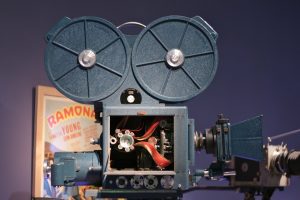
Before full Technicolor, several intermediate colour technologies emerged. Hand-colouring of films dates back to the medium’s earliest days, with colorists painstakingly tinting individual frames. The Pathécolor stencil process and toning techniques (where entire scenes were bathed in a single colour to indicate mood or setting) were widely used in the 1910s and 1920s. These approaches demonstrate that filmmakers recognized colour’s expressive potential long before true colour cinematography was technically feasible (Yumibe, 2012).
The introduction of colour changed the visual language of cinema. It added a layer of realism to films, allowing directors to use colour to signify mood, character, and setting in previously impossible ways with black-and-white film. Color also helped create more dynamic and visually appealing films, particularly in genres like musicals, fantasy, and epic historical dramas, where colour could heighten the spectacle (Kendall, 2017). On a broader cultural level, the rise of colour films helped establish cinema as a modern, technological marvel that was ever more attuned to the visual aesthetics of the real world.
Technicolor’s development was more complex than initially presented. The three-strip Technicolor process, which dominated from the mid-1930s through the early 1950s, required specialized cameras, trained technicians, and extensive post-production work. The Technicolor company maintained tight control over its technology, employing colour consultants who advised (and sometimes dictated to) filmmakers on appropriate colour schemes. Natalie Kalmus, ex-wife of Technicolor co-founder Herbert Kalmus, became particularly influential as the company’s primary colour consultant (Higgins, 2007).
Different national cinemas approached colour differently. While Hollywood often used Technicolor for prestige productions and musicals, filmmakers in other countries explored alternative colour processes and aesthetic approaches. Michael Powell and Emeric Pressburger’s The Red Shoes (1948) demonstrated a more expressionistic use of colour than most Hollywood productions of the same era (Street, 2012).
The transition to single-strip colour processes like Eastmancolor in the 1950s democratized colour filmmaking by reducing costs and technical complexity. However, these films proved less stable than Technicolour, leading to preservation challenges. Many films from the 1950s-1970s have suffered severe colour fading, creating ongoing restoration challenges for film archivists (Fossati, 2018).
The Rise of Digital Technology: A New Era of Filmmaking
The next major leap in film technology came with digital filmmaking. In the late 1990s, the industry began transitioning from traditional film stock to digital formats. Digital cameras, which recorded images as digital data instead of chemically processed film, offered significant cost, speed, and flexibility advantages. Digital filmmaking made it easier to edit, store, and distribute films while allowing filmmakers to shoot in various environments without the constraints of physical film (Sterne, 2003).
The digital transition involved multiple technological threads developing simultaneously. Digital sound preceded digital imagery in mainstream cinema, with Dolby Digital, DTS, and SDDS systems becoming common in theatres during the 1990s before digital projection took hold. Digital editing systems like Avid transformed post-production workflows in the early 1990s, allowing for more complex editing approaches long before digital cameras became standard (McKernan, 2005).
One of the most significant breakthroughs in digital technology was the development of computer-generated imagery (CGI), which allowed filmmakers to create highly realistic visual effects that were previously unattainable using practical effects. Films like Jurassic Park (1993) demonstrated the potential of CGI to bring dinosaurs to life on screen, forever changing the nature of visual storytelling. Since then, CGI has become an integral part of filmmaking, used in everything from blockbuster action films to animated features (Harris, 2018). Incorporating CGI has opened up new creative possibilities for filmmakers, allowing them to craft fantastical worlds, manipulate reality, and tell stories in ways that were once limited to the imagination.
The first feature films shot entirely digitally reveal the technology’s evolving capabilities. Denmark’s Dogme 95 films like The Celebration (1998) embraced digital video’s low-fidelity aesthetic as an artistic choice, while George Lucas’s Star Wars: Episode II (2002) demonstrated high-end digital cinematography’s potential. These divergent approaches show how digital technology expanded the spectrum of visual possibilities (Willis, 2005).
Digital distribution has transformed how films reach audiences and what kinds of films get made. The economics of physical film prints meant that wide theatrical releases were only feasible for films with substantial marketing budgets. Digital distribution reduced these costs dramatically, enabling smaller films to reach broader audiences and supporting the growth of independent cinema (Iordanova & Cunningham, 2012).
The relationship between digital technology and film preservation presents complex challenges. While digital tools offer powerful restoration capabilities for damaged film, digital formats have proven highly unstable for long-term preservation. Film stock can survive for a century under proper conditions, while digital storage formats become obsolete within decades or even years, requiring constant migration to new systems (Fossati, 2018).
Implications of Technological Advancements: Societal and Artistic Shifts
Each technological advancement in film (sound, colour, and digital technologies) has had profound implications for the industry and society. On a societal level, film has remained a powerful tool for shaping public perception, reflecting cultural values, and influencing political discourse. As cinema became more accessible, it became a medium for social change, with filmmakers using new technologies to address critical issues such as race, gender, and class. For instance, introducing sound and colour allowed filmmakers to present more nuanced and complex depictions of social realities, later explored in genres like film noir, social realism, and documentaries.
The democratization of filmmaking through accessible digital technology has profound geopolitical implications. Countries without established film industries can now develop cinematic voices without massive infrastructure investments. This has led to flourishing national cinemas in places like Nigeria (Nollywood), which became the world’s second-largest film industry by volume using affordable digital production methods (Miller, 2012).
Digitization, in particular, has democratized filmmaking, allowing for a greater diversity of voices in the industry. Independent filmmakers can now create and distribute their films without relying on the traditional studio system, and digital platforms like YouTube and Netflix have made it possible for films to reach global audiences instantly (Desser, 2005). This has led to a greater diversification of stories told on screen, with films from different cultures, genres, and perspectives reaching broader audiences.
Technological advances have also reshaped the way films are consumed. With the rise of streaming services and digital distribution, audiences no longer need to go to theatres to watch films, significantly impacting traditional cinema exhibitions. The move to digital projection in theatres and the rise of streaming platforms have made the film more accessible but also introduced new challenges for the industry, including issues of piracy, changing revenue models, and the shifting economics of filmmaking (Kendall, 2017).
Technological advancements have shifted power relationships within the film industry. Studio control has been partially decentralized as filmmakers access independent production and distribution channels. However, new power centers have emerged through streaming platforms and technology companies that now influence what films get made based on proprietary audience data and algorithmic recommendation systems (Lotz, 2017).
The environmental impact of film technology deserves consideration. Traditional film production and processing involve significant chemical waste, while digital filmmaking eliminates these issues but introduces electronic waste and high energy consumption for rendering and data storage. The industry continues to grapple with sustainability concerns across evolving technologies (Maxwell & Miller, 2012).
The relationship between technological advancement and artistic expression remains complex. While new technologies enable novel creative approaches, they also create commercial pressures for spectacle over substance. The dominance of CGI-heavy franchise films in contemporary cinema demonstrates how technological capabilities can reshape industry priorities, sometimes at the expense of narrative diversity (King, 2002).
The cumulative effect of these technological transformations extends beyond cinema to influence adjacent media. Video games, virtual reality, and interactive storytelling all draw upon cinematic language while introducing new participatory elements. As these boundaries blur, the definition of “film” continues to evolve, suggesting that future technological developments may transform the medium in ways we cannot yet anticipate (Jenkins, 2006).
The history of film is one of continuous innovation, driven by technological advancements that have reshaped how films are made, viewed, and experienced. From the early moving images captured on film stock to the rise of digital technologies and CGI, each leap forward has enhanced filmmakers’ creative potential and influenced society’s relationship with the medium. As we continue to see new developments in virtual reality, artificial intelligence, and immersive technologies, the future of film will undoubtedly bring about further changes, expanding the possibilities of storytelling and how we experience cinema.
The Early History of Film in Canada (1896-1920s)
Introducing film to Canada represents a significant yet contested historical moment in Canadian cultural development. The first documented public film screening took place in Montreal on June 28, 1896, utilizing the revolutionary Lumière Cinématographe technology (Morris, 1978). Despite the groundbreaking nature of this cultural milestone, the event received minimal media attention, with only the newspaper La Presse in attendance to document the proceedings. This historical oversight has led many subsequent scholars to incorrectly attribute Canada’s first film exhibition to a later event (Pendakur, 1990).
The more widely recognized “inaugural screening” occurred on July 21, 1896, at West End Park in Ottawa, drawing approximately 800 spectators to witness the Canadian premiere of Edison’s Vitascope technology (Cox, 2000). This presentation was made possible through the entrepreneurial efforts of the Holland Brothers, who had secured exclusive exhibition rights to the Vitascope throughout Canadian territories. These early film presentations consisted primarily of “actuality films” – documentary-style snippets capturing everyday scenes and simple activities, each running less than one minute. Contemporary audiences, experiencing moving images for the first time, were captivated by what reviewers described as “realism on canvas,” marking the inception of Canada’s enduring relationship with cinematic arts (Pendakur, 1990, p. 49).
The early Canadian film landscape faced numerous structural challenges that would continue to shape its development for decades. Most early Canadian films were created by non-permanent residents, resulting in representations characterized by external perspectives that often failed to capture authentic Canadian experiences or viewpoints (Morris, 1978). The critical component of distribution was severely constrained by what Pendakur (1990) described as the “early domination of film markets by American and British films” (p. 49). The Canadian population, too geographically dispersed and numerically insufficient, struggled to sustain a robust domestic film industry. Additionally, unfamiliar with the emerging film business, Canadian investors frequently fell victim to fraudulent schemes, further hampering industrial development. The limited production infrastructure is exemplified by only one “centralized” film studio in Canada, located in Trenton, Ontario, which ceased operations by 1934 (Morris, 1978).
The Allen Family and Theatre Development (1910s-1923)
The Allen family represents one of Canadian exhibition history’s most significant yet underappreciated chapters. Originally emigrating from the United States, brothers Jules and Jay Allen demonstrated remarkable entrepreneurial vision by establishing early motion picture theatres in small Canadian municipalities before expanding to major urban centers (Cox, 2000). Their innovative business approach fundamentally transformed the Canadian theatrical landscape by developing an extensive chain of exhibition venues and establishing a national film distribution network strategically headquartered in Calgary (Dombowsky, 2009).
The Allens’ business philosophy centred on what Cox (2000) characterized as “selling the theatre rather than the photoplay” (p. 86). This revolutionary concept prioritized the theatrical experience rather than the specific films. Their venues featured architectural elegance, lavish interior decorations, and unprecedented amenities designed to maximize patron comfort and create an atmosphere of luxury accessible to the general public. The Allen family operated three distinct theatres in Calgary, each meticulously designed to elevate the cinematic experience beyond mere film projection (Dombowsky, 2009).

The Allens’ rapid expansion and commercial success ultimately attracted the attention of American film mogul Adolph Zukor, who recognized the strategic importance of the Canadian market within his ambitions for global cinematic dominance. As Cox (2000) observed, “Canada was becoming a battlefield in a global war for motion-picture supremacy” (p. 92). When Allens resisted Zukor’s pressure to sell their operations, he implemented aggressive competitive practices, strategically acquiring theatres and distribution channels around their holdings to diminish their market position (Cox, 2000).
This targeted competition, unfortunate investment decisions, the economic depression of 1921, and subsequent declining attendance figures ultimately forced the Allen enterprise into bankruptcy by 1923. The dissolution of their theatre empire created a near-monopoly in Canadian exhibitions controlled primarily by American corporate interests. Despite this setback, the Allen family demonstrated remarkable resilience, later rebuilding a smaller theatre business operating as an affiliate of Famous Players throughout the 1930s and 1940s, maintaining independent operations through the 1970s and 1980s, and eventually establishing a chain of five drive-in theatres in Ontario that continued operations as recently as 2019 (Cox, 2000).
The Documentary Tradition and Canadian Film Identity
The distinctive contribution of Canadian cinema to global film culture emerged primarily through its documentary tradition rather than narrative feature production. As film scholar Elder (1989) incisively noted, “Most Canadian film has been a part of the realistic tradition… in the especially important place documentary filmmaking has had in Canada and the prevalence of realist films in our feature film tradition” (p. 3). This documentary orientation was shaped both by circumstance and philosophical alignment, with limited resources for narrative feature production, documentary filmmaking offered a more accessible approach that simultaneously aligned with Canadian cultural values, emphasizing collective identity over individual heroism (Druik, 2007).
The documentary tradition established itself as particularly significant in three distinct contexts. First, it functioned as a vehicle for exploring and articulating national identity during periods of cultural definition. Second, as Bredin (2006) observed, documentary emerged as “the most accessible genre for First Nations filmmakers” (p. 154), providing an essential platform for Indigenous expression. Third, the realist approach facilitated substantive social commentary by representing typical Canadian experiences within their authentic contexts. As Druik (2007) articulated, “Documentary tends to follow in the modern tendency of realism to treat the ‘representative as typical’ and therefore the opposite of the symbolic” (p. 31).
This fundamental orientation toward documentary realism distinguished Canadian cinema from Hollywood’s entertainment-driven narrative approach and established Canada’s international reputation for thoughtful, socially engaged non-fiction filmmaking (Elder, 1989). The privileging of documentary over fiction reflected practical considerations and cultural preferences for authenticity, community representation, and social purpose that continue to influence Canadian film production in the contemporary era.
The National Film Board and John Grierson (1939-1950s)
Establishing the National Film Board of Canada (NFB) in 1939 represents a watershed moment in Canadian cultural history and film development. This state-sponsored filmmaking institution, primarily focused on short, non-theatrical documentary production, rapidly developed what Druick (2007) characterized as “an almost mythic status, both in Canada and abroad” (p. 17). Formalized through the National Film Act, the NFB assumed comprehensive responsibility for all government film activities by 1949, consolidating Canada’s approach to cinematic production under a unified institutional framework.
John Grierson, appointed as the NFB’s inaugural commissioner, brought international documentary prestige and a profound vision regarding cinema’s potential for social and political transformation. Under Grierson’s dynamic leadership, the NFB “produced propaganda films that rivalled the output of the United States and Great Britain and earned Canada a worldwide reputation in documentary filmmaking” (Elder, 1989, p. 154). This achievement was particularly remarkable given Canada’s relatively modest population and limited previous film production infrastructure.
The NFB experienced significant expansion during World War II, producing essential information materials, including the influential newsreel series Canada Carries On. These approximately twenty-minute “two-reelers,” frequently narrated by Lorne Greene (who later gained fame in American television), provided Canadians with crucial war information while developing a distinctively Canadian cinematic voice. The NFB’s 1941 production, Churchill’s Island, received an Academy Award, further establishing Canada’s documentary reputation on the international stage (Druick, 2007).
To extend cinematic access beyond urban centers, the NFB pioneered innovative distribution strategies, including converting films to 16mm format for travelling projectionists. This approach substantially expanded film exhibitions throughout rural Canada, reaching communities far removed from conventional theatrical venues and creating a national film culture transcending geographic isolation. As Hughes (2016) observed, the “NFB’s emphasis on rural distribution substantially increased the presence of film exhibition throughout the country, not especially close to the U.S., and specifically in locations incapable of supporting a commercial cinema” (p. 72).
Evolution of the NFB and Canadian Documentary (1950s-Present)
Following World War II, the National Film Board demonstrated remarkable adaptive capacity in response to changing political climates, technological developments, and evolving social priorities. During the 1940s and 1950s, amid growing Cold War tensions, the NFB strategically repositioned itself as an educational film provider while maintaining its commitment to documentary production (Druick, 2007). This period saw the continued emphasis on rural distribution networks, significantly enhancing film exhibition throughout regions previously underserved by commercial cinema.
The 1960s marked a period of extensive innovation as the NFB embraced cinéma-vérité filmmaking techniques and invested in technological development, including contributions to groundbreaking formats like IMAX (Elder, 1989). The organization’s commitment to diversifying cinematic voices expanded significantly during the 1970s with the creation of dedicated Women’s Studios, providing unprecedented opportunities for female filmmakers within the Canadian production landscape.
Throughout the 1980s, the NFB increasingly focused on supporting emerging filmmakers from diverse backgrounds while strengthening its commitment to Indigenous cinema. From the 1980s to the present, the NFB has prioritized collaboration with First Nations, Métis, and Inuit creators, producing approximately 300 works by Indigenous directors between 1970 and 2000 (Indigenous Filmmaking, 2017). This evolutionary trajectory enabled the NFB to maintain its cultural significance while adapting to changing social concerns and technological innovations. Throughout its institutional history, the NFB has effectively balanced informational mandates with entertainment value, frequently achieving both simultaneously through compelling documentary storytelling that continues to influence contemporary Canadian film practice.
The Hollywood Problem: Distribution and Dependency
Despite significant achievements in documentary filmmaking, Canadian cinema has struggled persistently against Hollywood’s economic dominance and cultural influence. Even during the early 1920s, amid Hollywood’s vertical integration and the progressive loss of Canadian theatres to foreign control, Morris (1978) observed that “the industry in Canada was not strong” (p. 238). This foundational weakness would characterize Canadian cinema’s relationship with Hollywood throughout the subsequent century.
Several structural factors have perpetuated this dependency relationship. Canada remains one of the few significant markets where Hollywood doesn’t face protective quotas for local films or requirements to reinvest earnings in native production (Pratley, 1988). Moreover, Canada is the only country outside the United States that is considered part of American films’ “domestic release” territory, complicating the development of a distinct national cinema with its own industrial infrastructure (Pendakur, 1990).
Historically controlled by American interests, the distribution system consistently privileged Hollywood productions, leaving Canadian films struggling to secure adequate theatrical releases or promotional support. This systemic disadvantage led Pendakur (1990) to characterize Canada as “a cultural colony of the U.S.,” with this relationship “most acutely felt in the feature film industry” (p. 87). The 1948 antitrust consent decree in the United States, which mandated the separation of American theatres from Hollywood studios, paradoxically failed to impact Canadian theatres or substantively alter the system of dependency that had developed over previous decades (Morris, 1978).
The recurring challenge for Canadian filmmakers has centred on accessing domestic audiences through a distribution and exhibition infrastructure oriented toward American products. This structural imbalance has persistently undermined attempts to establish a self-sustaining Canadian film industry capable of competing effectively in its own national market (Johnson, 2013).
Government Intervention: CFDC/Telefilm Canada
In response to the persistent challenges facing domestic film production, the Canadian government established the Canadian Film Development Corporation (CFDC) with the explicit mandate of fostering and promoting the development of a distinctive national cinema. Despite these intentions, the organization quickly exhausted its initial $10 million allocation in under four years, with few productions generating sufficient revenue to recover investments (Madger et al., 2019).
The fundamental issue remained distribution access rather than production financing. CFDC-supported films typically reached audiences through Canadian independent distributors with limited access to first-run theatres. Simultaneously, major American distribution companies demonstrated minimal interest in handling Canadian content, compounding the challenge of connecting domestic productions with their intended audiences. This situation left Canadian filmmakers struggling to secure appropriate release dates or venue placements to maximize audience potential (Johnson, 2013).
To address these structural imbalances, the CFDC recommended the implementation of screen quotas to ensure Canadian content received theatrical exposure. However, this regulatory approach received minimal industry support and was abandoned after a brief two-year experimental period. Subsequently, the organization strategically pivoted toward television as an alternative exhibition platform, eventually expanding its mandate to include television production funding. This expanded scope was formally recognized when the organization was renamed Telefilm Canada, reflecting its broader mandate beyond theatrical film production (Madger et al., 2019).
The historical evolution of the CFDC/Telefilm Canada illustrates the persistent challenges in establishing sustainable domestic production within a market dominated by foreign interests. The organization’s strategic shift toward television anticipates contemporary debates regarding streaming platforms as potential alternatives to traditional theatrical distribution for Canadian content (Johnson, 2013).
Quebec Cinema: Exception to the Rule
Within the challenging landscape of Canadian film, Quebec cinema represents a remarkable exception to the general pattern of audience indifference toward domestic productions. As White (2006) astutely observed, “Quebec cinema is the most domestically successful… [because] a self-sustaining pop culture has long existed and continues to exist in that majority-francophone province” (p. 42). This exceptional case demonstrates how linguistic and cultural distinctiveness can foster audience loyalty and create conditions for a more resilient local film industry.
The success of Quebec cinema derives from several interconnected factors. Linguistic specificity creates natural market protection, as French-language audiences actively seek content in their primary language. Cultural distinctiveness provides filmmakers with recognizable social contexts and community experiences that resonate deeply with local audiences. Additionally, the concentration of French-speaking Canadians within a specific geographic region creates sufficient population density to support theatrical exhibitions of domestic productions (White, 2006).
The Quebec example provides an illuminating contrast to the struggles of English-Canadian cinema, which must compete directly with American productions without the protective barrier of linguistic difference. Quebec’s cinematic achievements suggest that sustainable domestic film industries require some form of market differentiation – whether through language, cultural specificity, or regulatory protection – to establish themselves in the face of Hollywood’s global dominance (Madger et al., 2019).
This exception further illustrates how local film industries can thrive when aligned with distinctive cultural identities and supported by audiences who recognize themselves in the stories being told. Quebec cinema’s success offers valuable insights for cultural policymakers seeking to strengthen national film traditions in other regions facing similar challenges of foreign market domination (Johnson, 2013).
Summary
The global history of film reflects the powerful influence of technological change. From early moving images to the introduction of sound, colour, and digital formats, each innovation reshaped how films were made and experienced, changing storytelling and audience engagement.
Film arrived in Canada in 1896 and was quickly embraced. Exhibitors like the Allen family helped build local interest, but Canadian film followed a different path from Hollywood. With limited commercial resources, the country focused on documentary filmmaking. Under John Grierson, the National Film Board of Canada (NFB) helped build Canada’s reputation for socially engaged documentaries.
At the same time, Canadian filmmakers faced persistent challenges. American control of distribution and exhibition made it difficult for local films to reach audiences. In response, government agencies such as the Canadian Film Development Corporation, later Telefilm Canada, were created to offer support. Quebec’s film industry has stood out, supported by its distinct language, culture, and audience.
Key Takeaways
Key takeaways from this chapter include:
- Technological advancements have continuously redefined cinema. From silent films to digital productions, new tools have reshaped filmmaking, storytelling, and how audiences connect with cinema.
- Documentary filmmaking is central to Canada’s cinematic identity. Rather than building a commercial feature industry, Canada gained recognition for documentaries shaped by cultural values and public institutions.
- Canadian cinema has long struggled with American dominance. Barriers in distribution and a small market have limited visibility, though public funding and strong regional industries like Quebec’s have helped.
These developments show how film’s evolution is shaped by more than technology; cultural values, economic realities, and national identity all play a role, especially in the Canadian context.
Group Activity
Reimagining Canadian Film Distribution
Time required: 30 minutes.
Group size: 3-4 students
Instructions:
- In your groups, design an alternative distribution strategy for Canadian films that could help them compete with Hollywood productions.
- Consider the following questions:
- What platforms or technologies would you utilize?
- How would you market specifically Canadian content?
- What funding mechanisms would support your strategy?
- How would you ensure diversity of voices (including Indigenous perspectives)?
- Create a brief pitch (5 minutes) to present your strategy to the class.
- Be prepared to discuss each group’s approach, strengths and potential challenges.
End-of-Chapter Activity (News Scan)
Canadian Film in the Global Marketplace
Purpose: This assignment helps you connect historical perspectives on Canadian cinema with contemporary developments, enhancing your ability to critically analyze film industry dynamics and cultural representation in global contexts.
Using Google News, find a recent article (published in the last three months) about Canadian film production, distribution, or reception in international markets.
In 250 words, respond to the following:
- Summarize the Article (100-150 words)
- Provide the title, author, and date in APA format.
- Explain the article’s primary focus and significance.
- Identify key findings or arguments presented.
- Connect to Chapter Themes (100-150 words)
- Relate the article to at least one key theme from this chapter (such as distribution challenges, documentary tradition, or the influence of film on the evolving media landscape).
- Analyze how the article illustrates continuity or change in Canadian film compared to historical patterns discussed in the chapter.
- Explain what the article suggests about the future trajectory of Canadian cinema.
Cite your sources (textbook and article) in APA format.
References
Abel, R. (2005). Encyclopedia of Early Cinema. Routledge.
Academy of Motion Picture Arts and Sciences. (1931). The 3rd Academy Awards. https://www.oscars.org/oscars/ceremonies/1931
Academy of Motion Picture Arts and Sciences. (1932). The 4th Academy Awards. https://www.oscars.org/oscars/ceremonies/1932
Altman, R. (2004). Silent Film Sound. Columbia University Press.
Bordwell, D., Thompson, K., & Smith, J. (2024). Film Art: An Introduction (13th ed.). McGraw-Hill.
Bredin, M. (2006). Indigenous media as alternative media: Participation and cultural production. In P. Attallah & L. R. Shade (Eds.), Mediascapes: New patterns in Canadian communication (pp. 148-170). Thomson Nelson.
Cox, K. R. (2000). Movies and talkies: The coming of sound to Canadian film exhibition, 1927-1932 [Doctoral dissertation, McGill University]. ProQuest Dissertations Publishing.
Crafton, D. (1999). The Talkies: American Cinema’s Transition to Sound, 1926-1931. University of California Press.
Desser, D. (2005). Hollywood Goes Shopping. University of Minnesota Press.
Dombowsky, P. (2009). Edmonton’s rich theatre history. Edmonton Journal.
Druick, Z. (2007). Projecting Canada: Government policy and documentary film at the National Film Board of Canada. McGill-Queen’s University Press.
Elder, B. (1989). Image and identity: Reflections on Canadian film and culture. Wilfrid Laurier University Press.
Ezra, E. (2000). Georges Méliès: The Birth of the Auteur. Manchester University Press.
Fossati, G. (2018). From Grain to Pixel: The Archival Life of Film in Transition (3rd ed.). Amsterdam University Press.
Gomery, D. (1992). Shared Pleasures: A History of Movie Presentation in the United States. University of Wisconsin Press.
Harris, M. (2018). Pictures at a Revolution: Five Movies and the Birth of the New Hollywood. Penguin.
Harrison, E. (2013). Sound Effects: The Art of Sound in Film. Springer.
Higgins, S. (2007). Harnessing the Technicolor Rainbow: Color Design in the 1930s. University of Texas Press.
Horak, J. C. (2008). Hollywood. In E. Barnouw (Ed.), International encyclopedia of communications. Oxford University Press.
Hughes, C. (2016). Rural, remote, and reservation areas: Obstacles and opportunities for the National Film Board of Canada, 1960s-1980s. Film History, 28(1), 71-83.
Indigenous filmmaking at the NFB. (2017). National Film Board of Canada. https://www.nfb.ca/indigenous-cinema/
Iordanova, D., & Cunningham, S. (2012). Digital Disruption: Cinema Moves On-line. St. Andrews Film Studies.
Jenkins, H. (2006). Convergence Culture: Where Old and New Media Collide. NYU Press.
Johnson, A. (2013). The Canadian film industry: Industrial development and policy challenges. University of Toronto Press.
Kendall, T. (2017). The History of Colour in Cinema. Oxford University Press.
King, G. (2002). New Hollywood Cinema: An Introduction. Columbia University Press.
Lastra, J. (2000). Sound Technology and the American Cinema: Perception, Representation, Modernity. Columbia University Press.
Lotz, A. D. (2017). Portals: A Treatise on Internet-Distributed Television. Michigan Publishing.
Madger, T., Bredin, M., & Dubois, F. (Eds.). (2019). Canadian television: Textures, territories and technologies. McGill-Queen’s University Press.
Mary Pickford Foundation. (n.d.). The creation of United Artists. https://marypickford.org/caris-articles/creation-united-artists/
Maxwell, R., & Miller, T. (2012). Greening the Media. Oxford University Press.
McKernan, B. (2005). Digital Cinema: The Revolution in Cinematography, Post-Production, and Distribution. McGraw-Hill.
McKernan, L. (2008). Cinematography. In E. Barnouw (Ed.), International encyclopedia of communications. Oxford University Press.
Miller, J. (2012). Nollywood Central. Palgrave Macmillan.
Morris, P. (1978). Embattled shadows: A history of Canadian cinema, 1895-1939. McGill-Queen’s University Press.
O’Brien, C. (2005). Cinema’s Conversion to Sound: Technology and Film Style in France and the U.S. Indiana University Press.
Pendakur, M. (1990). Canadian dreams and American control: The political economy of the Canadian film industry. Wayne State University Press.
Pratley, G. (1988). Torn sprockets: The uncertain projection of the Canadian film. University of Delaware Press.
Solnit, R. (2004). River of Shadows: Eadweard Muybridge and the Technological Wild West. Viking.
Sterne, J. (2003). The Audible Past: Cultural Origins of Sound Reproduction. Duke University Press.
Street, S. (2012). Colour Films in Britain: The Negotiation of Innovation 1900-55. Palgrave Macmillan.
Weis, E., & Belton, J. (1985). Film Sound: Theory and Practice. Columbia University Press.
White, J. (2006). The Cinema of Canada. Wallflower Press.
Willis, H. (2005). New Digital Cinema: Reinventing the Moving Image. Wallflower Press.
Yumibe, J. (2012). Moving Colour: Early Film, Mass Culture, Modernism. Rutgers University Press.
Media Attributions
- Georges Méliès’ Trip to the Moon
- 3-strip_Technicolor_camera
- Adolph Zukor