
5.6 Breaking the Chain of Transmission
Breaking the chain of infection, as shown in Fig. 5.16, is the primary goal of reprocessing areas to prevent the spread of infection while also ensuring that reprocessing professionals protect themselves from potential exposure.
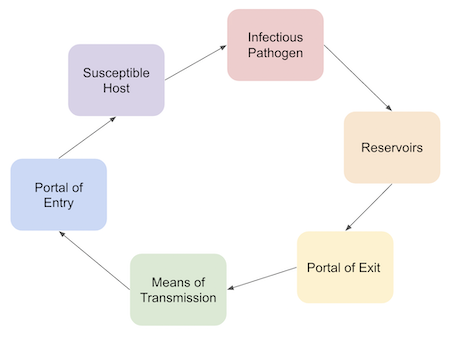
The process begins with targeting the infectious agent—such as bacteria, viruses, or fungi—that may be present on contaminated medical devices. By thoroughly cleaning, disinfecting, and sterilizing these instruments, harmful pathogens are eliminated, preventing their transmission to patients or staff. Instruments themselves can act as a reservoir for infectious agents, and proper reprocessing ensures that these devices do not harbor pathogens.
The portal of exit comes into play when pathogens are released from contaminated instruments or surfaces. By handling instruments carefully and ensuring they are cleaned and sterilized, the risk of pathogens exiting and spreading is minimized. The mode of transmission is disrupted through effective disinfection and the use of personal protective equipment (PPE), which prevents pathogens from being transmitted through direct or indirect contact. Additionally, reprocessing eliminates the potential for pathogens to enter the body through the portal of entry, such as wounds or mucous membranes, by ensuring that instruments are free of infectious agents before they are used on patients.
Finally, reprocessing protects susceptible hosts—patients with weakened immune systems—by making sure that instruments are sterile before being used, thereby reducing the risk of infection. Overall, reprocessing plays a vital role in breaking several links in the chain of infection, ensuring a safe environment for both staff and patients.
Breaking the chain of infection is essential for reprocessing professionals to protect themselves as well. Wearing appropriate personal protective equipment (PPE), such as gloves, gowns, face shields, and masks, which act as a barrier to these infectious agents, and practicing good hand hygiene, MDRTs can protect their own health. Vaccination also plays an important role and staying up-to-date with vaccines like the flu shot and hepatitis B vaccine helps protect reprocessing professionals from contracting preventable infections, ensuring they remain healthy and able to perform their duties without putting themselves or others at risk.
Reprocessing professionals play a critical role in breaking the chain of infection not only for patients by following strict protocols for cleaning, disinfecting, and sterilizing instruments and their work environment. They also protect themselves by using appropriate PPE, practicing good hygiene, and staying up-to-date with their vaccinations. Below are some specific examples of how reprocessing professionals, and others in health care, can be involved in breaking the chain of infection.
Breaking the Link at the Infectious Agent
- Clean, disinfect, or sterilize the work environment depending on the pathogen, and follow healthcare workplace policies.
- The client may be prescribed medication to eliminate the infectious agent.
- Specifically use antibiotics, antivirals, or antifungals to treat an infection.
- Clean, sterilize, or disinfect devices that may harbour infectious agents to kill pathogens.
Breaking the Link at the Reservoir
- Cleaning, disinfecting, or sterilizing the environment depending on the pathogen is essential, as is following healthcare workplace policies.
- Disinfect stethoscopes and other medical equipment and items after each client.
- Disinfect high-touch surface areas in the client’s room such as bed rails, doorknobs, and call bells, and shared facilities such as toilets and sinks.
- Use proper food handling and storage.
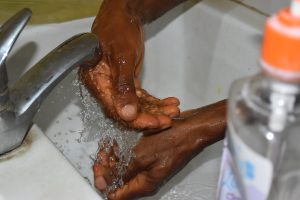
- Perform hand hygiene (Figure 5.17) prior to touching food items.
- Wash food as necessary, and clean the table surface prior to eating.
- Assist clients to perform personal hygiene if they have limited mobility, cognitive dysfunction, or a medical status that makes them unable to do so.
- Educate clients about hand hygiene, respiratory etiquette, and the importance of vaccinations to prevent the spread of infection.
- Conduct frequent environmental cleaning.
- Monitor environmental controls such as heating, ventilation, and air condition (HVAC) and +/– air pressure.
- Ensure optimal water treatment.
Breaking the Link at the Portal of Exit
- Perform frequent and thorough hand hygiene and follow routine practices.
- Encourage and teach clients about respiratory etiquette, such as when you see a client cough or sneeze into their hands and not perform hand hygiene afterwards.
- Encourage clients to dispose of soiled tissues after use.
- Cover wounds to avoid contamination through excretions.
- Dispose of contaminated linens and waste in the appropriate receptacles if a client is incontinent of stool or urine.
- When teaching or assisting a client with their personal hygiene, remember the technique of cleaning from cleanest to dirtiest areas, such as in perineal care and bathing.
- Practise respiratory etiquette by covering coughs and sneezes.
Breaking the Link at the Mode of Transmission
- Perform hand hygiene, following routine practices and taking additional precautions as needed.
- For contaminated inanimate objects such as stethoscopes, client charts, and doorknobs, it is essential to clean, disinfect, or sterilize the environment depending on the pathogen and to follow healthcare workplace policies.
- Ensure that there is the appropriate space separating clients in the same room and when in a cohort room.
- Follow negative-pressure-engineered room protocols to ensure that airborne pathogens do not travel outside the room.
- Know your immunity status when caring for clients diagnosed with measles.
- Educate clients about the importance of immunization to prevent infectious diseases.
- Clean, sterilize, and disinfect.
- Use personal protective equipment (PPE) when needed (Figure 5.18).
- Be familiar with engineering controls such as HVAC.

Breaking the Link at the Portal of Entry
- Perform hand hygiene—follow routine practices and take additional precautions as needed.
- Apply aseptic techniques as required; for example, when inserting catheters, changing central intravenous lines, and during wound dressing care.
- Follow healthcare workplace policies when cleaning, disinfecting, or sterilizing contaminated items or environments.
- When teaching or assisting a client with their personal hygiene, remember the technique of cleaning from cleanest to dirtiest areas, such as during perineal care and bathing.
- Ensure proper use of personal protective equipment (PPE) when needed.
- Be familiar with best practices for wound care.
Breaking the Link at the Susceptible Host
- Identify high-risk individuals and protect the client’s body defences from infection by covering open wounds, keeping drainage systems closed and intact, maintaining skin integrity, and following asepsis protocols.
- Following a healthy lifestyle with proper nutrition, physical activity, rest and sleep, effective coping strategies, and staying up to date on vaccinations will help break the chain.
- Treat any health conditions as needed to stay healthy.
To stop the transmission of an infectious agent, at least one of the links above must be broken. To help determine how to break the chain of transmission, perform a risk assessment with every client, in every situation, and in all healthcare settings. You can eliminate infectious agent transmission by consistently following infection prevention and control measures.
Attribution
Unless otherwise indicated, material on this page has been adapted from the following resource:
Hughes, M., Kenmir, A., St-Amant, O., Cosgrove, C., & Sharpe, G. (2021). Introduction to infection prevention and control practices for the interprofessional learner. eCampusOntario. https://ecampusontario.pressbooks.pub/introductiontoipcp/, licensed under CC BY-NC 4.0
Image Credits
(Images are listed in order of appearance)
Flow chart representing chain of infection by Clairemariemorris, CC0 1.0
Lavage de mains à l’eau au robinet dans un laboratoire au Bénin by Adoscam, CC BY-SA 4.0
Safety gear to provide maximum protection from Ebola (158114437216) by DFID – UK Department for International Development, CC BY 2.0



.jpg)