
3.8 Urinary and Reproductive Systems
Urinary System Overview and Functions
The urinary system (Figure 3.28) is responsible for cleansing the blood and removing wastes from the body. However, it has other equally important functions, including regulating pH, blood pressure, and the concentration of solutes in the blood; producing erythropoietin (EPO) to stimulate red blood cell production; providing the final synthesis step of vitamin D production; and producing the active form of vitamin D. The urinary system, controlled by the nervous system, also stores urine until a convenient time for disposal, then provides the structures for transporting liquid waste from the body.
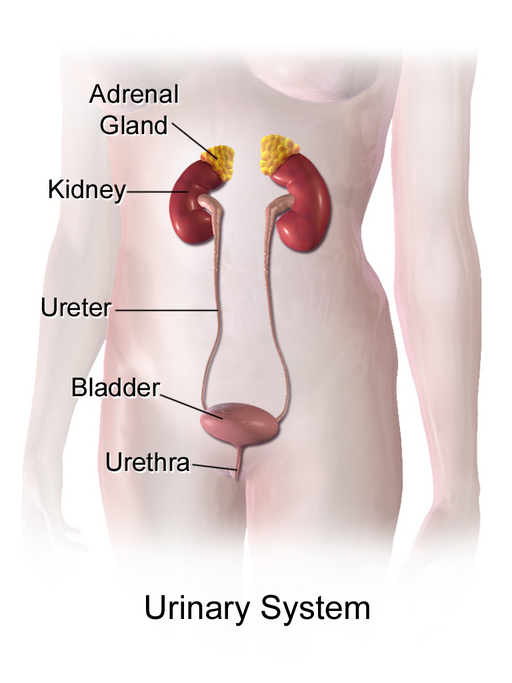
Components of the Urinary System
Kidneys: The two kidneys are complex organs that perform very complicated and necessary functions that are required for survival. If the kidneys fail, there are devastating effects on the body’s homeostasis—individuals will experience weakness, lethargy, shortness of breath, anemia, widespread edema, metabolic acidosis, rising potassium levels, heart arrhythmias, and many more symptoms. Nephrons are the functional units of the kidney; they cleanse the blood and balance the components within it (Betts et al., 2013), and take a simple filtrate of the blood and modify it into urine. Approximately 1 to 2 litres of urine are produced and excreted from the body every day.
Ureters: In each kidney, the renal pelvis narrows to become the ureter. As urine passes through the ureter, it does not passively drain into the urinary bladder, but rather is propelled by waves of muscle movement. Each ureter is approximately 30 cm long.
Urinary bladder: The bladder collects urine from both ureters and holds it until it is released from the body via the urethra.
Urethra: This structure transports urine from the bladder to outside the body. The urethra is the only urologic organ that is different between males and females. In women, the urethra is shorter, usually about 4 cm long, whereas in males, it is closer to 20 cm in length. The shorter length of the female urethra means there is less of a barrier to fecal bacteria, so women experience more urinary tract infections (UTIs) than men.
Common Urinary System Surgeries
- Cystectomy: Removal of the bladder (all or part).
- Nephrectomy: Removal of the kidney.
- Nephrostomy: A surgical procedure to create an opening into the kidney to enable urine to exit the body through the opening.
- Cystostomy: A surgical procedure to create an opening into the bladder to enable urine to exit the body through the opening.
Female Reproductive System Overview and Functions
The female reproductive system functions to produce gametes and reproductive hormones, making it similar to the male reproductive system. However, it has another function—to support a developing fetus and deliver it to the outside world. Unlike the male reproductive system, the female reproductive system is located primarily inside the pelvic cavity. Figure 3.29 provides an overview of the main components of the female reproductive system.
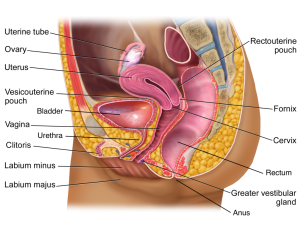
Components of the Female Reproductive System
Vagina: Approximately 10 cm long, the vagina is the muscular entrance to the reproductive tract. It is the exit from the uterus during menses and childbirth. The vagina leads to the cervix, which is the opening to the uterus.
Cervix: This structure connects the lower end of the uterus to the vagina.
Uterus: This muscular organ nourishes and supports the growing embryo. On average, it is approximately 5 cm wide and 7 cm long.
Ovaries: These are the two female gonads. They are located at the entrance to the fallopian tubes.
Fallopian tubes: The fallopian tubes are the pathway that the oocyte travels from the ovary to the uterus. The two fallopian tubes are located close to the ovaries but are not directly connected to them.
Breast: The breasts are located far from the other female reproductive organs and, as such, are considered accessory organs of the female reproductive system. The function of the breasts is lactation, which is supplying milk to an infant. The external features of the breast include the nipple, which is surrounded by the areola.
Male Reproductive System Overview and Functions
The function of the male reproductive system (Figure 3.30) is to produce sperm, which can then be transferred to the female reproductive tract. The testes are a critical component of the system because they produce both the sperm and the hormones that support all the male reproductive physiology. There are other accessory organs that assist with the production of sperm and seminal components that are also needed in the process. They include the epididymis, vas deferens, prostate, seminal vesicles, and penis.
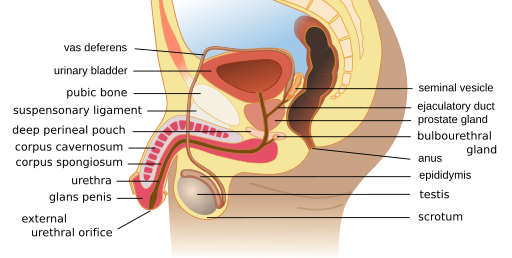
Components of the Male Reproductive System
Penis: This is the male organ of copulation and deposits semen into the female reproductive tract.
Scrotum: The scrotum is a skin-covered, highly pigmented, muscular sac that encloses the testes. The location of the scrotum behind the base of the penis is important in sperm production, which occurs in the testes. Sperm production cannot occur at body temperature, and the location of the scrotum outside the body keeps the testes 2 to 4°C below core body temperature.
Testes: These are the male gonads or, in other words, the male reproductive organs. The testes produce sperm and androgens such as testosterone. The singular form of testes is testis.
Epididymis: This is a coiled tube attached to each testis. Newly formed sperm travel down the epididymis as they continue to mature, a journey that on average takes 12 days, and the mature sperm are stored in the tail end of the epididymis.
Vas deferens: This thick, muscular tube is bundled together inside the scrotum with connective tissue, blood vessels, and nerves. It is also known as the ductus deferens and transports sperm from the epididymis to the urethra.
Seminal vesicles: As sperm pass through the vas deferens, they mix with fructose fluid from the seminal vesicles. The fluid accounts for approximately 60% of the semen’s volume.
Prostate gland: This gland sits in front of the rectum and at the base of the bladder, surrounding part of the urethra. The prostate is about the size of a walnut and excretes an alkaline, milky fluid into the semen, which assists with transportation to the female reproductive tract.
Bulbourethral glands: These glands release a thick, salty fluid that lubricates the end of the urethra and helps clean urine residue from the male urethra (Betts et al., 2013).
Common Reproductive System Surgeries
- Caesarean section: Surgical delivery of a baby through the abdomen.
- Hysterectomy: Surgical removal of the uterus.
- Myomectomy: Surgical removal of uterine fibroids.
- Oophorectomy: Surgical removal of the ovaries.
- Orchiopexy: Surgical repair of the testes.
- Salpingectomy: Surgical removal of the fallopian tubes.
- Transurethral resection of the prostate gland: Surgical removal of part of the prostate to treat benign prostatic hyperplasia (BPH).
- Vasectomy: A surgical procedure to cut the vas deferens as a permanent form of birth control.
Attribution
Unless otherwise indicated, material on this page has been adapted from the following resource:
Sturdy, L., & Erickson, S. (2022). The language of medical terminology. Open Education Alberta. https://pressbooks.openeducationalberta.ca/medicalterminology/, licensed under CC BY-NC-SA 4.0
References
Betts, J. G., Young, K. A., Wise, J. A., Johnson, E., Poe, B., Kruse, D. H., Korol, O., Johnson, J. E., Womble, M., & DeSaix, P. (2013). Anatomy and physiology. OpenStax. https://openstax.org/details/books/anatomy-and-physiology, licensed under CC BY 4.0
Image Credits
(Images are listed in order of appearance)
Urinary System (Female) by BruceBlaus, CC BY-SA 4.0
Blausen 0400 FemaleReproSystem 02b by BruceBlaus, CC BY 3.0
Human male reproductive system en by Wumingbai, CC BY-SA 4.0

.png)

