
Keeping a Lab Notebook[1]
Throughout the semester, I am going to challenge you to write your lab preparations, observations, and questions in a physical notebook using a pencil (or pen)! This notebook is going to be a highly personalized repository of learning in the lab! I have provided some guidelines to help you get started and keep organized – use them as you wish! The only requirements is that you bring it to lab every session and do your preparations in it.
Note: Pencil isn’t permanent, so why is it acceptable in this case? Pencil can survive when your notebook is accidently dropped in the water, and you can often write in the rain – the same can’t always be said for ink! In addition, we are using this lab notebook to facilitate learning and interacting with the scientific process, not for legal purposes.
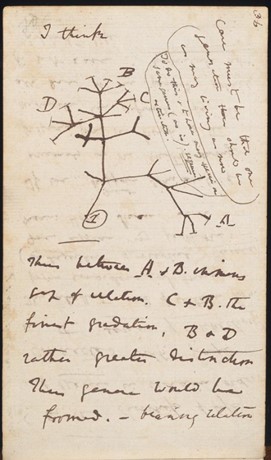
Purpose of a lab notebook
Whenever we carry out a field or laboratory study, it is important to document our daily work and observations. The notes that we make during these studies can be compiled in a lab notebook (hereafter referred to as notebook). The intended audience of a notebook is the researcher to supplement data collection (e.g., write observations, activities, questions). How you take notes and organize the information is up to you, and you will develop your own style as you gain more experience with taking detailed notes before, during, and after lab activities. One thing that all notebooks have in common is that they have both descriptive information (this is an outline of your activities) and includes a record of your ideas, questions, reflections that stem from the observations. In some cases, it also includes the data collected if separate data collection tables are not used.
How are we using a lab notebook in AUBIO 112?
For each lab session, you will be using the notebook in the following ways:
- Preparation: write the purpose/scientific question being addressed in the lab, the hypothesis and prediction (as appropriate). You will also want to include a flowchart or summary of the lab procedures that will help you keep on track (specifics are provided in the lab schedule and preparation document).
- During the lab: making observations (and sometimes data collection) during the lab
- After the lab: write your questions, summarize journal articles, sketch graphs, etc. It is up to you!
Tips for the AUBIO 112 Lab Notebook[2]
- Selecting your lab notebook: You are welcome to use any notebook. If you prefer writing on a tablet, feel free to do so (but take note that technology can fail, and batteries die!). I personally use a 6×9 inch spiral notebook from the local bargain store (this is the smallest size I recommend).
- Setting up and using your lab notebook: Even though everyone’s notebook will look different and contain different information, some structural components are important to keep your notebook organized (e.g., I use sticky notes to indicate where I am starting new observations). Here are some tips on getting started and for using it throughout the semester:
-
- Number the pages in the notebook. You won’t be removing any pages, and this will help you keep things organized.
- Add your contact information in case your notebook gets misplaced/left in the lab (e.g., put your name and email address on pg 1)
- Start a table of contents and fill it in as you go. Using a table of contents allows you to quickly find a previous lab, article summary, etc.
- Abbreviations – make sure there is a key in your notebook (I like to keep mine in the same area as my contact information or table of contents).
- Every new lab session should have the following information:
- Lab Title
- Date
- Lab partner information (name and email, as appropriate)
- Preparations
- In-lab data collection and observations
- Post-lab materials
- Leave room for reflection and analysis – I do this by writing observations on only one side of the page and writing reflections/questions/analysis on the opposite side. For example, if you are right-handed, you could write your observations on the right page and your reflection on the left. The opposite is true for left-handed people.
- If you make a mistake (or change your mind about something that you wrote), cross it out rather than erase it. You don’t want to erase anything in your notebook because that information may prove useful in the future (and will prevent speculation of fraud/fabricating results)
A final note on lab notebooks: If you are working in a research or industrial lab, you will likely have to do things differently! This lab notebook is to facilitate and document your work in this specific course. Research and industrial labs have a different purpose for the lab notebooks – for example, to avoid fraud and research misconduct, defend patents, etc. which will always require using blue or black ink.
- Adapted from: Audet D. 2018. Field notebook guidelines. AUBIO 359-450 Handout. Camrose (AB): Augustana Faculty, University of Alberta. ↵
- Reference consulted: Greene E. 2011. Why keep a field notebook? In: Canfield MR, editor. Field notes on science and nature. Cambridge (MA): Harvard University Press. p. 251-274. ↵