32 Creative Commons Licenses
Learning Outcomes
At the end of the chapter you will be able to:
- Describe the four different Creative Commons License components
- Explain the strengths and weaknesses of the four Creative License components
VIDEO: Creative Commons Licenses Explained
Watch on YouTube, where the full transcript is available
The Four Components of Creative Commons Licences
 Attribution (BY)
Proper attribution must be given to the original creator of the work whenever a portion of their work is reused or adapted. This includes a link to the original work, information about the author, and information about the original work’s licence.
 Share-Alike (SA)
Iterations of the original work must be made available under the same licence terms.
 Non-Commercial (NC)
The work cannot be sold at a profit or used for commercial means such as for-profit advertising. Copies of the work can be purchased in print and given away or sold at cost.
 No Derivatives (ND)
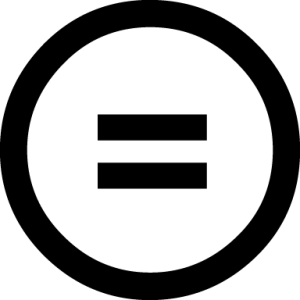
The work cannot be altered or “remixed.” Only identical copies of the work can be redistributed without additional permission from the creator.
The four components, or elements, of Creative Commons Licences are expressed using the icons above. These elements can be mixed and matched to create a total of six Creative Commons licences. [1] These licenses are often expressed in graphic form using CC buttons. [2]
The Four “Open” CC Licences
There are strengths and weaknesses to each Creative Commons licence you might apply to your OER. To help you make an informed decision, a short description of each licence that can be applied to OER is provided below.
CC BY (Attribution)
Strengths
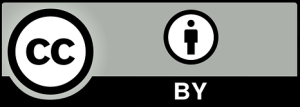
- The CC BY licence is the most popular and open licence provided by Creative Commons.
- By requiring attribution and nothing else, your CC BY work will be easy for others to adapt and build upon.
- CC BY is often the default choice for open publications. Youtube uses the CC BY 3.0 licence as their single “Creative Commons” option.
Weaknesses
- Because CC BY allows for easier sharing and adaptation, it also leaves the creator with less power over their work. When you use a CC BY licence, you cannot be certain that your work will remain open or that your work will be reused for projects you support.
CC BY SA (Attribution, Share-Alike)
Strengths
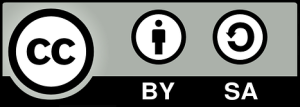
- The CC BY SA combines the openness of CC BY licence with the caveat that an item remains open under the same licence when adapted.
- The CC BY SA licence is the second most popular licence, and the licence used by Wikipedia for their articles.
Weaknesses
- Because the CC BY SA licence requires that adapted content be shared under the same licence, it can be difficult to adapt or to remix works licensed CC BY SA.[3]
CC BY NC (Attribution, Non-Commercial)
Strengths
- The CC BY NC licence gives the creator of a work complete control over any commercial reuse of their work.
- As a user, you can adapt and remix CC BY NC works so long as your new works provide attribution to the original author and do not turn a profit.
Weaknesses
- Some users may be concerned about what they are allowed to do with your CC BY NC work and where the commercial “line” is drawn. This topic is addressed in more depth in our OER in Print chapter (available March 2023).
CC BY NC SA (Attribution, Non-Commercial, Share-Alike)
Strengths
- CC BY NC SA is the most restrictive licence that can be used for OER and gives you the most control over its adaptations.
- Some creators apply this licence out of concern for their works being “scooped” by commercial publishers.
Weaknesses
- Because of its requirements, the CC BY NC SA licence is the hardest to adapt, remix, or build upon.
- If you hope to leverage the open community to promote and share your content, this licence may be a deterrent for potential partners as there is often confusion about what constitutes commercial use.
You can learn more about the individual CC licences on the Creative Commons website.
learning Check
Choosing a Licence for Your Work
Choosing a CC licence can be confusing at first, but the online Choose a License tool from Creative Commons can help. This tool generates a licence based on which rights you want to retain and which you would like to give to users. For example, if you want to share your work and allow others to adapt it, but you do not want others to be able to sell your work, you might consider using the CC-BY-NC licence.
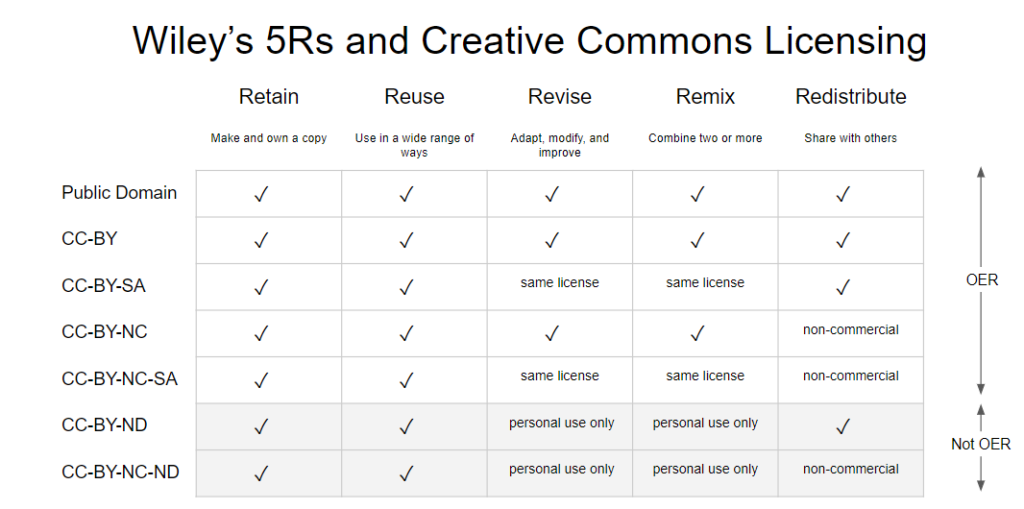
Before you choose a licence, keep in mind that an OER should be able to exercise all the 5 Rs of open content we discussed in the previous chapter. Not all of the CC licences meet this definition. Specifically, the CC-BY-ND and CC-BY-NC-ND licences do not allow revising or remixing content, two of the most significant freedoms of OER for many instructors.
Implementing a CC Licence
Creative Commons has an online Marking Guide that demonstrates how to add your chosen CC licence on different types of media. Making your licence obvious on whatever item you are sharing is an important part of the dissemination process for OER: otherwise, users won’t know what licence you’ve chosen! No matter the format, there are some standards you can follow:
- Make it clear
- Make it visible
- Provide links (to the licence and the work)
Attribution vs Citation when Using Other’s Work
Although there are different rules for each licence, every CC licence includes the Attribution component which requires that users provide proper attribution for an original work being shared or adapted. Attribution is a similar process to citing academic works in a paper, but there are some key differences. The following table outlines some of the ways in which citations and attribution are similar and different:
| Citation | Attribution |
|---|---|
| Purpose is academic (e.g. avoiding plagiarism) | Purpose is legal (e.g. following licensing regulations) |
| Does NOT typically include licensing information for the work | Typically includes licensing information for the work |
| Used to quote or paraphrase a limited portion of a work | Used to quote or paraphrase all or a portion of a work |
| Can paraphrase, but cannot typically change the work’s meaning | Can change the work under Fair Dealing or with advance permission (e.g., under most CC licences) |
| Many citation styles are available (e.g., APA, Chicago, and MLA) |
Attribution statement styles are still emerging, but there are some defined best practices |
| Cited resources are typically placed in a reference list | Attribution statements are typically found near the work used (e.g., below an image) |
One easy way to remember the requirements for attribution is the acronym T.A.S.L.:
- T = Title of work
- A = Author or creator. Link to a page with their contact information, when possible.
- S = Source. Where can you find the original work?
- L = Licence. This can be expressed using the abbreviated form (e.g., CC-BY 4.0) and then linked to the full statement.
If the final work is digital, each of these elements can be linked to the original source to provide additional information. If the final work is in print or is an audio/visual file, consider posting the attribution information in a separate online page or mentioning the attribution as part of the credits within the media itself.
Learning Check
Footnotes
- The No Derivatives and Share Alike components are incompatible and cannot be combined under one licence.
- All icons and buttons found within this and subsequent chapters are created by Creative Commons under a CC-BY 4.0 Licence.
- TheOGRepository. (2012, Sept 5). Creating OER and combining licenses [YouTube video]. Retrieved from https://www.youtube.com/watch?v=Hkz4q2yuQU8