
1 Epistemology and Learning Theory
Anthony William (Tony) Bates
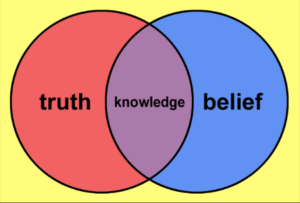
Figure 1.1. Image: © Freethought Kampala, 2017, via Libguides, University of Pittsburgh
Learning Outcomes
After reading this chapter you will be able to:
- explain why it is important for teachers to reflect on epistemology
- describe the relation between epistemological positions and how teachers teach
- explain the relationship between teacher’s beliefs about the “nature of knowledge” and how they teach
What is epistemology?
Our choice of teaching approaches and even the use of technology are absolutely dependent on beliefs and assumptions we have about the nature of knowledge, about the requirements of our subject discipline, and about how we think students learn. The way we teach in higher education will be driven primarily by our beliefs or rather, by the commonly agreed consensus within an academic discipline about what constitutes valid knowledge in the subject area.
The nature of knowledge centres on the question of how we know what we know. What makes us believe that something is ‘true’? Questions of this kind are epistemological in nature. Hofer and Pintrich (1997) state:
Epistemology is a branch of philosophy concerned with the nature and justification of knowledge.
The famous argument at the British Association in 1860 between Thomas Huxley and the Bishop of Oxford, Samuel Wilberforce, over the origin of species is a classic example of the clash between beliefs about the foundations of knowledge. Wilberforce argued that Man was created by God; Huxley argued that Man evolved through natural selection. Bishop Wilberforce believed he was right because ‘true’ knowledge was determined through faith and interpretation of holy scripture; Professor Huxley believed he was right because ‘true’ knowledge was derived through empirical science and rational skepticism.
An important part of higher education is aimed at developing students’ understanding, within a particular discipline, of the criteria and values that underpin academic study of that discipline, and these include questions of what constitutes valid knowledge in that subject area. For many experts in a particular field, these assumptions are often so strong and embedded that the experts may not even be openly conscious of them unless challenged. But for novices, such as students, it often takes a great deal of time to understand fully the underlying value systems that drive choice of content and methods of teaching.
Our epistemological position therefore has direct practical consequences for how we teach.
Epistemology and theories of learning
Most teachers in the school/k-12 sector will be familiar with the main theories of learning, but because instructors in post-secondary education are hired primarily for their subject experience, or research or vocational skills, it is essential to introduce and discuss, if only briefly, these main theories. In practice, even without formal training or knowledge of different theories of learning, all teachers and instructors will approach teaching within one of these main theoretical approaches, whether or not they are aware of the educational jargon surrounding these approaches. Also, as new technologies and new modes of teaching such as online learning, technology-based teaching, and informal digital networks of learners have evolved, new theories of learning are beginning to emerge.
With a knowledge of alternative theoretical approaches, teachers and instructors are in a better position to make choices about how to approach their teaching in ways that will best fit the perceived needs of their students, within the very many different learning contexts that teachers and instructors face. This is particularly important when addressing many of the requirements of learners in a digital age that are set out in Chapter 1 of Bates’ orginal work. Furthermore, the choice of or preference for a particular epistemology or a particular theoretical approach to teaching will have major implications for the way that technology is used to support teaching.
In fact, there is a huge amount of literature on theories of learning, and I am aware that the treatment in this book is cursory, to say the least. Those who would prefer a more detailed introduction to theories of learning should explore Schunk (2016) or Harasim (2017). The aim of my book though is not to be comprehensive in terms of in-depth coverage of all learning theories, but to provide a basis on which to suggest and evaluate different ways of teaching to meet the diverse needs of learners in a digital age.
The important point here is that every theory of teaching or learning is underpinned by a particular assumption or understanding of what constitutes ‘true’ knowledge: in other words by a particular epistemological position. In the following sections we will examine four of the most common theories of learning, and the underlying epistemologies that drive them.
Learning Check
References
Harasim, L. (2017). Learning Theory and Online Technologies 2nd edition. New York/London: Taylor and Francis. https://www.routledge.com/Learning-Theory-and-Online-Technologies-2nd-Edition/Harasim/p/book/9781138860001
Hofer, B. and Pintrich, P. (1997). The development of epistemological theories: beliefs about knowledge and knowing and their relation to learning. Review of Educational Research, 67(1), pp. 88-140. https://journals.sagepub.com/doi/10.3102/00346543067001088
Schunk, D. (2016). Learning Theories: An Educational Perspective: 7th edition. London: Pearson Education.