
12 Curricular Approaches to Technology Education
Tracy Boger
Learning Outcomes
After reading this chapter you should be able to:
- Describe multiple curricular approaches for defining technology learning outcomes
- Describe differences in the purpose and implementation of learning outcomes for standalone technology courses and core subject areas
In Alberta’s educational system, there are multiple curricular approaches for defining technology learning outcomes. These various strategies ensure that students gain technological competency as a dedicated skill set and can use technology to support learning across all subject areas. Each of Alberta’s three main curricular approaches to teaching and learning with technology are summarized below.
Integrating technology into a core subject area: In this case, technology is integrated for the purpose of meeting core subject area learning outcomes. For example, genetics concepts can be learned with an online simulation where students breed virtual mice to observe the inheritance of traits through dominant and recessive genes. The expected technology outcomes are detailed in a curricular document, such as the Information Communication Technology (ICT) Program of Studies (2000), which is distinct from the core subject area curriculum. The ICT Program of Studies is explored in detail in Chapter 11.
Standalone Technology Courses: A standalone technology course is a course that focuses exclusively on technology-related skills, concepts, or tools, rather than integrating technology into another subject area. In standalone technology courses, technology outcomes are embedded directly into the subject area curriculum, such as the Career and Technology Studies (CTS) Program of Study (2009). In this case, technology learning outcomes focus on learning how to use technology for a specific purpose. For example, a learning outcome may focus on students learning how to write and debug code or create a digital presentation.
Technology outcomes embedded in core subject curriculum: Technology outcomes can also be embedded in core subject area curriculum alongside subject-area outcomes. In this case, the use of technology is a key component of the core subject area learning outcome. An example of this would be elementary school children using block coding in a science class to address the computational thinking outcomes that are outlined in the science curriculum.
Standalone Technology Courses
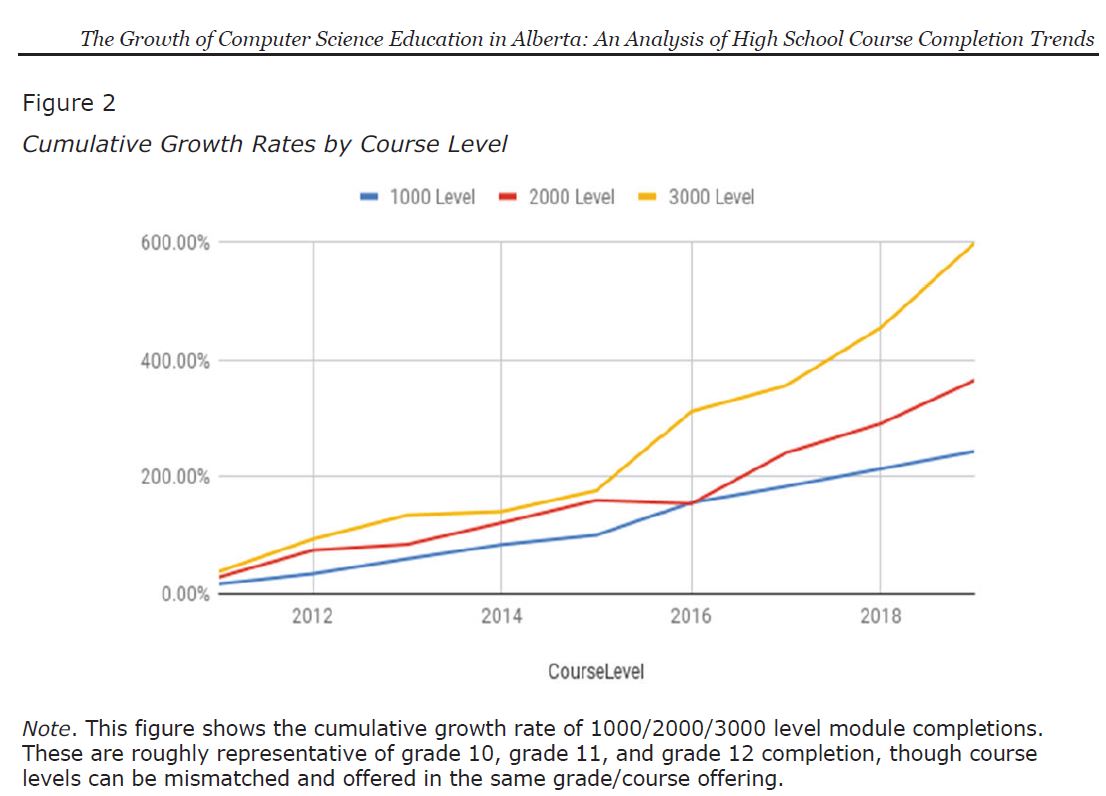
When people think of stand-alone technology courses, they often think of Computer Science Education (CSE). Globally, UNESCO (2023) estimates that computer science courses in primary and secondary schools are compulsory for 43% of students in high income countries, 62% in upper-middle income countries, 5% in lower-middle income countries, and 0% of students in low-income countries (p. 16). Even though Computing Science Education has a strong history in North America, its prominence and widespread implementation are concentrated in the jurisdictions that have made it a priority (McCashin et al., 2023, p. 299). This variance in student access to CSE suggests that expectations of teachers’ technical knowledge and skills vary by region and teaching context.
Despite this disparity, CSE is on the rise. In Alberta, CSE is increasing rapidly in popularity; however, the growth rate is significantly lower in rural areas (McCashin et al., 2023, p. 312). Nonetheless, the inclusion of CSE within the science curriculum indicates that there will be greater expectations for elementary school generalists and K-6 science teachers to teach computational thinking and other aspects of CSE, such as coding.
Stand-alone technology courses are not limited to CSE education, and can include visual communications, business skills, industrial arts, and vocational training. The diversity of standalone technology courses can be attributed to the contextualization of these courses, which are often a response to educational goals and cultural contexts (UNESCO, 2023, p. 20). For example, in Alberta, the Career and Technology Studies Curriculum emphasizes “cooperation with teachers, business and industry representatives, and post-secondary educators to address the emerging trends, challenges and opportunities of today and tomorrow” (Alberta Education, 2009, p. 1).
CTS Program of Studies
In Alberta, the Career and Technology (CTS) Program of Studies is divided into 5 clusters that contain courses designed to prepare high school students for the workplace or further learning opportunities (Alberta Education, 2009, p. 5). Dedicated technology courses can be found within two of these clusters. The Business, Administration, Finance & Information Technology (BIT) cluster contains courses related to computing science, networking, and information processing courses, while the Media Design Communications cluster contains courses related to graphic design, web design, animation, AV production, photography, desktop publishing, and other related topics.
CTS courses are offered at the secondary school level as single credit modules that can be combined to create a multi-credit course. Although this can lead to inconsistent offerings of technology courses across the province, this approach provides schools with flexibility to design course offerings that meet the needs of the communities that they serve. This degree of flexibility contrasts with core curriculum subjects, which have a standardized program of study.
Table 12.1 One Credit Modules From the CTS Program of Study
| Business, Administration, Finance & Information Technology (BIT) Courses | ||
| Introductory Level | Intermediate Level | Advanced Level |
| Computing Science (CSE) | ||
| CSE1010: Computer Science 1
CSE1110: Structured Programming 1 CSE1120: Structured Programming 2 CSE1210: Client-side Scripting 1 CSE1220: Client-side Scripting 2 CSE1240: Robotics Programming 1 CSE1910: CSE Project A |
CSE2010: Computer Science 2
CSE2110: Procedural Programming 1 CSE2120: Data Structures 1 CSE2130: Files and File Structures 1 CSE2140: Second Language Programming 1 CSE2210: Client-side Scripting 3 CSE2240: Robotics Programming 2 CSE2910: CSE Project B CSE2920: CSE Project C CSE2950: CSE Intermediate Practicum |
CSE3010: Computer Science 3
CSE3020: Computer Science 4 CSE3110: Iterative Algorithm 1 CSE3120: Object-oriented Programming 1 CSE3130: Object-oriented Programming 2 CSE3140: Second Language Programming 2 CSE3210: Server-side Scripting 1 CSE3240: Robotics Programming 3 CSE3310: Recursive Algorithms 1 CSE3320: Dynamic Data Structures 1 CSE3330: Dynamic Data Structures 2 CSE3340: Dynamic Data Structures 3 CSE3910: CSE Project D CSE3920: CSE Project E CSE3950: CSE Advanced Practicum |
| Networking (NET) | ||
| NET1010: Digital Technology 1
NET1910: NET Project A |
NET2010: Digital Technology 2
NET2020: Workstation Technology & Operations NET2030: Network Structures NET2040: Network Media & Devices NET2050: Open System Interconnection NET2060: Network Protocols NET2070: Local Area Networks NET2080: Laptops & Peripherals NET2110: Telecommunications 1 NET2910: NET Project B NET2920: NET Project C NET2950: NET Intermediate Practicum |
NET3010: Digital Technology 3
NET3020: Digital Applications NET3030: Microprocessors NET3040: Microprocessor Interface NET3050: Network Operating Systems NET3060: Wide Area Networks NET3070: Routing Fundamentals NET3080: Internet Processes NET3090: Network Management NET3100: Network Media & Devices, Security NET3110: Telecommunications 2 NET3910: NET Project D NET3920: NET Project E NET3950: NET Advanced Practicum |
| Information Processing (INF) | ||
| INF1030: Word Processing 1
INF1050: Database 1 INF1060: Spreadsheet 1 INF1070: Digital Presentation INF1910: INF Project A |
INF2020: Keyboarding
INF2050: Word Processing 2 INF2070: Database 2 INF2080: Spreadsheet 2 INF2090: Correspondence INF2100: Reports INF2910: INF Project B INF2920: INF Project C INF2950: INF Intermediate Practicum |
INF3010: Hardware & Software Analysis
INF3060: Word Processing 3 INF3080: Project Management Tools INF3095: Productivity Software Integration INF3910: INF Project D INF3920: INF Project E INF3950: Advanced Practicum |
| Media, Design & Communication Arts (MDC) Courses | ||
| Introductory Level | Intermediate Level | Advanced Level |
| Communication Technology (COM) | ||
| COM1005: Visual Composition
COM1015: Media COM1025: Typography COM1035: Graphics Tools COM1055: Web Design 1 COM1105: Audio/Video COM1145: Animation 1 COM1165: Printing 1 COM1205: Photography – Introduction COM1215: Photography – Exposure COM1255: E-Learning & Learning Management Systems COM1275: Photography – Digital Processing 1 COM1910: COM Project A |
COM2015: Media Impact
COM2025: Electronic Layout & Publishing 1 COM2035: Raster Graphics 1 COM2045: Vector Graphics 1 COM2055: Web Design 2 COM2105: AV Preproduction 1 COM2115: AV Production 1 COM2125: AV Postproduction 1 COM2145: Animation 2 COM2155: Design – Brand Identity COM2165: Printing 2 COM2175: Interactive Presentation COM2205: Photography – Composition COM2215: Photography – Communication COM2225: Photography – Darkroom Techniques COM2235: Photography – Lenses COM2285: COM Tech Client Services 1 COM2910: COM Project B COM2920: COM Project C COM2950: COM Intermediate Practicum |
COM3005: Creative Writing
COM3025: Electronic Layout & Publishing 2 COM3035: Raster Graphics 2 COM3045: Vector Graphics 2 COM3055: Rich Media – Basics COM3065: Rich Media – Programming COM3075: Cascading Style Sheets COM3085: Content Management Systems COM3105: AV Preproduction 2 COM3115: AV Production 2 COM3125: AV Postproduction 2 COM3135: Audio Techniques COM3145: Animation 3 COM3155: Design – Advertising Campaigns COM3165: AV Broadcasting COM3205: Photography – Lighting COM3215: Photography – Photojournalism COM3225: Photography – Colour COM3235: Photography – B/W Digital Techniques COM3245: Photography – Outdoor COM3275: Photography – Digital Processing 2 COM3285: COM Tech Client Services 2 COM3910: COM Project D COM3920: COM Project E COM3950: COM Advanced Practicum |
________________________________________________________________________
Alberta Education. (2009). Career and technology studies curriculum. https://education.alberta.ca/career-and-technology-studies/programs-of-study/
Technology Outcomes Embedded in Core Curriculum
Alberta’s K-6 Science Program of Study (2023) is an example of a core subject area that has technology outcomes embedded directly within it. While the science curriculum includes Computer Science Education outcomes, technology integration in science extends beyond CSE related topics. For example, science lessons could involve the use of virtual labs, simulations, or digital sensors such as digital thermometers to collect real-time data. Additionally, students could be asked to demonstrate knowledge of science concepts through the creation of a digital presentation, infographic, or video. Consequently, elementary science teachers are expected to be familiar with both the ICT Program of Studies (2000) and the K-6 Science Program of Study (2023) to effectively meet all mandated technology and science learning outcomes.
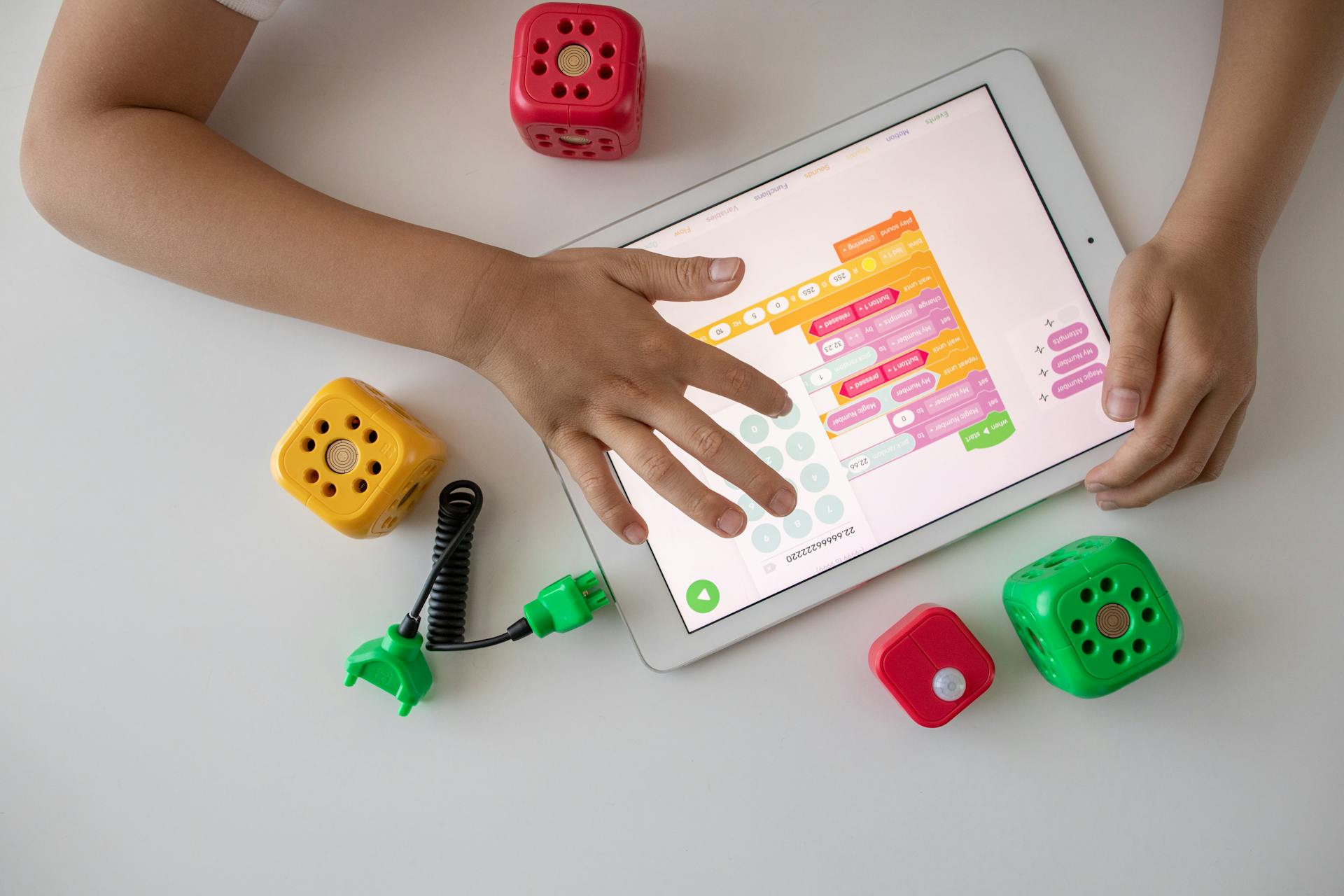
The newly implemented K-6 Science Program of Study (2023) features Computer Science Education as one of its central organizing concepts. The science program of study explicitly states that “students will employ design processes in the creation of instructions, algorithms, and computational artifacts. They will also engage in coding activities and consider the impacts of computers, coding, and technology” (Alberta Education, 2023, p. 1). Consequently, all K-6 science teachers are required to teach CSE outcomes, such as computational thinking. Computational thinking is introduced at the kindergarten level through foundational skills such as understanding and recognizing instructions. By grade five, students are expected to learn more advanced CSE concepts such as algorithms and coding. For example, they translate algorithms to code and design algorithms with loops using a visual block-based language such as Scratch, Tynker, or Blockly. In grade 6, students learn about more complex structures that are used in coding, such as conditional coding statements, including if-then-else statements and advanced loop constructs.
Grade 5 CSE LEARNING Outcomes, from the k-6 Science Curriculum
ORGANIZING IDEA COMPUTER SCIENCE: Problem solving and scientific inquiry are developed through the knowledgeable application of creativity, design, and computational thinking.
LEARNIGN OUTCOME: Students apply design processes when creating artifacts that can be used by a human or machine to address a need.
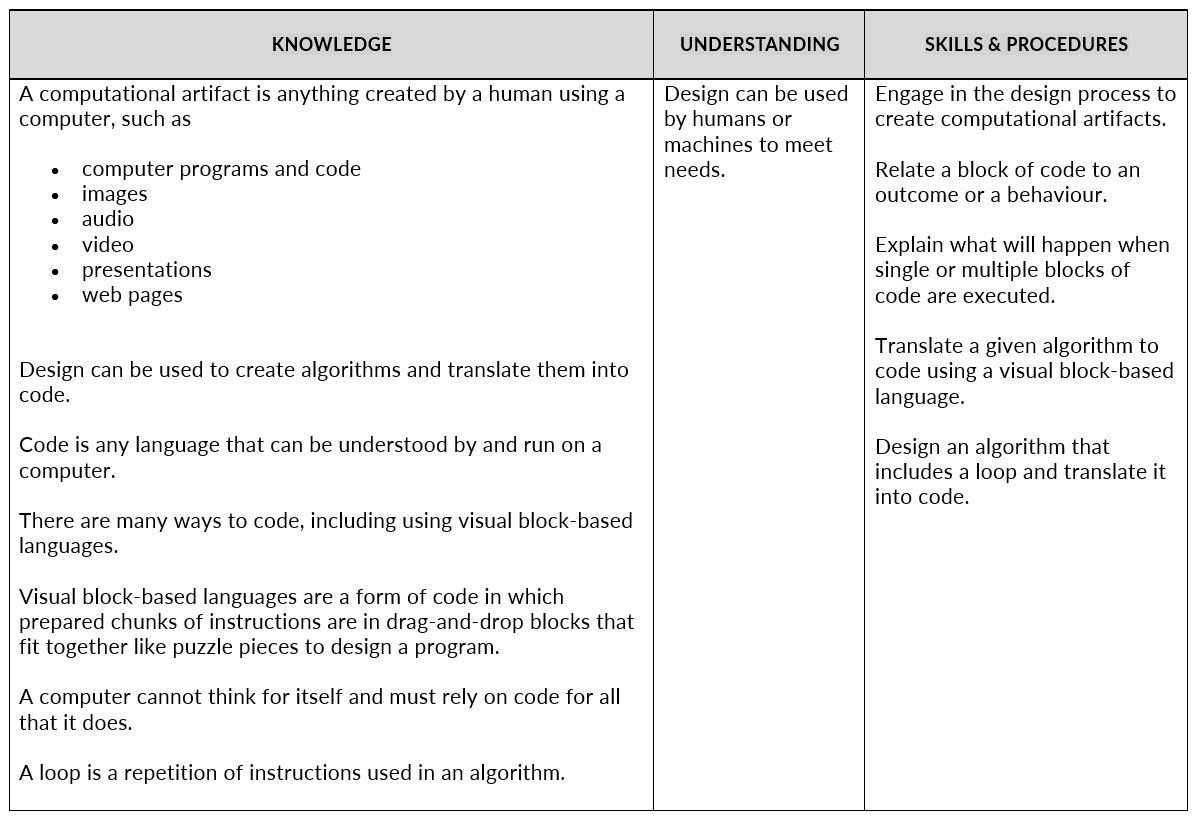
Figure 12.3. Source: Alberta Education. (2023). Science (K–6) curriculum. https://curriculum.learnalberta.ca/curriculum/en/c/scik?s=SCI
In Alberta, technology outcomes from the ICT Program of Studies have also been included in subject specific curricular documents in the form of an appendix. For example, the appendix of the Mathematics K-9 Program of Study (Alberta Education, 2016) contained a list of the ICT Program of Study outcomes that related to math. This was helpful because math teachers could easily identify technology outcomes that were directly relevant to mathematics without having to read the entire ICT POS. It should be noted, however, that the newest K-6 math curriculum documents that were released in 2023 do not reference the ICT POS technology learning outcomes.
Technology Resources to Support Curriculum
The Alberta Education website provides access to recommended online learning resources that can be used to support curricular goals. For example, Alberta Education has acquired a license for select ExploreLearning Gizmos for Grades K–6, which teachers can access through New LearnAlberta.
ExploreLearning Gizmos are interactive online simulations that enable students to explore math and science concepts through inquiry based learning and experimentation. For teachers who are interested in the entire ExploreLearning Gizmo resource depository, they can be accessed directly through the ExploreLearning website. When accessing gizmos directly from the ExploreLearning website, these online resources can be sorted by grade and topic, academic standards (organized by Canadian provinces), or by textbook, which is very helpful for making curricular connections.
Learning Check
References
Alberta Education. (2000). Information and communication technology program of studies. https://education.alberta.ca/information-communication-technology/program-of-studies/
Alberta Education. (2009). Career and technology studies curriculum. https://education.alberta.ca/career-and-technology-studies/programs-of-study/
Alberta Education. (2016). Mathematics kindergarten to grade nine curriculum. https://education.alberta.ca/media/3115252/2016_k_to_9_math_pos.pdf
Alberta Education. (2017). Career and technology foundations. https://curriculum.learnalberta.ca/curriculum/en/pos/CTF
Alberta Education. (2022). Alberta programs of study. https://www.alberta.ca/programs-of-study.aspx
Alberta Education. (2023). Science (K–6) curriculum. https://curriculum.learnalberta.ca/curriculum/en/c/scik?s=SCI
McCashin, Q., Adams, C., Carbonaro, M., & Pedersen, L. (2023). The growth of computer science education in Alberta: An analysis of high school course completion trends. Alberta Journal of Educational Research, 69(3), 296–321. https://doi.org/10.11575/ajer.v69i3.75299
UNESCO. (2023). Global education monitoring report summary 2023: Technology in education: A tool on whose terms? Paris, UNESCO. https://doi.org/10.54676/HABJ1624