38 Integrative Learning Matters: Fostering Career Readiness and Digital Resistance through eCareer Portfolio
Yi Fei Wang and Sarah Imran
Mount Royal University, Canada
ABSTRACT
The post-pandemic rise of artificial intelligence (AI) has profoundly altered the landscape of higher education, reshaping how knowledge, career readiness, and digital resilience are defined and cultivated. This chapter explores Mount Royal University’s eCareer Portfolio initiative—a strategic, student-centered intervention designed to foster integrative learning, digital resilience, and career preparedness. Rooted in constructivist and integrative learning frameworks, the eCareer Portfolio bridges academic, co-curricular, and work-integrated experiences through reflective synthesis, digital curation, and purposeful identity-building. Delivered both as an embedded and standalone course, it empowers students to map their learning trajectories, articulate competencies, and adapt to technological and labor market disruptions. The initiative also advances institutional commitments to accessibility, equity, and inclusion by offering flexible, neurodiverse-friendly learning environments. By embedding practices such as informational interviews and micro-mentorships, the portfolio enhances students’ career literacy and self-awareness. The chapter provides a comprehensive overview of the curriculum, instructional design, implementation strategies, and assessment approaches that make the eCareer Portfolio a scalable and replicable model for fostering student agency and future-ready learning in an AI-enhanced world.
Keywords:Artificial Intelligence (AI), digital resilience, career readiness, ePortfolio, integrative learning, work-integrated learning (WIL), reflection, higher education, experiential learning, accessibility, student agency.
INTRODUCTION
The influence of artificial intelligence (AI) is transforming higher education, prompting a critical re-examination of what constitutes meaningful knowledge and digital resilience for university students in the post-Covid era (Foster, 2023; Eltahir & Babiker, 2024). This raises a pivotal question: how should university education prepare students to navigate and thrive in an increasingly digital world? In this new era, growing emphasis is placed on cultivating digital resilience alongside experiential learning—equipping students with the adaptability, critical thinking, and technological competencies essential for sustained career readiness.
In 2023, Mount Royal University launched the eCareer Portfolio initiative in response to the rapid transformation of the academic landscape driven by advances in artificial intelligence (AI). These AI developments were compounded by the long-term effects of the Covid-19 pandemic, which had already accelerated the shift toward digital learning, virtual collaboration, and remote career development (Aristovnik et al., 2023; Pantelimon, 2021; Abdelouahed et al., 2025). The pandemic exposed vulnerabilities in traditional career preparation models and highlighted the need for more adaptable, student-centered approaches. In the post-pandemic era, as students increasingly relied on digital platforms and AI tools for learning, communication, and problem-solving, the nature of knowledge and career readiness itself began to shift. In this context, digital resilience emerged as a critical competency – empowering students to navigate uncertainty, respond to technological disruption, and continuously adapt their learning strategies. The eCareer Portfolio initiative evolved not only as a response to technological change but also as a strategic effort to help students build the confidence, flexibility, and digital identity needed to thrive in a post-pandemic, AI-driven world. It reflects a broader transformation in higher education, away from traditional models of knowledge distribution and acquisition and discipline-specific instruction and toward more reflective and integrative learning approaches, where students synthesize knowledge across courses and experiences to build deeper, more meaningful understanding (Bhardwaj, Zhang, Tan, & Pandey, 2025).
THE ECAREER PORTFOLIO: A PEDAGOGICAL APPROACH FOR INTEGRATIVE LEARNING
Our investigation of the use of eCareer Portfolio is grounded in this broader educational context. We examine an approach that reflects MRU’s strong institutional commitment to experiential learning and the cultivation of digital resilience in a post-pandemic world, an emphasis embedded in both the 2023-2030 academic plan “Connect. Inspire. Transform.” and the university strategic plan “Opening Minds and Changing Lives.” This institutional vision is brought to life through concrete initiatives such as eCareer Portfolio that translate strategic priorities into meaningful student experiences. Our eCareer Portfolio initiative serves as a pedagogical approach for integrative learning by bridging students’ academic, co-curricular, and professional experiences through structured reflection and purposeful synthesis. Informed by best practices in higher education – particularly those advanced by the Association of American Colleges & Universities through The LEAP Vision for Learning (2011)—the eCareer Portfolio program at MRU has emerged as a central mechanism for advancing MRU’s goal of delivering transformative education and becoming a leader in experiential learning.
The program supports this mission by offering students structured opportunities to plan, track, organize, and articulate their academic and experiential learning experiences as a means to develop and market their professional identities. It encourages students to connect knowledge across various contexts – linking course work, personal interests, and real-world experiences – to form a coherent narrative of their development, while also helping them identify and demonstrate transferable career readiness competencies essential for success in diverse career pathways. Through reflective practice, students engage in self-assessment, set goals, and continually revise their career paths.
A unique feature of the eCareer Portfolio initiative is its use of a digital platform not only as a repository of achievements, but as a space for cultivating dynamic competencies that foster students’ digital resilience. In the post-pandemic context where virtual engagement, remote work, and AI-driven tools have become integral to professional life, students must continuously adapt to evolving digital environments. The eCareer Portfolio empowers them to do so through thoughtful selection and use of AI tools to analyze and enhance content, digital platforms to curate and showcase their professional identity, and media to communicate their skills and experiences effectively. Through maintaining and updating their portfolios across different platforms and formats, students learn to manage their digital identity, respond to technological change, and sustain their professional growth in uncertain and fast-changing conditions. This adaptive capacity, embedded in the design and practice of the portfolio, positions digital resilience as a core outcome of the learning process.
This chapter offers a comprehensive examination of the eCareer Portfolio’s curriculum development and implementation as part of MRU’s instructional approach to teaching reflective, integrative skills for career readiness. With a particular focus on curricular structure, instructional design, and the program’s contribution to career readiness, the chapter positions the eCareer Portfolio as more than a digital repository of student work. Rather, it is presented as a dynamic, scaffolded learning process that cultivates critical reflection and integrative inquiry. One of the distinctive features of the eCareer Portfolio program is its work-integrated learning for students’ professional development. By embedding real-world experiences into the academic journey, the MRU model offers a compelling case study for institutions seeking to merge academic learning with applied professional preparation, advancing both student agency and institutional goals in the process.
THEORETICAL FRAMEWORK
The eCareer Portfolio program is grounded in an integrative learning framework that encourages students to make meaningful connections between academic coursework, co-curricular activities, and real-world experiences. By reflecting on and articulating these connections, students develop a cohesive understanding of their personal and professional growth. Central to the program is a commitment to accessibility. The eCareer Portfolio is designed with flexible, student-centered approaches that recognize and accommodate a range of cognitive styles and communication preferences. Its accessible design ensures that all students—regardless of neurological differences—can effectively engage with the program, reflect on their experiences, and demonstrate their competencies in ways that are authentic and empowering.
Integrative Learning Framework
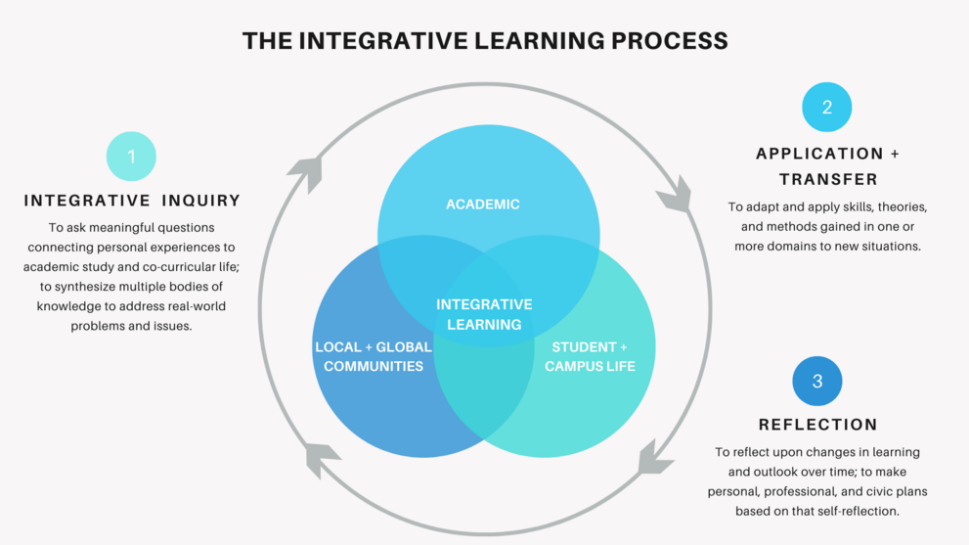
In an era where artificial intelligence (AI) is increasingly embedded in the academic experience, the framework of integrative learning (Figure 1) demands renewed attention (Mandal, 2024). Traditionally defined as both an intentionally designed sequence of courses and a cognitive process through which students actively connect topics, disciplines, and experiences (Passarelli & Kolb, 2012), integrative learning must now adapt to the realities of AI-enhanced education by shifting its focus from the accumulation of static knowledge to the development of adaptive, reflective, and interdisciplinary thinking skills (Glory, Nalina, Santhosh, & Prasad, 2023). While AI tools can provide rapid access to information and assist with surface-level learning tasks, they do not inherently foster the deeper cognitive processes required for integration.
This evolution calls for learning experiences like the eCareer Portfolio, which emphasize synthesis across disciplines, reflective self-assessment, and the ability to navigate complexity and uncertainty—skills that remain uniquely human and cannot be replicated by AI. Constructivist theory (Bruner, 1996) reminds us that learning is not merely about delivering content or sequencing courses, but about enabling students to make meaning across disciplinary boundaries. The eCareer Portfolio embodies this principle by providing a structured yet flexible framework that prompts students to engage in reflection, synthesis, and personal narrative construction. In a digital learning environment increasingly influenced by AI, it is essential to create learning structures that promote active engagement and critical thinking. The eCareer Portfolio supports this by helping students move beyond passive consumption of AI-generated content, offering scaffolded opportunities to make meaningful connections, evaluate diverse perspectives, and integrate academic, co-curricular, and experiential learning. Through curated reflections, goal setting, and integration of academic and curricula, co-curricular experiences, the eCareer Portfolio supports integrative learning by enabling students to make meaningful connections, evaluate their growth, and develop the critical thinking and adaptability essential for thriving in an AI-enhanced world.
Such integrative learning does not happen by chance; it requires intentional instructional design and a developmental structure that supports progression over time. Brown and Leonard (2012) describe integrative learning as a continuum—from basic application to advanced synthesis—requiring both intellectual effort and developmental readiness. Within this continuum, the eCareer Portfolio serves as a tool to resist the temptation to outsource thinking to technology. Instead, it encourages students to engage in personally relevant inquiry, navigate cognitive dissonance, and arrive at reflective resolutions—deepening their learning and helping them develop as adaptable, self-aware professionals in a complex, AI-enhanced world.
Figure 1
The Integrative Learning Process (SUNY Genesco, 2025, n.p.)
Accessible Learning Environment
The eCareer Portfolio is intentionally designed to build an accessible learning environment that enables all students—regardless of their abilities, learning preferences, or backgrounds—to fully engage with and benefit from the program. It reflects Mount Royal University’s (MRU) ongoing commitment to equity, diversity, inclusion, and accessibility (EDIA) by integrating key strategies that promote flexibility, predictability, clarity, and sensory accessibility. These accessible approaches are designed to ensure that all students can thrive in their educational journey.
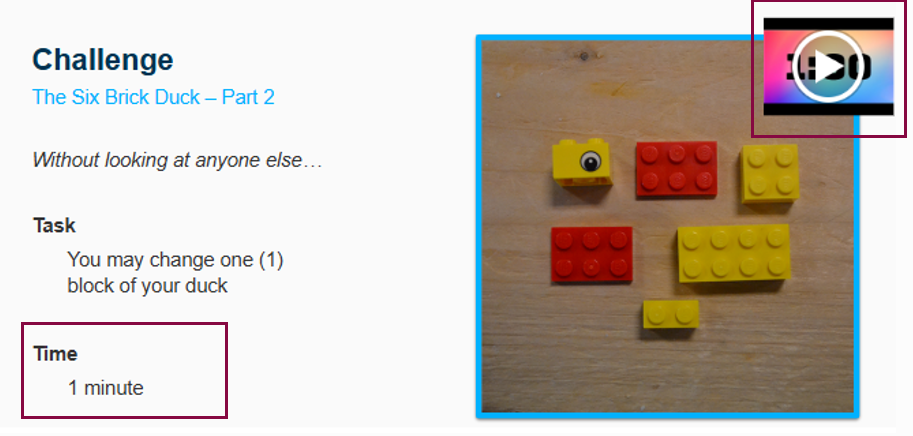
Building on this commitment, the program integrates practical strategies that prioritize flexibility and autonomy in the learning process. To support this, the eCareer Portfolio incorporates several flexible design elements that allow students to engage with the program on their own pace. For example, self-paced modules remove strict time constraints (Figure 2), allowing students to complete reflection activities and portfolio-building tasks at their own pace, giving them the time needed for thoughtful and critical reflection. Instead of rigid submission dates, the program features rolling deadlines for key milestones, supported by career development coordinators who provide guidance as students progress along individualized learning timelines. Additionally, a range of asynchronous support resources—including online tutorials, step-by-step guides, and written examples—are available at any time, ensuring students can access help whenever they need it.
Figure 2
Self-Paced Module: Time Constraint Removed
In addition to flexibility and on-demand support, the program also emphasizes consistency and clarity to further enhance the student learning experience. To create a predictable and supportive learning environment, the eCareer Portfolio incorporates structured design elements that help students navigate the course with confidence. Each week follows a consistent and repeatable task structure, enabling students to anticipate their responsibilities and plan their engagement accordingly. At the beginning of the semester, students receive a comprehensive roadmap outlining key portfolio milestones, deadlines, and checkpoints, offering a clear overview of what to expect throughout the term. All modules follow standardized layouts and navigation, reducing cognitive load and making it easier for students to access and complete required activities. Additionally, any changes to timelines or expectations are communicated at least one week in advance through multiple channels, ensuring students have ample time to adjust and stay on track.
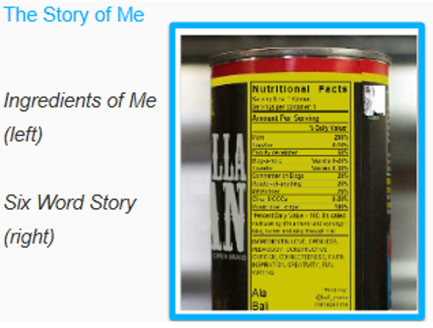
To promote clarity and reduce cognitive barriers, the eCareer Portfolio is designed with a strong emphasis on plain and consistent communication. All portfolio tasks are written in straightforward, jargon-free language with clearly stated objectives, step-by-step instructions, and defined outcomes to minimize confusion and support student understanding (Table 1). Each task includes detailed written guidelines, rubrics, and checklists that outline specific requirements, enabling students to clearly grasp expectations and independently assess their progress. Additionally, key terms are defined and used consistently across all modules to eliminate ambiguity and ensure a cohesive learning experience.
Table 1
Task: Telling My Story: Who I Am and What Shaped Me (created by Authors)
|
Activity |
|
|
Instruction |
Design your own “ingredients label” to represent the core elements that make up who you are. Consider your strengths, values, skills, interests, cultural background, academic achievements, and co-curricular experiences. Think of each ingredient as a meaningful component that contributes to your identity and growth. Use a format similar to a nutritional label to visually present your unique composition. |
|
Learning Outcomes |
By the end of this task, you will: Create a personal story through visual (Ingredients of Me). Demonstrate self-awareness in articulating how diverse aspects of your life contribute to your personal and professional growth. Develop storytelling skills that support career readiness and enhance your ability to present yourselves effectively in professional and academic contexts. |
In addition to promoting linguistic clarity, the program also attends to the sensory dimensions of learning to create a more accessible environment. It integrates thoughtful design choices that minimize overstimulation and promote focus. The digital interface features a minimalist visual design with clean layouts, limited color palettes, and consistent formatting, reducing visual clutter and helping students concentrate on content. For in-person components, quiet workspaces with soft lighting and minimal background noise are provided as alternatives to more stimulating settings (Career Studio), offering a calm and comfortable space for reflection and engagement. Additionally, all video content is designed with sensory-friendly features, including calm visuals, clear narration, captions, and flexible playback options, ensuring students can access information in ways that suit their sensory needs.
To honor diverse ways of learning and self-expression, the eCareer Portfolio offers multiple means of engagement, representation, and expression. Students have the option to complete reflection activities through written narratives or visual artifacts, enabling them to choose formats that best align with their strengths, preferences, and communication styles. Core concepts and instructions are presented in varied formats—such as text, infographics, and hypertext—to accommodate different learning styles and enhance accessibility. Additionally, scaffolded reflection prompts and portfolio templates are provided with varying levels of complexity, including optional guiding questions and structured outlines, to support students at different stages of readiness and build confidence as they develop their reflective practice.
These accessible enhancements underscore MRU’s commitment to creating an accessible, reflective, and skills-based framework that prepares all students for meaningful engagement in their academic, professional, and civic lives.
Digital Resilience
One of the key features of the eCareer Portfolio is digital resilience. The eCareer portfolio plays a crucial role in building digital resistance by providing students with hands-on experience in managing their online presence, navigating digital tools, and responding to challenges in a tech-driven world. As students curate and organize their work, they develop critical digital skills, including evaluating content credibility, protecting personal data, and adapting to new platforms. By regularly updating their portfolios, they learn to problem-solve technical issues, refine their digital identity, and present themselves professionally in online spaces. This process not only boosts their confidence in using technology but also prepares them to handle cybersecurity risks, misinformation, and evolving workplace demands. Ultimately, the eCareer Portfolio fosters a growth mindset, ensuring students remain adaptable and resilient in an ever-changing digital landscape.
ECAREER PORTFOLIO PATHWAYS
At Mount Royal University (MRU), the eCareer Portfolio is delivered through two distinct pathways: embedded delivery within credit courses in academic majors such as Psychology, Broadcasting, and Journalism; and standalone course offerings supported by CEWIL-funded initiatives, accessible to students across all majors. This dual approach ensures flexibility and broad access while also grounding the portfolio in disciplinary contexts. The dual-pathway design of the eCareer Portfolio at Mount Royal University offers significant benefits by balancing flexibility, accessibility, and disciplinary relevance. Through embedded delivery in credit-bearing courses, students engage with the portfolio in ways that are directly tied to their academic and professional identities. Meanwhile, standalone offerings ensure that all students—regardless of major—can access reflective and career-oriented learning opportunities. This inclusive structure promotes equity and broad participation, while also allowing students to scaffold their engagement with the portfolio over time. By integratiparticipation whileng both curricular and co-curricular experiences, the design of the pathways aligns with MRU’s institutional goals for experiential and integrative learning and prepares students to document their development, reflect critically, and articulate their readiness for future career opportunities.
ECAREER PORTFOLIO CURRICULUM
The eCareer Portfolio curriculum is organized into a series of modules that guide students through their personal and professional development, integrating work-integrated learning experiences to enhance students’ career exploration, skill application, and reflective practice in real-world contexts. To support this developmental process, the curriculum is structured around a set of sequenced modules that scaffold learning and reflection at key stages of students’ academic and career journeys. These modules include Journey Map, Emerging Professionals, Evidence of Learning, eCareer Portfolio Blueprint, Platform, Maker, and Showcase—each designed with a specific focus (Table 2).
Table 2
eCareer Portfolio Curriculum (created by Authors)
|
Module |
Focus and Description |
|
Journey Map |
Helps students explore the eCareer Portfolio as a process aligned with their academic and professional journey. Students create a personalized map to navigate expectations throughout their undergraduate experience. |
|
Emerging Professionals |
Introduces students to industry-informed career readiness competencies and helps them use these to plan for successful entry into the workforce. |
|
Evidence of Learning |
Guides students in identifying and articulating curricular and co-curricular activities for their experiential transcript in MyCareerHub. Students upload and organize evidence in the eCareer Portfolio inventory. |
|
eCareer Portfolio Blueprint |
Builds the foundation of the eCareer Portfolio by designing a personalized blueprint. Through guided activities, students review their experiential transcript, identify meaningful learning experiences, and strategically plan how to organize and present their evidence of growth. They will also create visual or structural “drawings” to map out their portfolio’s layout, ensuring it is both cohesive and easy to navigate. This blueprint will serve as a roadmap for developing a reflective, well-organized portfolio that effectively communicates their skills, achievements, and aspirations. |
|
eCareer Portfolio Platform |
Supports students in selecting the most appropriate ePortfolio technology. Includes reviewing sample portfolios, comparing platforms, and creating an account on a chosen tool. |
|
eCareer Portfolio Maker |
Focuses on the creative development of the eCareer Portfolio using multimedia tools such as audio, visuals, infographics, and graphic design in a maker studio environment. |
|
Showcase |
Prepares students to present their eCareer Portfolios to peers and industry/community partners. Includes reviewing career goals and refining portfolios based on industry feedback. |
eCareer Portfolio Module: Journey Map
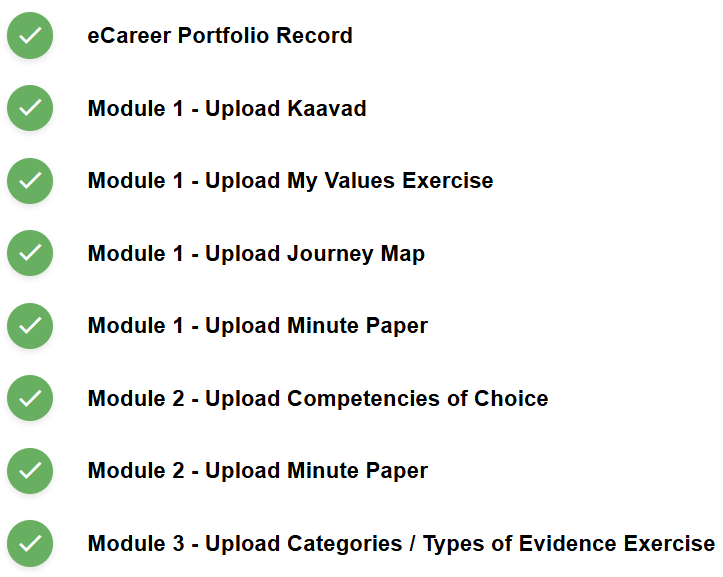
The Journey Map is the foundational module of the eCareer Portfolio, designed to help students envision and outline their four-year university experience in alignment with their future career aspirations (Figure 3). In this module, students chart a personalized academic and professional roadmap that integrates curricular and co-curricular learning, extracurricular involvement, and work-integrated learning opportunities. By reflecting on how these diverse experiences contribute to their growth, students gain deeper insight into their evolving identity, values, and competencies (Figure 4). The Journey Map supports students in connecting what they learn inside and outside the classroom with who they are becoming and what they aim to do—fostering intentionality, self-awareness, and a clearer sense of purpose throughout their academic journey and beyond.
Figure 3
Screenshot of student’s journey map
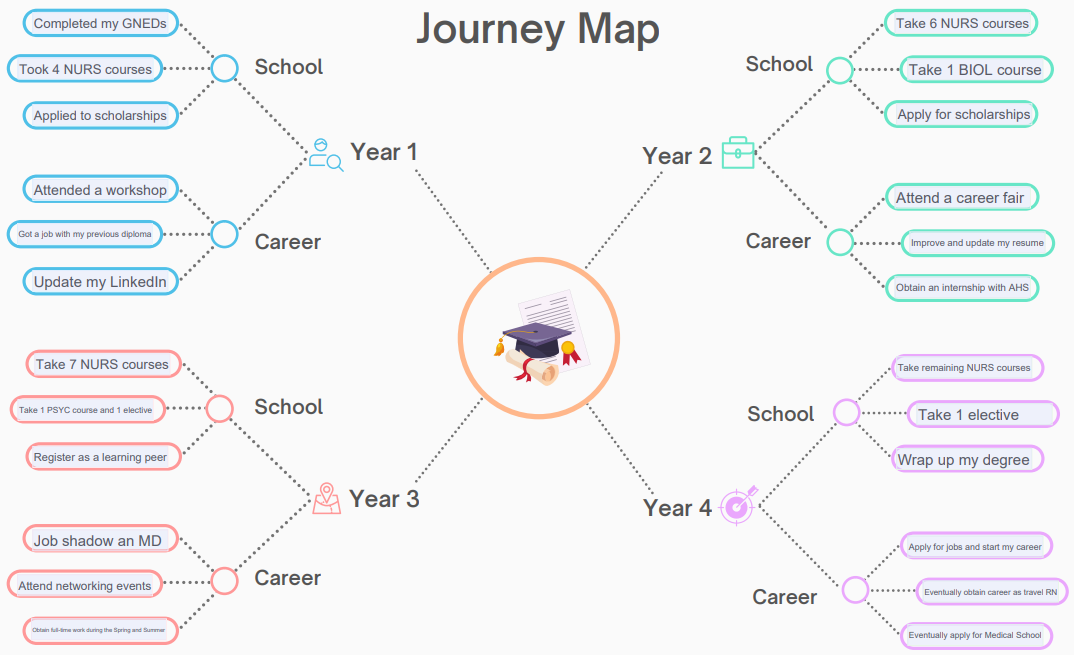
Figure 4
Screenshot of student’s synthesizing identity, value and competencies
One of the key elements in the Journey Map module is intentional planning, which encourages students to proactively align their academic choices, co-curricular involvement, and experiential learning with their long-term career aspirations (Figure 3). Rather than approaching university as a series of disconnected courses and activities, students are guided to see their journey as an integrated narrative of growth. As shown in the example (Figure 3), the student laid out their academic and career planning in a cohesive way to ensure both pathways are intentionally aligned. By identifying milestones, setting goals, and mapping opportunities across their four-year experience, the student begins to recognize patterns in their interests, values, and strengths. This process not only cultivates a stronger sense of identity and direction but also empowers the student to make informed decisions that support both personal fulfillment and professional readiness.
Intentional planning within the eCareer Portfolio Journey Map module is achieved through a series of structured prompts, guided reflections, and planning exercises that help students connect their academic and co-curricular experiences to future career goals (Table 3). Students begin by identifying their core values, interests, and aspirations, which serve as anchors for mapping their university journey. They then outline anticipated milestones—such as key courses, experiential learning opportunities, leadership roles, and skill development activities—aligned with their personal and professional objectives. The module includes timeline planning tools and reflection checkpoints, allowing students to regularly revisit and revise their plans as they grow and gain new insights. Facilitated through eCareer Portfolio instructional sessions and instructor feedback, this process helps students develop a strategic mindset, preparing them to navigate uncertainty with clarity and purpose.
Table 3
Journey Map Module: Structured Reflection Prompts (created by Authors)
|
Category |
Prompt |
|
Values and Identity
|
What are values that guide your decisions and behavior? |
|
How do your interests shape your academic and career goals? |
|
|
Academic Planning
|
Which courses or programs are most aligned with your future aspirations? |
|
Are there interdisciplinary options (e.g., minors, certificates) that support your goals? |
|
|
Co-Curricular Engagement
|
What student organizations or leadership roles interest you? |
|
How do these activities complement your academic and personal growth? |
|
|
Career Exploration / WIL
|
What work-integrated learning experiences (e.g., internships, mentorships) will you pursue? |
|
What career paths are you curious about, and how will you explore them? |
|
|
Skill and Competency Building
|
What core skills do you aim to develop over the next few years? |
|
How will you measure your growth in these areas? |
|
|
Reflection and Goal-Setting
|
What goals do you want to achieve this year, and how will you work toward them? |
|
What have you learned about yourself from past experiences? |
|
eCareer Portfolio Module: Emerging Professionals
The Emerging Professionals module introduces students to the foundational concepts of career readiness by exploring the competencies essential for success in today’s dynamic workforce. In this module, students are guided through both curricular and co-curricular experiences, including work-integrated learning activities, to examine how these experiences contribute to the development of key career readiness competencies. By understanding the relationship between academic learning, experiential opportunities, and career readiness competencies, students begin to articulate their growth and prepare to transition confidently into the workplace (Figure 5).
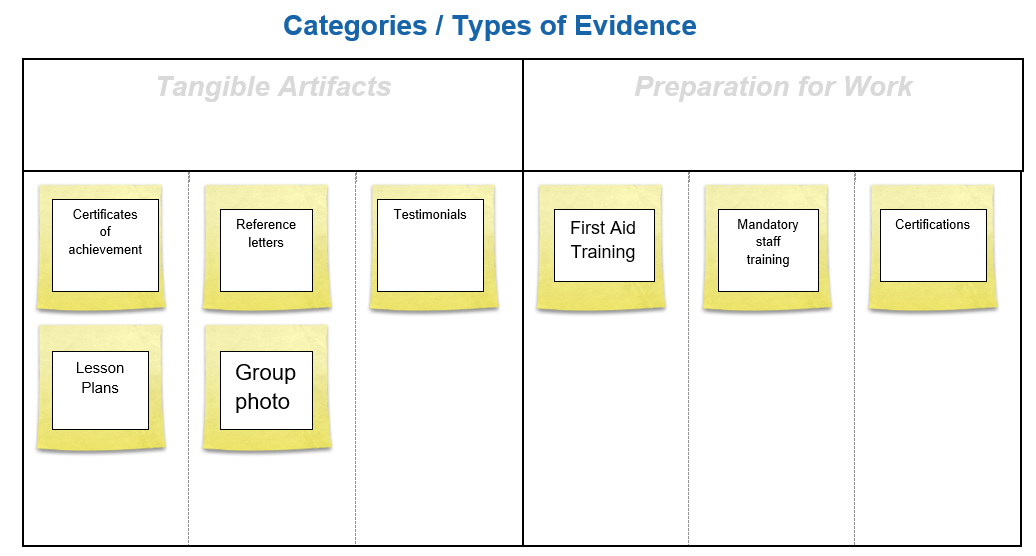
To support this process, the module provides a structured foundation for exploring the competencies that underpin career readiness. Students are introduced to the concept of career readiness competencies through a combination of guided reflection, practical application, and self-assessment. Using frameworks developed by the National Association of Colleges and Employers (NACE), the module helps students identify and understand key NACE competencies within the context of their own academic and curricular / co-curricular experiences. Through curated activities and prompts, students analyze how these competencies emerge from their coursework, work-integrated learning, and extracurricular involvement (Figure 6). By making these connections explicit, the module not only deepens students’ awareness of their strengths and areas for growth but also prepares them to articulate their skills confidently in resumes, interviews, and professional settings.
Figure 5
Screenshot of Student’s Self-Assessment of Career Readiness Competencies
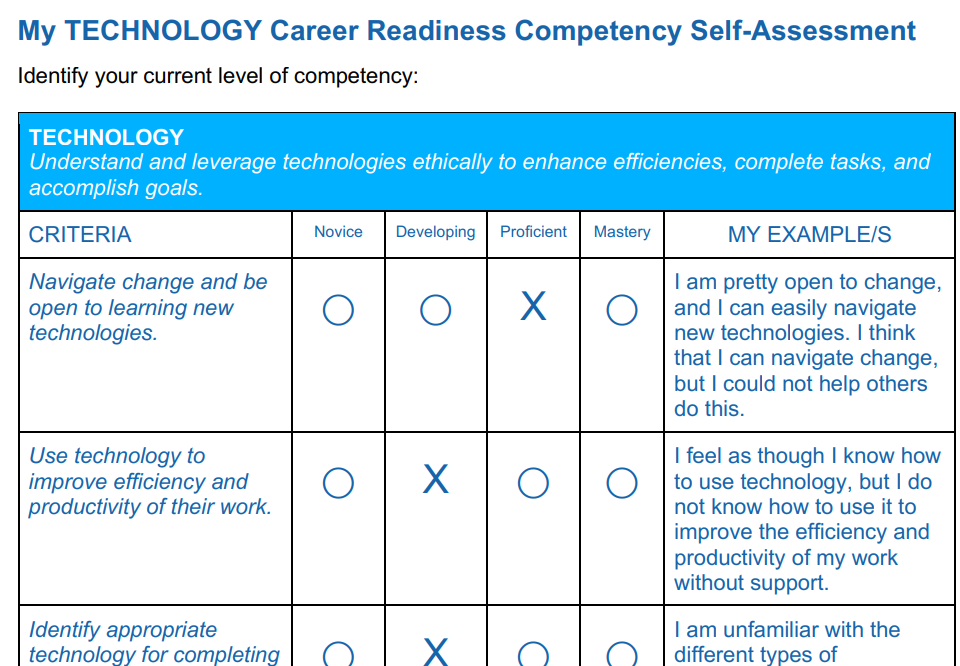
Figure 6
Screenshot of Student’s Evidence
This process is further strengthened by helping students draw direct connections between specific competencies and the real-world experiences that shape them. By explicitly linking these competencies—such as communication, teamwork, and problem-solving—to academic, curricular / co-curricular work-integrated learning activities, students gain a deeper awareness of how their daily efforts contribute to long-term professional growth. This alignment not only helps students recognize their existing strengths but also enables them to identify areas for improvement and intentionally develop relevant skills aligned with their career goals. Ultimately, the module empowers students to become more confident, self-aware, and prepared as they navigate the transition from university to the workplace.
eCareer Portfolio Module: Evidence of Learning
As students explore their career readiness competencies, they engage in critical reflection to deepen their understanding of personal growth. The Evidence of Learning module guides students in articulating their experiences within the Experiential Transcript, helping them recognize and document meaningful experiences. Together, the Emerging Professionals and Evidence of Learning modules work in tandem to help students understand what they have done, what they are currently doing, and what they aspire to do.
To support this process, the Evidence of Learning module provides a practical framework for students to identify and document the different forms of evidence that reflect their ongoing development: tangible evidence and intangible evidence. Tangible evidence includes concrete artifacts that can be uploaded or visually presented, such as research papers, project reports, presentations, certificates, or supervisor evaluations. These items serve as verifiable demonstrations of specific skills or accomplishments (Figure 6). In contrast, intangible evidence refers to the less visible but equally important learning outcomes, such as improved communication, increased confidence, resilience, or critical thinking. While these may not always result in a physical product, they can be captured through reflective writing, self-assessments, or narratives that connect personal growth to broader career readiness competencies. By valuing both forms of evidence, students develop a more holistic and nuanced understanding of their learning journey. This balanced perspective helps students articulate their full range of competencies and experiences, enabling them to tell a richer, more reflective story of their learning journey—one that goes beyond achievements to include personal insight and transformation.
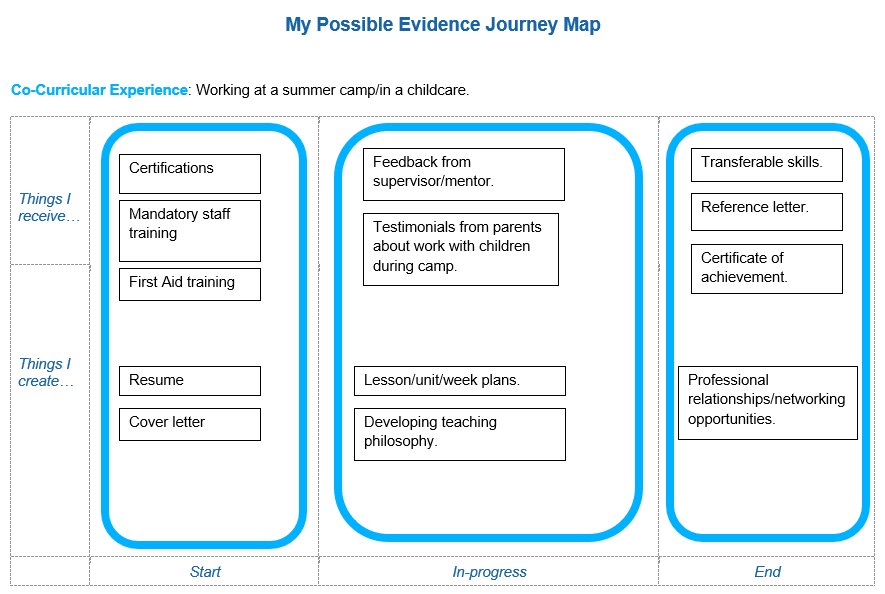
To support this reflective process, the My Possible Evidence Journey Map offers a visual framework that helps students organize and make sense of their learning across different phases of an experience (Figure 7).
The visual framework is structured around three chronological stages—Start, In-progress, and End—and categorizes evidence into two groups: “Things I receive” (externally provided) and “Things I create” (generated by the student). This dual categorization encourages students to reflect on both the inputs they receive and the outputs they generate throughout their experiential journey.
In the Start stage, students typically focus on preparation and onboarding. Under Things I receive, this includes certifications, mandatory staff training, and First Aid training—all of which establish the foundational requirements for the role. Simultaneously, under Things I create, students may prepare their resumes and cover letters as part of the application process. These documents serve as early indicators of their qualifications and intent, setting the stage for what they hope to achieve during the experience.
During the In-progress stage, students engage directly with the experience and begin accumulating formative evidence. Things I receive may include feedback from a supervisor or mentor, as well as testimonials from parents (Figure 7). These external perspectives offer valuable insight into student performance and growth. In Figure 7 example, students may generate Things I create, such as lesson, unit, or week plans, and begin developing a personal teaching philosophy. These artifacts demonstrate initiative, critical thinking, and the ability to apply learning in real-world settings.
The End stage captures the culminating outcomes of the experience. Things I receive might include recognition of transferable skills, a reference letter, and a certificate of achievement. These items validate the student’s contributions and readiness for future opportunities. Meanwhile, under Things I create, students may have developed professional relationships or networking opportunities that could support their ongoing career development. These intangible assets often extend beyond the experience itself, contributing to long-term professional identity and growth.
Figure 7
Screenshot of Student’s Evidence Journey Map
This integrated approach enables students to make clear connections between their experiences and the competencies they are developing, fostering a more intentional and reflective learning journey.
eCareer Portfolio Module: Blueprint, Platform and Maker
Now that students have explored their experiences, competencies, and long-term goals, it is time to guide them in narrating their professional stories with purpose and coherence. This next phase of the eCareer Portfolio process—known as the Blueprint Design—invites students to synthesize their learning by selecting meaningful evidence, aligning it with career readiness competencies, and drawing on insights from their Journey Map. Through this reflective and creative process, students begin to craft a compelling narrative that captures their evolving professional identity. They are also introduced to a range of digital platforms and tools, enabling them to choose the format that best represents their goals and audience. Ultimately, this phase supports students in designing and developing an eCareer Portfolio that not only showcases their skills and experiences, but also communicates their unique value as emerging professionals (Figure 8).
Figure 8
Screenshot of Student’s eCareer Portfolio: Resume Style Approach
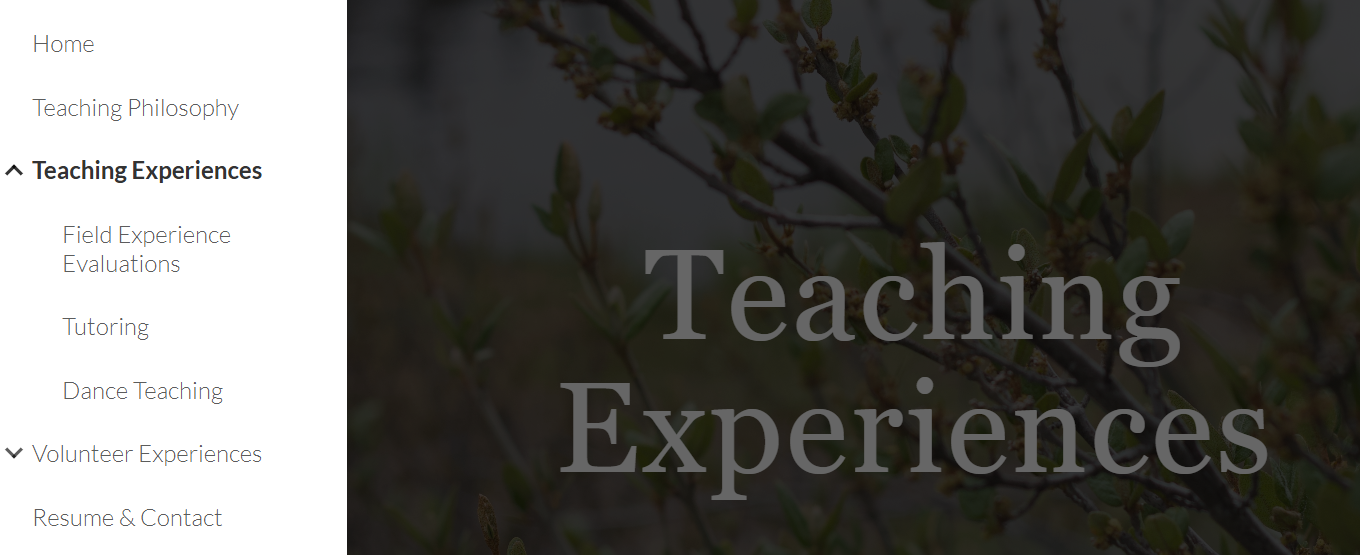
Students approach the construction of their professional narratives in different ways, depending on their goals, experiences, and communication styles. Some students choose a resume-style approach (Figure 8), where they list their key academic, co-curricular, and work-integrated learning experiences alongside the competencies developed through each. This format emphasizes clarity, structure, and direct alignment with job application expectations. Others adopt a more story-driven approach (Figure 9), crafting reflective narratives that illustrate their journey toward becoming a professional—highlighting pivotal moments, personal growth, and the evolution of their knowing, values and goals. These narratives often draw deeply from the Journey Map and emphasize identity formation and meaning-making. Both approaches are valid and effective; the eCareer Portfolio allows students the flexibility to choose a format—or a blend of both—that best represents their emerging professional identity and resonates with their intended audience.
Figure 9
Screenshot of Student’s eCareer Portfolio: Story-Driven Approach

A distinctive feature of the MRU eCareer Portfolio is its emphasis on continuous reflective synthesis, empowering students to construct meaningful narratives about their professional growth. Through this process, students are encouraged to articulate their learning trajectories, map academic and curricular / co-curricular experiences to future goals, and engage in critical self-assessment. Whether students adopt a structured, resume-style approach that highlights specific experiences and competencies or a story-driven format that emphasizes their personal and professional development, the reflective synthesis provides a flexible framework to support both. This reflective practice promotes deeper self-awareness, enabling students to recognize their strengths, identify areas for growth, and clarify their career aspirations. As a result, the eCareer Portfolio becomes more than a digital repository—it evolves into a powerful self-marketing tool that helps students communicate their competencies with clarity, confidence, and authenticity to prospective employers and broader professional audiences.
WORK-INTEGRATED LEARNING IN ECAREER PORTFOLIO
The eCareer Portfolio curriculum extends beyond traditional classroom instruction by embedding work-integrated learning (WIL) strategies that reinforce experiential connections. Two notable practices—informational interviews and micro mentorship—have been piloted to enhance students’ career exploration (Table 4). These initiatives allow students to engage directly with professionals in their chosen fields, gaining valuable insights, building networks, and developing a stronger understanding of career opportunities aligned with their academic backgrounds. Informational interviews offer authentic, real-world perspectives, while micro mentorships provide ongoing guidance, contributing to students’ confidence and preparedness as they transition into the workforce.
Table 4
Comparison of WIL Approaches (created by Authors)
|
Aspect |
Informational Interview |
Micro Mentorship |
|
Definition |
A structured conversation with a professional to gather insights about a career, organization, or industry. |
A short-term mentoring relationship with a professional in a relevant field. |
|
Purpose |
To gain real-world perspectives and industry-specific information. |
To provide ongoing guidance and support for professional development. |
|
Interaction Style |
One-time, focused interview or meeting. |
Interactive, relationship-based support over time. |
|
Duration |
Short-term (typically 30–60 minutes). |
Medium-term (over several weeks or months). |
|
Key Benefits |
Provides authentic insights into professional roles and expectations; helps with career decision-making. |
Builds confidence, offers personalized feedback, and fosters deeper professional relationships. |
|
Career Impact |
Expands awareness of career opportunities and helps clarify career goals. |
Strengthens career preparedness and supports smoother transitions into the workforce. |
WIL: Information Interview
One of the key work-integrated learning activities in the eCareer Portfolio is the Informational Interview, which offers students the opportunity to explore how an academic degree can be translated into diverse professional pathways. Through one-on-one conversations with professionals in fields related to their major, students gain valuable insights into real-world career trajectories, decision-making processes, and the many ways individuals launch and shape their careers—even with the same academic background. This experience helps students move beyond assumptions about their degree and discover possibilities they may not have previously considered. As part of this activity, students will create an Industry Professional Portfolio (Figure 10) that compares their own emerging career path with those of the professionals they interview, deepening their understanding of potential directions and informing their future planning.
The informational interview process involves a series of intentional steps designed to help students engage meaningfully with professionals in their field of interest. First, students identify professionals whose careers align with their academic background or aspirations, often leveraging alumni networks, LinkedIn, or referrals. Next, they reach out with a professional request for a brief meeting, clearly stating their interest and purpose. Once the interview is scheduled, students prepare thoughtful, open-ended questions that explore the professional’s career journey, daily responsibilities, required competencies, and advice for new professionals. During the interview, students actively listen, take notes, and engage in a respectful, conversational manner. Finally, they follow up with a thank-you message, reinforcing the connection and reflecting on key takeaways. These steps not only build students’ communication and networking skills but also deepen their understanding of how academic experiences and professional competencies intersect in the real world.
Figure 10
Screenshot of Student’s Information Interview
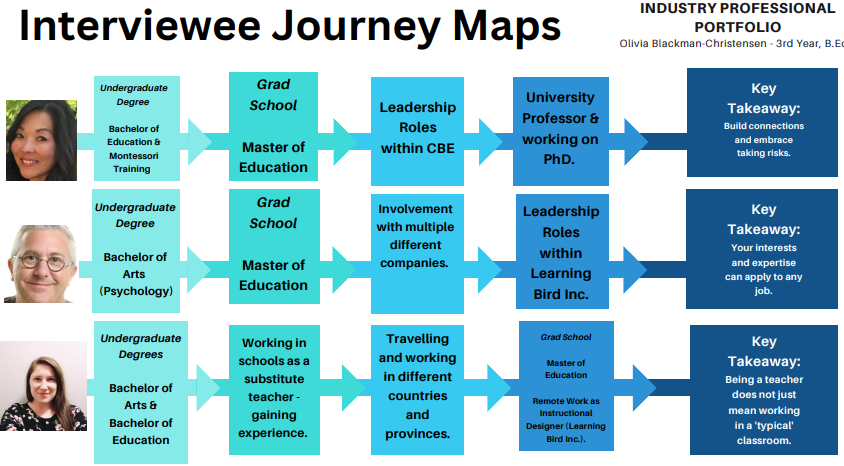
This activity is important because it bridges the gap between academic learning and the realities of the professional world. By hearing directly from professionals, students gain authentic, nuanced perspectives that can’t be found in course descriptions or job postings. It helps them see how transferable skills and competencies develop over time, how career paths are often non-linear, and how personal values, interests, and opportunities shape professional choices. Comparing their own aspirations with real-world examples encourages students to reflect critically on their goals, clarify their interests, and make more informed decisions about their academic and career planning. Ultimately, the Informational Interview fosters agency, confidence, and a deeper sense of purpose as students envision the future they want to create.
As part of the eCareer Portfolio process, students at Mount Royal University benefit from robust support systems that enhance both the content and presentation of their professional narratives. Career development coordinators from career services at MRU provide expert guidance, help students refine their professional goals, and offer support in preparing for and reflecting on informational interviews. In parallel, studio consultants offer design-focused support, helping students visually communicate their learning through infographics, journey maps, and portfolio layouts. These consultants guide students in selecting appropriate formats, organizing information clearly, and using visual storytelling to enhance the impact of their eCareer Portfolios and Industry Professional Portfolio. Together, these supports ensure that students not only reflect deeply on their professional development but also present their experiences in compelling, user-friendly ways.
WIL: Micro Mentorship
The Micro-Mentorship of the eCareer Portfolio serves as a focused work-integrated learning (WIL) experience that connects students with industry professionals for short-term, goal-oriented mentorship. This structured engagement provides students with valuable guidance as they explore specific industries, gain insights into workplace culture, and clarify how their academic background aligns with real-world expectations (Figure 11). Unlike long-term mentorships, micro-mentorships are intentionally brief—typically consisting of one to three meetings—allowing students to engage with multiple professionals within the chosen sector. Through these conversations, students develop a clearer understanding of industry-specific norms, required competencies, and potential career pathways, strengthening their ability to make informed decisions about their future.
Figure 11
Screenshot of Student’s Miro-mentorship
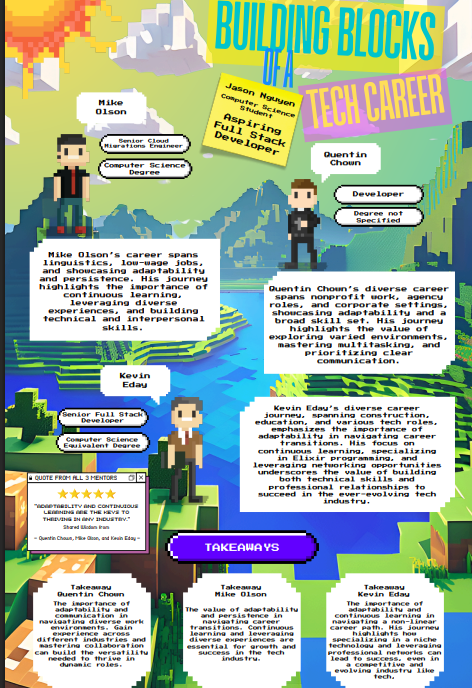
The Micro-Mentorship component of the eCareer Portfolio offers students a focused work-integrated learning experience centered on exploring what their degree can lead to through guided professional connections (Figure 11). Unlike the informational interview activity where students independently seek out professionals, micro-mentorships involve industry mentors actively providing students access to their professional networks. These introductions enable students to connect with industry professionals and conduct targeted interviews that explore the professionals’ career journeys (Figure 12) and how they applied their academic background in real-world contexts. The emphasis is on helping students understand the diverse and often non-linear pathways that can emerge from a single degree. Following these conversations, students are asked to summarize key takeaways, reflecting on how the professionals’ experiences shape their own understanding of career possibilities, required competencies, and future goals. This approach not only expands students’ industry exposure but also deepens their career literacy and self-awareness.
Both the Informational Interview and Micro-Mentorship approaches within the eCareer Portfolio provide valuable work-integrated learning experiences that connect students with industry professionals (Table 5). While they share common goals—such as enhancing career literacy, encouraging reflection, and supporting professional identity development—they differ in structure and emphasis. Informational interviews require students to independently identify and engage professionals to explore broad industry insights, while micro-mentorships offer more guided access through mentor-provided networks, focusing specifically on how a degree can lead to diverse professional outcomes within the chosen sector. Together, these approaches offer complementary opportunities for students to gain meaningful, real-world perspectives as they prepare for future careers.
Figure 12
Screenshot of Student’s Micro-mentorship (permission received to use screenshot from 2024 cohort)
Table 5
Features of Information Interview and Micro-Mentorship (created by Authors)
|
Features |
Informational Interview |
Micro-Mentorship |
|
Initiation |
Students identify and contact professionals independently. |
Mentors introduce students to professionals within their networks. |
|
Focus |
Explores industries, roles, and career paths broadly. |
Focuses on how a degree leads to diverse career journeys. |
|
Duration |
Typically one-time interviews initiated and led by students. |
Short-term (1–3 meetings) with guided introductions. |
|
Support Level |
Requires student initiative and self-direction. |
More mentor-guided with structured networking support. |
|
Learning Emphasis |
Develops communication and networking skills; exposes students to industry insights. |
Strengthens understanding of degree-to-career connections and professional identity. |
IMPLEMENTATION OF ECAREER PORTFOLIO
As Part of a Credit Course
The eCareer Portfolio is embedded within credit courses across various disciplines such as Psychology, Journalism, and Broadcasting, allowing students to engage with career development as an integrated part of their academic experience. As a graded component of these courses, the eCareer Portfolio offers students structured opportunities to reflect on their learning, articulate transferable skills, and connect their coursework with broader professional goals. This embedded approach ensures that career readiness is not treated as an add-on but as a core outcome of disciplinary learning. By aligning reflective practices with academic content, students gain a deeper understanding of how their education translates into real-world competencies—ultimately enhancing both their academic performance and career preparedness.
Embedding the eCareer Portfolio within credit-bearing courses offers several key benefits for both students and instructors. First, it ensures that career development is seamlessly integrated into the academic curriculum, reinforcing the relevance of course content to real-world applications. This alignment encourages students to think critically about how their disciplinary knowledge, curricular activities, and / or work-integrated learning experiences contribute to their long-term goals. As part of a graded course component, the portfolio also promotes consistent engagement, reflection, and skill articulation—rather than treating career planning as an optional or separate task. For instructors, it provides a structured way to support student development beyond academic achievement, fostering transferable competencies such as communication, critical thinking, teamwork and so on.
As Standalone Course
The eCareer Portfolio is also implemented as a standalone course, offering students across all majors an opportunity to engage deeply with personal and professional development outside the boundaries of a specific discipline. This course is designed to guide students through a structured process of reflection, goal-setting, and competency articulation, with a strong emphasis on career readiness and work-integrated learning. Through curated modules, students explore their academic and curricula / co-curricular experiences, map their professional journeys, and build a comprehensive digital portfolio that showcases their competencies, values, and aspirations. As a co-curricular option, the standalone course provides flexibility for students to participate at various stages of their academic journey, making it especially valuable for those who may not have access to the embedded version within their program. The course serves as a powerful tool for helping students synthesize their learning, expand their professional networks, and prepare for future career opportunities with greater clarity and confidence.
Offering the eCareer Portfolio as a standalone course provides several distinct benefits for students and institutions alike. First, it ensures equitable access to career development support for students in programs where the portfolio is not embedded, allowing all learners—regardless of discipline—to engage in reflective, future-oriented planning. The standalone format offers flexibility, making it suitable for students at different stages of their academic journey, including those nearing graduation who wish to synthesize and present their experiences in a professional format. It also creates dedicated time and space for students to focus on building their professional identities, independent of the constraints of disciplinary content. By engaging in intentional reflection, students become more aware of their strengths, competencies, and career aspirations, and are better equipped to communicate these in job applications, interviews, and networking contexts. For institutions, the standalone course model supports scalable delivery of career education and fosters cross-disciplinary engagement, ultimately enhancing graduate employability and lifelong learning.
DISCUSSION AND CONCLUSION
Discussion
The eCareer Portfolio initiative at Mount Royal University exemplifies an integrative learning pedagogy designed to support students’ holistic development and career readiness. Rooted in the principles of reflection, synthesis, and integrative learning, the initiative encourages students to connect academic knowledge with curricular / co-curricular experiences, work-integrated learning, and personal values to form a coherent professional identity. Rather than viewing learning as fragmented across disciplines and experiences, the eCareer Portfolio helps students recognize patterns, make meaning from diverse forms of learning, and articulate how these contribute to their evolving career goals.
This pedagogy reinforces the idea that career readiness is not simply about acquiring job-specific skills, but about developing the ability to think critically, communicate effectively, and navigate uncertainty—competencies that are transferable across roles and industries. Through modules such as Journey Mapping, Emerging Professionals, Informational Interviews, and Micro-Mentorships, students engage in structured opportunities to reflect, plan, and act with purpose. By making these reflective practices visible and assessable, the eCareer Portfolio elevates the role of career development within academic programs and empowers students to take ownership of their learning and future.
Moreover, this initiative addresses a growing need in higher education to align student learning with the demands of an AI-enhanced, rapidly changing workforce. It positions career readiness not as a separate service, but as an embedded, pedagogically grounded component of the undergraduate experience. As a result, the eCareer Portfolio serves as a replicable model for institutions seeking to deepen student engagement, bridge the gap between education and employment, and cultivate lifelong learners equipped for success in an uncertain world.
Challenges and Future Improvement
While the eCareer Portfolio has demonstrated significant impact on student engagement and career readiness, its implementation also presents a number of challenges and opportunities for future improvement. One key challenge lies in ensuring consistent integration across diverse disciplines and course formats, particularly when balancing academic content with reflective and career-focused activities. Additionally, some students may initially struggle with the abstract nature of reflection and self-assessment, requiring additional scaffolding and support. Career development coordinator capacity can also limit the scalability of personalized feedback and mentorship.
Moving forward, enhancing digital tools for portfolio creation, expanding training for career development coordinators, and developing more accessible resources to support diverse learners will be essential. Strengthening partnerships with industry and alumni networks can also enrich the work-integrated learning components, ensuring that students continue to receive relevant, real-world insights. With thoughtful iteration, the eCareer Portfolio can continue to evolve as a transformative model for preparing students to thrive in an increasingly complex and dynamic career landscape.
Conclusion
In conclusion, the design, development, and implementation of the eCareer Portfolio at Mount Royal University represent a strategic, student-centered approach to advancing career readiness through integrative and reflective learning. Whether embedded within credit-bearing courses or delivered as a standalone offering, the eCareer Portfolio empowers students to make meaningful connections between their academic, curricular / co-curricular work-integrated learning, and experiential learning. Through curated modules, guided reflection, and work-integrated learning activities such as informational interviews and micro-mentorships, students develop critical competencies, explore professional identities, and articulate their career goals with clarity and confidence. By engaging in this process, students not only prepare themselves for a rapidly evolving, AI-enhanced workforce but also cultivate the adaptability, self-awareness, and lifelong learning mindset essential for navigating diverse career paths. As a scalable and flexible model, the eCareer Portfolio offers a powerful framework that other institutions can adapt to foster student agency, deepen learning, and strengthen the bridge between education and employment.
REFERENCES
Abdelouahed, A., El Ghazi, I., & El Adnani, M. (2025). Integrating artificial intelligence into public health education and healthcare: insights from the Covid-19 and monkeypox crises fro future pandemic readiness. Frontiers in Education, 10, 1518909. https://doi.org/10.3389/feduc.2025.1518909
Aristovnik, A., Ravšelj, D., Umek, L., Tomazevic, N., & Smrkolj, G. (2023). Impact of the Covid-19 pandemic on online learning in higher education: a bibliometric analysis. Frontiers in Education, 8, 1225834. https://doi.org/10.3389/feduc.2023.1225834
Association of American Colleges and Universities (2011). The LEAP vision for learning: Outcomes, practices, impact and employers’ views. Washington D. C.
Bhardwaj, V., Zhang, S., Tan, Y. Q., & Pandey, V. (2025). Redefining learning: student-centered strategies for academic and personal growth. Frontiers Education, 10.
Brown, J., & Leonard, D. (2012). Integrative Learning. Issues in Integrative Studies, 30, 48-74.
Bruner, J. (1996). The Culture of Education. Cambridge, MA: Harvard University Press.
Eltahir, M. E., & Babiker, F. M. E. (2024). The Influence of Artificial Intelligence Tools on Student Performance in e-Learning Environments: Case Study. The Electronic Journal of ELearning, 22(9), 91-110.
Foster, C. (2023). Embedding AI in Higher Education: A Call for a Service Design Approach. In H. ahankhani, A. Jamal, G. Brown, E. Sainidis, R. Fong, & U. J. Butt (Eds.), AI, Blockchain and Self-Sovereign Identity in Higher Education (pp. 53-65). Cham: Springer.
Glory, J. S., Nalina, E., Santhosh, Y., & Prasad, D. (2023). Enhancing Holistic Education through AI-Integrated Learning Environments: A Comprehensive Framework. Paper presented at the 2023 International Conference on Research Methodologies in Knowledge Management, Artificial Intelligence and Telecommunication Engineering (RMKMATE), Chennai, India.
Mandal, J. (2024). AI integration in lifelong learning: Transformative approaches to teaching and learning. In M. Banerjee, S. Sinha, & P. Pandey (Eds.), Artificial Intelligence in Education: Revolutionizing Learning and Teaching (pp. 250-257): Red Shine Publication.
Pantelimon, F. V. (2021). The evolution of AI-driven educational systems during the COVID-19 pandemic. Sustainability, 13(23), 13501. https://doi.org/10.3390/su132313501
Passarelli, A. M., & Kolb, D. A. (2012). The Learning Way: Learning from Experience as the Path to Lifelong Learning and Development. In M. L. (ed.) (Ed.), Oxford Handbook of Lifelong Learning (pp. 70-90).
SUNY Genesco. (2025). What is integrative learning? https://www.geneseo.edu/cil/what-integrative-learning
AUTHORS
Dr. Yifei Wang is Manager of Special Projects in Work-Integrated Learning (WIL) and curriculum design at Career Services, Mount Royal University (MRU). With more than 15 years of experience bridging academic learning and industry practice, she has been a leading voice in embedding WIL into higher education. Dr. Wang earned her PhD and completed postdoctoral work at the University of British Columbia (UBC), specializing in curriculum design, with research focused on innovative models for WIL program development. Her work ensures that academic programs align with real-world industry needs, equipping students with the skills and confidence to thrive professionally. In addition to her leadership role, Dr. Wang has taught courses in instructional design and pedagogy, applying her expertise to close the gap between theory and practice. She is deeply committed to fostering sustainable industry–academic partnerships, leaving a lasting impact on both institutions and employers, and establishing herself as a leader in WIL and curriculum innovation. Prior to joining MRU, Dr. Wang directed instructional design initiatives at the Southern Alberta Institute of Technology (SAIT), where she forged strong collaborations between programs and industry partners. Her leadership at SAIT helped align educational outcomes with workforce demands, enhancing student employability and strengthening industry engagement.
Email: yfwang@mtroyal.ca
Sarah Imran serves as the Director of Career Services at Mount Royal University in Calgary, Canada. Since 2019, she has driven a comprehensive strategy overseeing experiential and work-integrated learning across university faculties, ensuring a cohesive alignment between academia and the workforce. With a career spanning over two decades in public post-secondary education, Sarah’s expertise is deeply rooted in forging meaningful partnerships that bridge industry with academic rigor. Prior to her current role, she excelled as Associate Dean at the Southern Alberta Institute of Technology (SAIT), where her leadership paved the way for innovative programs designed to meet the evolving demands of the energy sector. Her tenure at SAIT was marked by her ability to strategically enhance workforce-ready initiatives. Earlier, as Workforce Development Coordinator at Keyano College, Sarah was instrumental in delivering programs that equipped students with skills to thrive in competitive labor markets. Sarah’s experience spans internships, workforce readiness, and partnership development, making her a sought-after expert in the sector. Her research interests focus on the cultivation of career competencies, competency development, and their intrinsic connection to career satisfaction—areas where her insights have made a notable impact. Sarah holds an Honours Bachelor of Commerce from Western Caspian University and a Master of Business Administration from Durham University.
Email: simran@mtroyal.ca