2 Digital Resilience in the 21st Century: The Role of ePortfolios in Fostering Adaptive and Technological Competencies
Molebogeng Esther Thage and Maweya Amokelo Given
University of South Africa
ABSTRACT
As technology rapidly advances, the significance of digital resilience in both educational and workplace settings cannot be overstated. Digital resilience is an individual’s ability to adapt to emerging technologies, protect themselves from online threats, and navigate various digital platforms with confidence. One particularly effective tool for developing digital resilience is the ePortfolio, a dynamic digital collection of evidence of an individual’s work that showcases their skills and experiences. The purpose of ePortfolios extends far beyond self-promotion; they also encourage critical self-reflection, facilitate continuous learning, and empower individuals to adapt to dynamic environments. This chapter creates a conceptual model to understand how ePortfolios enhance technological adaptability and foster proactive learning. Grounded in constructivist learning theory, digital literacy frameworks, resilience theory, and self-regulated learning (SRL) theory, the review examined how ePortfolios enable individuals to confront and overcome digital challenges with confidence. By examining the relationship between ePortfolios and digital resilience, this chapter illustrates their capacity to enhance problem-solving capabilities and promote a culture of lifelong learning. Unlike traditional academic tools, ePortfolios empower students to actively shape their educational journeys and prepare for a reality where adaptability is essential. Moreover, they serve as an essential link between academic learning and the practical skills required in today’s evolving digital economy. By providing an in-depth analysis of digital resilience, this chapter reveals how ePortfolios empower individuals to critically assess digital information, safeguard their online identities, and stay informed about technological advancements. Ultimately, the insights underscore that ePortfolios not only enhance digital competency but also contribute to personal and professional growth, enabling individuals to advance their careers and remain equipped for the challenges of a dynamic digital landscape. The chapter concludes with actionable recommendations for Teachers, employers, and policymakers to integrate ePortfolios more thoroughly into educational pathways and career development initiatives.
Keywords: Digital resilience, ePortfolios, technological adaptability, digital literacy, lifelong learning
INTRODUCTION
Significant transformations in the digital landscape of both the education and work sectors have fundamentally reshaped professional requirements, placing an increasing demand for individuals who are technically skilled and highly adaptable to further changes. As digital tools and platforms continue to evolve, digital resilience has emerged as a vital skill for navigating the rapidly changing world of technology. While basic digital literacy primarily emphasises technical skills, digital resilience goes beyond basic familiarity with technology to include the ability of a technology user to manage change, stay safe online, and engage confidently in digital environments (Yang et al., 2023). Digital resilience incorporates a blend of cognitive, emotional, and strategic competencies.
As more facets of learning and work transition to digital realms, educational institutions and employers are recognising the importance of fostering digital resilience (Kralj, 2022). The electronic portfolio, or ePortfolio, is an increasingly popular tool for building this type of resilience. By using ePortfolios, students and professionals can enhance their adaptability, develop digital competencies, and cultivate the lifelong learning skills essential in today’s rapidly evolving digital environment.
This chapter synthesizes theoretical perspectives from Constructivist Learning Theory, Self-Regulated Theory, Digital Literacy Frameworks, and Resilience Theory to develop a conceptual model that positions the ePortfolios as an essential tool for enhancing digital resilience and preparing individuals for technological transformation (Beaumont-Bates, 2022).
In this chapter, the researchers outline the research aims and questions before moving on to a comprehensive literature review. This review, along with the theoretical framework, informed the development and use of a conceptual model, which helped determine how the theory could be applied in practice. A discussion follows on the insights that inform the use of ePortfolios in educational and work environments by answering the research questions. We then conclude with recommendations and a focus on future research.
Research Aim and Questions
This chapter examines the role of ePortfolios in fostering digital resilience, with a focus on developing adaptive and technological competencies within educational and professional contexts. It also examines the essential skills required to thrive in an increasingly digital world.
Research Questions
Central to the chapter’s exploration are three fundamental research questions
- How do ePortfolios support the development of digital resilience?
- What mechanisms within ePortfolios contribute to users’ technological adaptability?
- What strategies can Teachers and organisations implement to enhance digital resilience through ePortfolios?
These questions are important as they aim to understand the role of ePortfolios in promoting and fostering resilience in educational and professional contexts. Collectively, they bridge theory and practice, ensuring the chapter contributes both conceptual clarity and actionable insights. Furthermore, they guide the discussion throughout the chapter.
SIGNIFICANCE OF THE STUDY
As industries continue to evolve rapidly in response to digital transformation, it is increasingly important to cultivate a workforce capable of navigating these changes effectively. This research contributes to the ongoing dialogue about digital resilience and skills-based learning. It provides valuable insights for Teachers, professionals, employers, and policymakers to inform the development of impactful, technology-driven learning initiatives and professional development strategies to strengthen adaptability and effectiveness in the digital age.
LITERATURE REVIEW
This literature review examines the role of ePortfolios in fostering digital resilience across educational and professional contexts. To provide clarity and depth, the review is structured into the following thematic areas: historical background, educational applications, teacher development, professional growth, digital resilience, remote learning, future prospects, and existing challenges.
Historical Background of Digital Resilience and ePortfolios
The concept of ePortfolios was initially discussed in the 1970s, gained momentum in the 1980s, and emerged in the 1990s as educational institutions began integrating digital platforms to document and assess learning (Zhang, 2022). Initially, they were mainly used as repositories for storing and showcasing academic achievements (Zhang & Tur, 2024). ePortfolio has evolved into a dynamic, interactive tools that support and foster personalized learning and professional development. Over time, their growing adoption reflects broader trends in digital education, emphasizing adaptability, lifelong learning, and resilience (Slepcevic-Zach & Stock, 2018; Zhang & Tur, 2022).
Today, ePortfolios are widely used across diverse domains, including higher education, professional training, career development, and other disciplines. They provide structured ways for individuals to organise and present their work, strengthening people’s beliefs and improving user trust in digital engagement.
Digital resilience has emerged as a vital competency in today’s digital landscape, highlighting how well individuals, organisations, and systems can adapt to technological disruptions (Garista & Pocetta, 2014). Kucuksuleymanoglu (2025) defines resilience as the ability to maintain well-being and achieve positive development in lifelong learning, even in the face of adversity. However, the precise concept of “digital resilience” remains underexplored in the context of lifelong learning. Digital resilience and lifelong learning are deeply interconnected (Wang, 2024), as they empower individuals to navigate an ever-evolving technological landscape, adapt to digital challenges, use technology effectively to overcome setbacks, and create a foundation for continuous growth and learning. ePortfolios play a vital role in bridging the long-term impact of ePortfolios on the digital resilience gap by fostering skills such as self-directed learning, critical thinking, and digital literacy, which are essential for navigating digital environments effectively (Yang & Wong, 2024). With this understanding, we can now delve deeper into ePortfolios and digital resilience.
ePortfolios in Education
ePortfolios offer pedagogical assistance for both teachers and students by supporting reflection, professional growth, and assessment. For students, they encourage self-reflection, metacognition, and critical thinking, while also serving as tools for shaping personal and professional identities and assessing learning outcomes (Segaran & Hasim, 2021). In educational contexts, ePortfolios promote self-regulated learning (SRL) by allowing individuals to set clear learning goals, monitor their progress, and engage in continuous self-assessment (El-Senousy, 2020).
For Teachers, they function not only as repositories for documenting teaching practices but as tools for reflection, professional development, and collaboration (Dunne & Logue, 2021; Taptamat et al., 2025). Turkey (2017) asserts that integration of ePortfolios into learning environments fosters metacognition and critical thinking, both of which are essential for students and professionals to navigate technological advancements effectively. As digital learning contexts rise, ePortfolios serve as tools for continuous assessment and skills development for both teachers and students.
ePortfolios in Teacher Education
A growing body of research highlights the relevance of ePortfolios in teacher education, particularly in fostering lifelong learning habits and digital resilience. Pettenati et al. (2024) emphasised that ePortfolios provide dynamic spaces for reflective practice, allowing pre-service teachers to document their learning experiences, receive feedback, and refine their teaching strategies. This finding aligns with constructivist learning theories, which stress the importance of active knowledge construction and experiential learning (Yang & Wong, 2024).
It also resonates with self-regulated learning theory, as ePortfolios encourage goal setting, self-monitoring, and metacognitive reflection, core processes that improve individuals’ ability to direct their own development (Olstad, 2024; Segaran & Hasim, 2021). Moreover, ePortfolios play a direct and practical role in enhancing teacher preparedness for increasingly digital classrooms and then serve as evidence-based tools to showcase an individual’s pedagogical growth and instructional proficiency.
ePortfolios and Professional Development
Beyond academic disciplines, ePortfolios play a transformative role in career readiness and employability. “As ePortfolios are reflective in nature, they make affordances for introspection, foster awareness, and stimulate a shift in mindset in one’s assumptions about learning capabilities and, to some extent, perception of instruction in virtual spaces” (Prokopetz, 2022, p. 9). Compared to traditional resumes, ePortfolios allow for a more dynamic, interactive, and comprehensive evaluation of skills.
Also, by curating and presenting their work digitally, users can engage in competency-based assessment, construct their professional identities, and develop career-related skills (Todeschini & Sollberger, 2023). Kelly & Le Rossignol (2022) suggest that as industries increasingly emphasise digital literacy and adaptability, ePortfolios have become vital tools in preparing individuals for dynamic and competitive job markets. Zhang and Tur (2023) believe that ePortfolios have gained significant recognition as transformative digital learning and professional development tools that facilitate the documentation, reflection, and demonstration of individual competencies in structured and personalised ways.
ePortfolios and Digital Resilience
The rapid evolution of digital environments makes digital resilience a critical competency for both students and professionals. Digital resilience refers to an individual’s ability to recover from technological disruptions, engage critically with digital tools, and adapt continuously to emerging technological challenges (Yang et al., 2023). ePortfolios play a significant role in contributing to digital resilience by fostering technological adaptability, enhancing problem-solving skills, and building self-efficacy (Kelly & Le Rossignol, 2022).
In educational contexts, ePortfolios encourage students to interact with emerging digital tools, experiment with multimedia formats, and reflect on their development of digital literacy. Blaschke and Marín (2020) found that students who actively curate digital content and receive ongoing feedback through ePortfolios develop stronger problem-solving skills and greater adaptability, both of which are essential for digital resilience. By regularly updating their ePortfolios, students not only record and track their progress but also engage in iterative learning processes that strengthen their ability to manage digital transformations effectively.
Beyond academia, research highlights the significance of ePortfolios for workforce development, particularly within industries experiencing rapid technological change. A recent study by Yadav (2024) found that structured ePortfolios facilitate authentic assessment by enabling professionals to develop digital competencies critical for career adaptability. This finding aligns with broader efforts being made to integrate digital competency frameworks into workforce training programmes to ensure that employees remain resilient and competitive in digitally driven workplaces (Bennett et al., 2016). Through ePortfolios, professionals can showcase their resilience through technical proficiencies, document their learning experiences, and engage in reflective practice to continuously refine their skills.
The Role of ePortfolios in Remote Learning: Lessons Learned from the Pandemic
The COVID-19 pandemic underscored the importance of digital resilience in education, highlighting ePortfolios as valuable tools for facilitating remote learning. Zhang and Tur (2024) identified several lessons from the pandemic, including the need for flexible learning environments where ePortfolios proved instrumental in ensuring continuity of education despite disruptions. ePortfolios enable students to showcase progress and achievements in remote settings by digitally documenting their learning journeys. Additionally, the pandemic was an opportunity to demonstrate the effectiveness of self-regulated learning through ePortfolios. Lam (2022) found that students with strong self-regulation skills benefited the most from ePortfolios, as these tools align well with autonomous learning processes. Furthermore, ePortfolios emerged as viable alternatives to traditional assessments, offering a more comprehensive and authentic representation of students’ learning and skill development.
Another key takeaway from the pandemic was the importance of collaboration and co-design in shaping effective ePortfolio practices. Teachers and institutions recognised the need for inclusive and interactive digital learning strategies to promote engagement, peer feedback, and mentorship. In the post-pandemic era, the integration of ePortfolios into mainstream education continues to expand, reinforcing their role in fostering digital resilience and enhancing learning outcomes.
Prospects for ePortfolios
ePortfolios have a promising future, with emerging trends and technological advancements further shaping their role in education and professional development. A key advancement is an increased ability to customise ePortfolios, allowing users to design unique digital narratives that reflect their personal and professional identities, and highlight their strengths, competencies, and achievements in dynamic, engaging ways. In terms of lifelong learning, eortofilos have long been recognized as a dynamic platform for maintaining, organizing, and showcasing learning.
The integration of artificial intelligence (AI) in ePortfolios is another transformative trend. AI-driven tools can help users curate content, perform pattern analysis, and suggest improvements based on learnt behaviours. Adaptive AI intensifies the usability and effectiveness of ePortfolios by offering tailored recommendations for skill development and competency tracking.
Virtual and augmented reality (VR/AR) technologies also promise to enrich ePortfolio experiences. These immersive tools can support interactive presentations of projects and achievements, particularly in fields that require hands-on demonstrations, such as design, engineering, and medical education. For example, VR/AR enhances experiential learning by simulating realistic contexts and closing resource gaps in higher education (Jantjies et al., 2018)
Moreover, ePortfolios are anticipated to play a central role in lifelong career development. As digital credentials and competency-based learning grow in importance, ePortfolios enable individuals to document and verify their qualifications across their careers, reinforcing their relevance in a digital-first world. The final prospect to note is that global accessibility is a key factor in the future of ePortfolios. Therefore, with efforts to bridge digital divides between institutions or between countries, such as unequal access to technology, digital literacy skills, and high-speed internet, it is plausible that ePortfolios will become even more inclusive and widely available across various educational and professional settings.
Challenges and Gaps in the Literature
While ePortfolios show potential in enhancing digital resilience and adaptability, some challenges and research gaps still exist. One significant challenge is digital equity—the concept that not all students and professionals have equal access to ePortfolio technologies, resulting in adoption and engagement disparities (Blaschke and Marín , 2020). Additionally, students’ motivation and engagement are critical factors influencing the effectiveness of ePortfolios. The challenge is that some users may struggle to self-direct their learning and reflection processes without structured guidance (Prokopetz, 2022).
Adding to the challenges is the limited research on best practices for integrating ePortfolios into workforce training programmes. While academic studies highlight the benefits of ePortfolios for student learning, further research is needed to examine how organisations can systematically incorporate ePortfolios into professional development initiatives (Todeschini & Sollberger, 2023). Another critical gap in research is the long-term impact of ePortfolios on digital resilience. Most studies assess short-term learning outcomes, but few explore how ePortfolio engagement translates into sustained technological adaptability and resilience over time. Future research should focus on longitudinal studies to measure the lasting effects of ePortfolio use on lifelong learning and career advancement (Silvestro & Nadir, 2021).
THEORETICAL FRAMEWORK
The concept of digital resilience is grounded in interdisciplinary theories that explain how individuals build adaptability and competence within digital environments. This chapter integrates four central theoretical perspectives—Constructivist Learning Theory, Self-regulated Learning Theory, Digital Literacy Frameworks, and Resilience Theory. Together, these perspectives provide a comprehensive framework for understanding how ePortfolios foster digital resilience.
Constructivist Learning Theory
The constructivist learning theory asserts that knowledge is actively constructed through experience and reflection rather than being passively absorbed (Vygotsky, 1978). This theory aligns with how ePortfolios encourage students to curate their learning journey, reflect on their progress, and adapt their digital skills in response to feedback (Yang & Wong, 2024). Specifically, ePortfolios foster self-directed learning because users must actively engage with digital tools to create, organise, and revise content, thus supporting personalised learning pathways (Yan & Singh, 2024). They also encourage critical thinking and reflection as students develop metacognitive skills by evaluating their work and responding to feedback (Guo & Li, 2024).
This process improves digital adaptability, as interaction with multimedia, hyperlinks, and cloud-based platforms helps students acquire transferable skills applicable in both academic and professional contexts (Yang & Wong, 2024). By facilitating active learning and skill development, ePortfolios offer individuals opportunities to construct knowledge in real-world digital settings, making them valuable tools for lifelong learning and professional growth, all of which align with the constructivist learning theory.
Digital Literacy Framework
Digital literacy frameworks focus on an individual’s ability to evaluate, create, and communicate effectively using digital technologies (Martin, 2008; Korkmaz & Akçay, 2024). These frameworks are crucial to digital resilience. ePortfolios serve as dynamic platforms for developing digital literacy by providing evidence of technological competency. By engaging with various digital tools, multimedia formats, and interactive content, users strengthen their ability to work within digital ecosystems (Zhang & Tur, 2023).
Moreover, ePortfolios foster ethical digital engagement as individuals critically assess their online presence, intellectual property rights, and digital privacy, thereby promoting responsible digital citizenship (Moya et al., 2022). The collaborative aspect of ePortfolios—through peer reviews and online sharing—enhances digital communication skills, which are vital components of digital literacy and resilience (Jimoyiannis, 2012). Thus, ePortfolios contribute to the development of adaptive digital skills that prepare individuals for long-term resilience in evolving digital landscapes.
Resilience Theory
Resilience theory emphasises an individual’s ability to adapt and recover from challenges by applying coping mechanisms (Luthar et al., 2000; Rutter, 2012). In digital contexts, we see the principles of resilience theory in several ways. Resilience refers to the capacity of an individual to confidently navigate technological changes, cybersecurity threats, and evolving digital environments (Kelly & Le Rossignol, 2022). ePortfolios foster digital resilience by encouraging reflective practice, in which users analyse past experiences, identify challenges, and develop strategies to overcome digital obstacles (Prokopetz, 2022). They also promote problem-solving skills with iterative feedback and revision cycles, helping individuals troubleshoot digital challenges effectively (Buzzetto-More, 2010).
Furthermore, engaging with diverse digital tools cultivates digital agility, enabling individuals to navigate new technologies (Jimoyiannis, 2012). Teachers and employers can create the adaptive learning environments needed to prepare individuals for technological disruptions and lifelong digital engagement by integrating the learnings of the resilience theory into ePortfolio design.
Self-Regulated Learning Theory
Finally, the researchers found that the self-regulated learning (SRL) theory is particularly relevant in the context of ePortfolios. This theory underscores the active role of students in managing their learning processes through goal setting, self-monitoring, and reflection (Segaran & Hasim, 2021). ePortfolios empower individuals to set personalised learning goals, engage in self-assessment, and adapt learning strategies according to reflection and evaluation (Guo & Li, 2024). This aligns with the SRL principles of goal setting, metacognitive awareness, and self-efficacy, all of which contribute to developing resilient students. ePortfolios play a critical role in enhancing digital resilience in both academic and professional settings by encouraging lifelong learning habits and promoting self-regulated learning, which ties in with self-regulated learning.
Table 1 displays the theoretical foundations of digital resilience and ePortfolios: the theoretical perspectives and key concepts, as well as applications to ePortfolios.
Table 1
Theoretical Foundations of Digital Resilience and ePortfolios (created by Authors)
|
Theoretical Perspective |
Key Concept(s) |
Application to ePortfolios |
|
Constructivist Learning Theory |
Knowledge is constructed through experiences. |
Self-regulated learning, reflection, and digital skill development. |
|
Digital Literacy Frameworks |
Digital competency, information ethics, and adaptability. |
Technological fluency and responsible digital engagement. |
|
Resilience Theory |
Adaptive responses to challenges and problem-solving |
Building coping strategies, critical thinking, and professional growth |
|
Self-Regulated Learning (SRL) Theory |
Goal setting, self-monitoring, and reflection. |
Encouraging self-directed learning and continuous improvement. |
To wrap up the table’s insights, the four theories collectively demonstrate how ePortfolios foster digital resilience by combining knowledge construction, digital competency, adaptability, and self-regulation. Constructivist learning and digital literacy frameworks explain how Students or professionals build and demonstrate skills, while resilience and self-regulated learning theories show how they adapt to challenges and sustain growth. Interconnected, these theories illustrate how ePortfolios function as holistic tools that not only support lifelong learning and professional development but also empower individuals to document achievements, participate in continuous learning, and respond effectively to evolving digital contexts and professional demands.
Conceptual Model: The Role of ePortfolios in Building Digital Resilience
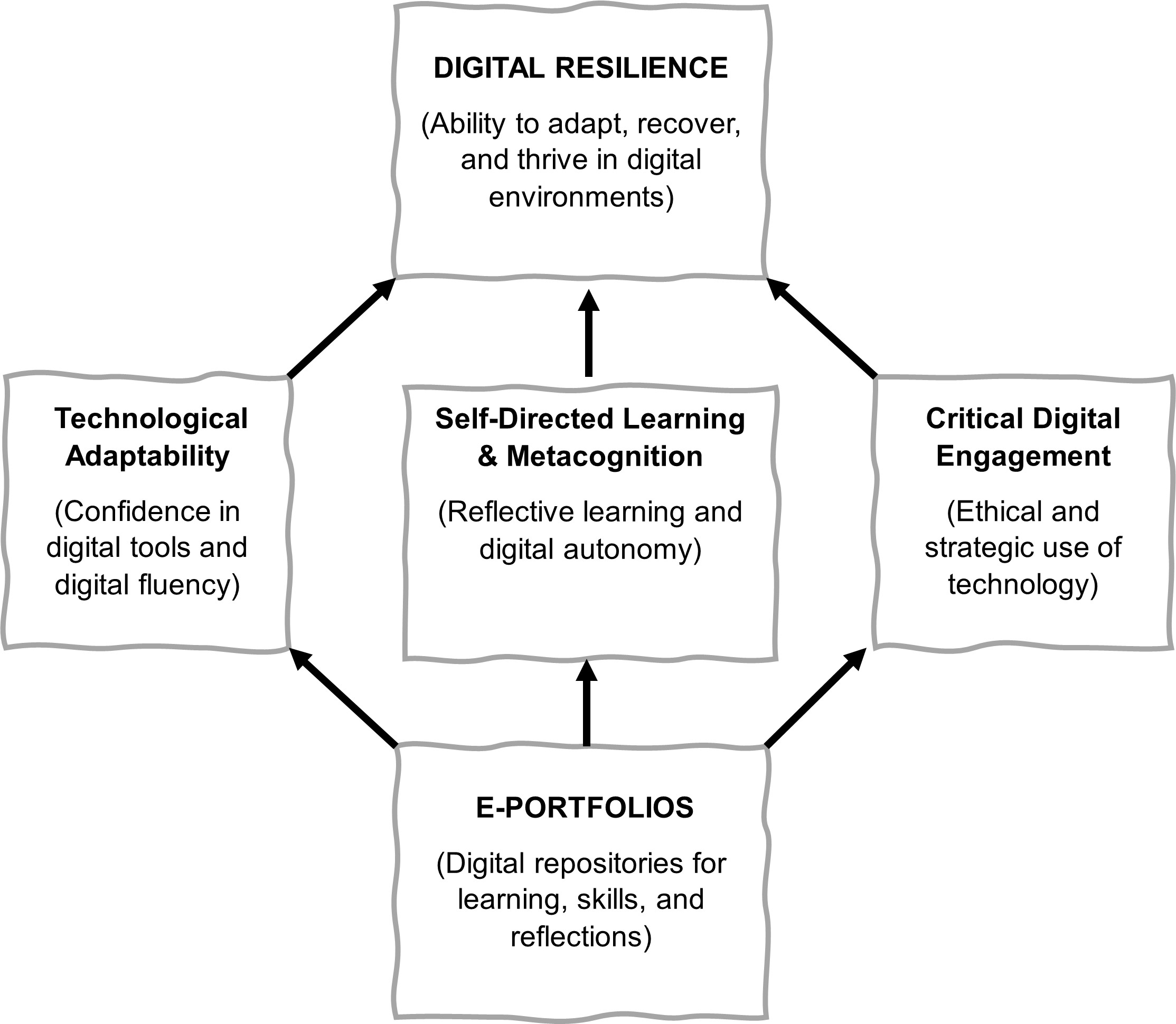
The conceptual model developed in this chapter explores three fundamental dimensions through which ePortfolios contribute to digital resilience: technological adaptability, self-directed learning and reflection, and critical digital engagement. This model integrates theoretical perspectives and research to illustrate how ePortfolios foster digital resilience. prepare individuals for digital disruptions and evolving technological landscapes, improving their ability to thrive in an increasingly digitised society.
The researchers of this chapter have developed a conceptual model that illustrates the relationship between ePortfolios and digital resilience (see Figure 1). This model highlights the interrelated dimensions that contribute to an individual’s ability to thrive in digital environments. Technological adaptability is cultivated through interaction with cloud-based platforms, multimedia tools, and interactive design elements, which boosts individuals’ confidence in digital problem-solving. Self-directed learning and reflection are promoted through goal setting, self-assessment, and iterative improvement, fostering lifelong learning habits. Lastly, critical digital engagement is strengthened by the development of ethical awareness, cybersecurity skills, and digital literacy, ensuring responsible participation in online spaces.
Together, these three dimensions reinforce digital resilience, equipping individuals with the skills and confidence needed to adapt to technological transformations and professional challenges. By integrating ePortfolios into educational and professional development strategies, institutions and organisations can empower individuals to navigate digital disruptions effectively, fostering a culture of continuous learning and adaptability in an increasingly digitalised world.
Figure 1
Conceptual model for ePortfolios and digital resilience
Each dimension of the model is discussed in detail below.
Dimension 1: Technological Adaptability
Technological adaptability, the first dimension of the model, is a core component of digital resilience that refers to an individual’s ability to confidently engage with emerging digital tools and platforms. ePortfolios support this development by requiring users to interact with cloud-based systems, multimedia content, and interactive design tools. This hands-on engagement enables individuals to troubleshoot technical issues, fostering a problem-solving mindset that is essential for responding to digital disruptions (Jimoyiannis, 2012). Ultimately, fostering digital fluency by developing the user’s confidence in their ability to navigate technological changes and troubleshoot digital challenges (Blaschke & Marín, 2020).
As users maintain their ePortfolios, they gain exposure to a diverse range of digital tools, including content management systems, data visualisation software, and collaborative platforms. This iterative process of updating and curating content enhances their technical competencies and adaptability strategies (Kelly & Le Rossignol, 2022). Over time, individuals not only improve their digital skills but also gain the confidence to explore and integrate new technologies into their academic and professional practices (Yan & Singh, 2024). Thus, by facilitating technological adaptability, ePortfolios play a crucial role in preparing individuals for an ever-evolving digital world.
Dimension 2: Self-directed learning and metacognition
Self-directed learning involves individuals taking charge of their learning journeys, setting goals, and assessing their progress, and is a vital facet of digital resilience. ePortfolios support self-directed learning by providing a structured space for users to document their achievements, reflect on their learning experiences, and develop a sense of ownership over their educational and professional growth (Guo & Li, 2024). This process cultivates metacognitive awareness, enabling individuals to evaluate their strengths, identify areas for improvement, and refine their learning strategies, ultimately fostering a proactive approach to skill development.
Using ePortfolios also encourages goal setting and reflection, essential for lifelong learning. Through self-assessment, users can track their progress and adapt their learning strategies based on feedback and experiences (Beaumont-Bates, 2022). Additionally, the structured reflection process associated with ePortfolios helps individuals build resilience as they learn to analyse challenges, overcome obstacles, and refine their approaches to problem-solving (Moya et al., 2022). This iterative process reinforces critical thinking and adaptability, equipping individuals with the skills needed to navigate digital environments effectively.
Furthermore, ePortfolios promote autonomous learning behaviours when users curate, edit, and improve their digital portfolios over time. This ongoing engagement reinforces self-directed learning habits that extend beyond formal education, enabling individuals to cultivate digital resilience in academic and professional environments (Jimoyiannis, 2012). Consequently, ePortfolios are valuable tools to foster lifelong learning and empower individuals to take initiative in their personal and professional development. Self-directed learning and metacognition are powerful tools that empower individuals to take charge of their own growth and intellectual development.
Dimension 3: Critical digital engagement
Critical digital engagement encompasses the ability to engage critically with digital content and demonstrate responsible digital citizenship within digital space. ePortfolios support this by fostering digital literacy, ethical awareness, and competent cybersecurity skills. By encouraging users to evaluate the credibility of online sources, manage their digital identities, and engage in safe data-sharing practices, ePortfolios help individuals navigate the complexities of the digital world responsibly (Buzzetto-More, 2010).
As individuals manage their ePortfolios, they become more aware of data privacy issues, cyber threats, and ethical considerations in digital communication (Buzzetto-More, 2010). Through content curation and reflective practices, individuals develop the capacity to discern credible information from misinformation and make informed decisions for online sources (Zhang & Tur, 2023). Additionally, by showcasing their achievement and maintaining a professional digital presence, users enhance their employability and credibility in digital environments (Prokopetz, 2022). These practices contribute to responsible digital engagement, reinforcing ethical awareness and strengthening users’ ability to navigate the digital world with confidence.
Integrating these three dimensions, ePortfolios serve as powerful tools for fostering and building digital resilience. They equip individuals with the adaptability, autonomy, and critical awareness needed to navigate technological transformations and professional challenges. To address the research questions guiding this chapter, the following discussions explore how each dimension contributes to the development of digital resilience through ePortfolio practices. Ultimately, ePortfolios foster a culture of continuous learning and empower individuals to thrive in a rapidly evolving digital world.
DISCUSSIONS
Research Question 1
First, we will review Research Question 1: How do ePortfolios support the development of digital resilience? The insights can be grouped into two main parts, namely (i) ePortfolios as the foundation for digital resilience and (ii) the role of ePortfolios in building digital resilience. Each is discussed below.
ePortfolios as the Foundation for Digital Resilience
ePortfolios function as interactive digital spaces where individuals document their learning, reflect on skill development, and curate evidence of their competencies. Unlike traditional learning and assessment methods, ePortfolios emphasise continuous growth and engagement with digital tools, thereby strengthening resilience to technological disruptions and shifting professional landscapes (Buzzetto-More, 2010). Through structured reflection and self-regulated learning, ePortfolios support individuals to track their progress over time, refine digital competencies, and develop confidence in digital tool usage. Furthermore, the use of an ePortfolio encourages users to engage with digital networks and collaborate in online spaces, fostering an adaptive learning environment that enhances digital fluency.
The Role of ePortfolios in Building Digital Resilience
ePortfolios serve as foundational tools for fostering digital resilience by equipping individuals with the skills needed to navigate, adapt to, and thrive in digital environments. As digital ecosystems continue to evolve, individuals must develop the ability to critically engage with technology, reflect on their learning experiences, and demonstrate their technological adaptability. Digital resilience, in this context, refers to the capacity to effectively respond to technological disruptions, maintain continuous learning, and engage ethically in digital spaces.
The conceptual model developed through this chapter explains how ePortfolios contribute to digital resilience through three core mechanisms: technological adaptability, self-directed learning and metacognition, and critical digital engagement. By synthesising research on digital literacy, e-learning, and resilience theory, the model illustrates the interconnected processes that enable individuals to develop digital resilience in both educational and professional settings (Yang et al., 2023).
Research Question 2
What mechanisms within ePortfolios contribute to users’ technological adaptability? is now discussed in light of the literature review. The four key insights are that ePortfolios enhance confidence in digital tools, encourage continuous learning and reflection, promote ethical and strategic use of technology, and reinforce digital resilience.
Technological Adaptability: Enhancing Confidence in Digital Tools
Technological adaptability refers to an individual’s ability to effectively engage with and respond to new digital tools and platforms. As digital environments continue to evolve, individuals must cultivate digital fluency and the confidence to integrate diverse technologies into their learning and professional practices. ePortfolios inherently promote technological adaptability by requiring users to engage with cloud-based storage systems, multimedia platforms, and interactive content design software. This engagement encourages users to develop competence in using emerging technologies, reinforcing their ability to navigate digital transformations with ease.
Furthermore, ePortfolios foster iterative skill development, as users must continuously update, refine, and enhance their portfolios. This cyclical process allows individuals to develop problem-solving skills as they encounter and troubleshoot digital challenges while curating their portfolios (Kelly & Le Rossignol, 2022). Studies indicate that individuals who actively engage with ePortfolios demonstrate greater confidence in using digital tools, which translates into enhanced career readiness and technological competence (Zhang & Tur, 2024). By exposing individuals to real-world technological challenges, ePortfolios strengthen adaptability, enabling users to respond effectively to new digital trends and disruptions.
Self-directed Learning and Metacognition: Encouraging Continuous Learning and Reflection
A key characteristic of digital resilience is the ability to engage in self-directed learning, allowing individuals to adapt to technological changes through continuous reflection and goal-setting. ePortfolios provide a structured space for users to develop metacognitive awareness, fostering critical thinking and self-assessment. Through guided reflection, individuals can assess their learning progress, identify areas for improvement, and refine their strategies for acquiring new digital skills.
ePortfolios promote self-directed learning by facilitating goal-setting, self-assessment, and peer collaboration. Users can track their progress over time, gaining insights into their evolving digital competencies and adjusting their learning strategies accordingly (Guo & Li, 2024). Additionally, ePortfolios support collaborative learning by allowing users to engage in peer feedback and mentor-guided reflection, further reinforcing knowledge-sharing and skill enhancement.
Lifelong learning and digital resilience are closely interconnected, as individuals who engage in continuous skill development are better equipped to adapt to technological advancements. Research highlights that ePortfolios play a crucial role in sustaining lifelong learning habits, which are essential for career adaptability and professional growth (Pettenati et al., 2024). By embedding reflective learning practices into digital spaces, ePortfolios encourage users to become proactive students, fostering resilience in the face of rapid technological change.
Critical Digital Engagement: Promoting Ethical and Strategic Use of Technology
A crucial aspect of digital resilience is the ability to engage with digital content responsibly and strategically. ePortfolios encourage users to critically evaluate digital resources, manage their online presence, and make informed decisions about their use of technology. By promoting ethical considerations such as digital citizenship, data privacy, and intellectual property rights, ePortfolios help individuals develop a responsible and professional digital identity (Moya et al., 2022).
Additionally, ePortfolios enhance information literacy by training users to assess the credibility of online sources and engage in evidence-based decision-making. As individuals curate their portfolios, they develop skills in digital communication, enabling them to interact effectively in professional and academic digital spaces (Buzzetto-More, 2010). Research suggests that students who use ePortfolios demonstrate higher levels of digital literacy and digital resilience compared to those who rely solely on traditional learning methods. These skills are crucial in today’s digital landscape, where misinformation, cybersecurity threats, and ethical challenges are prevalent.
As individuals become more aware of digital risks, ePortfolios cultivate stronger decision-making skills and cybersecurity awareness. By engaging in reflective digital practices, users enhance their ability to navigate online environments safely and responsibly. This process not only strengthens their digital resilience but also prepares them for the ethical complexities of the digital world (Prokopetz, 2022).
How ePortfolios Reinforce Digital Resilience
The three mechanisms of digital resilience—technological adaptability, self-directed learning, and critical digital engagement—are interdependent, reinforcing one another through structured and iterative learning processes. When individuals consistently engage with technology, reflect on their learning experiences, and make informed digital decisions, they develop the confidence and skills necessary to thrive in digital environments.
The book chapter revealed that ePortfolios strengthen digital resilience by encouraging continuous self-reflection and assessment, leading to greater adaptability in dynamic digital landscapes. This, along with the fact that their feedback loops support skill improvement and adaptability, means that ePortfolios play a crucial role in providing a platform for learning, adapting to changes in the digital landscape, and improving digital capabilities. Additionally, ePortfolios facilitate engagement with digital tools and professional networks, promoting confidence in digital environments and reinforcing ethical digital practices (Yadav, 2024).
By integrating these mechanisms, ePortfolios function as transformative tools that enable individuals to build sustainable digital competencies. They serve as a bridge between formal education and professional development, ensuring that students remain agile in the face of evolving digital demands. Ultimately, this conceptual model highlights the critical role of ePortfolios in equipping individuals with the resilience needed to navigate technological change, adapt to new digital realities, and sustain lifelong learning.
Research Question 3
The following section shows the research insights that help answer the third research question: What strategies can Teachers and organisations implement to enhance digital resilience through ePortfolios? The key insights, which address the strategic use of ePortfolios to foster digital resilience, will now follow.
Strategies for Fostering Digital Resilience Through ePortfolios
To maximise the effectiveness of ePortfolios in fostering digital resilience, Teachers and professionals must implement structured strategies that enhance learning and professional development. In educational contexts, integrating structured ePortfolios within curricula provides students with clear guidelines on documentation, reflection, and iterative learning. Scaffolded portfolio development ensures that students engage with increasingly complex digital tasks, thereby building their digital competence and gradually increasing their technological confidence and problem-solving skills.
Additionally, incorporating peer collaboration and feedback mechanisms, such as discussion forums and peer review activities, promotes knowledge sharing, fosters teamwork, and enhances digital communication competencies. Gamification techniques, including digital badges and interactive learning challenges, can further motivate students and encourage sustained engagement with their ePortfolios.
For professionals, competency-based ePortfolios serve as effective tools for aligning portfolio content with industry digital skill standards. By showcasing digital problem-solving experiences and documenting their approaches to overcoming technological challenges, professionals reinforce their resilience in the workplace. Furthermore, integrating ePortfolios with career platforms such as LinkedIn enhances employability by allowing individuals to present their skills and achievements in professional digital spaces. These strategies collectively ensure that ePortfolios remain valuable assets in developing digital resilience across academic and professional domains.
Technological Adaptability
ePortfolios improve technological adaptability, which improves digital resilience. Digital tools and platforms are constantly evolving, requiring individuals to engage with new software, cloud-based storage, multimedia formats, and digital collaboration platforms (Kelly & Le Rossignol, 2022). Research highlights that when students curate, revise, and present their work in ePortfolios, they develop technical fluency and confidence in adapting to digital tools, which enhances employability and workplace readiness (Buzzetto-More, 2010).
A critical challenge in leveraging ePortfolios for technological adaptability is the digital divide; not all students have equal access to digital infrastructure, high-speed internet, or technical support. To ensure the development of equitable digital resilience, it is essential to address these disparities through institutional support, policy interventions, and improvements in accessibility. (Blaschke and Marín , 2020).
Self-directed Learning and Metacognition
Digital resilience extends beyond technical proficiency to include lifelong learning and adaptability. ePortfolios foster self-directed learning by allowing individuals to set learning goals, reflect on progress, and engage in iterative improvement. Studies show that self-regulated learning (SRL) is strongly correlated with digital resilience, as individuals who develop autonomous learning habits are better equipped to adapt to new technologies and digital challenges (Guo & Li, 2024).
However, not all students naturally engage in self-directed learning. Some require structured guidance, including scaffolded portfolio assignments, peer review mechanisms, and gamification strategies to sustain engagement. This natural resistance can be overcome by embedding the needed discipline as a requirement in structured learning. Research suggests that when ePortfolios are embedded within structured learning environments, they yield higher engagement levels and stronger digital resilience outcomes (Beaumont-Bates, 2022).
Critical Digital Engagement
The ability to critically engage with digital information, manage online identities, and make informed decisions in digital spaces is a crucial aspect of digital resilience. ePortfolios encourage users to critically evaluate online sources, develop digital ethics awareness, and navigate cybersecurity challenges, fostering responsible digital citizenship (Moya et al., 2022).
While ePortfolios encourage critical digital engagement, they also carry potential risks, including misinformation, privacy concerns, and digital security threats. Research highlights that ePortfolios must incorporate digital literacy training to ensure that users develop the skills needed to critically assess digital content, protect personal data, and engage ethically in digital spaces.
IMPLICATIONS FOR EDUCATIONAL AND WORKFORCE INTEGRATION OF EPORTFOLIOS
The insights of this chapter highlight several critical implications for the effective integration of ePortfolios into educational curricula and workforce training programmes. As digital learning and professional development tools, ePortfolios have the potential to enhance digital literacy, foster self-regulated learning, and improve career readiness. However, successful implementation requires a structured approach, one that considers curriculum integration, professional development, and policy frameworks to ensure equitable access.
Curriculum Integration
One of the key implications for the educational sector is the need for curriculum integration, where institutions incorporate structured ePortfolios assignments into academic programmes. This structured approach ensures that students systematically develop digital skills while participating in reflective practices that improve metacognitive awareness. By incorporating ePortfolios into course assessments, Teachers can motivate students to document their learning journeys, critically evaluate their progress, and showcase their competencies in a meaningful way (El-Senousy, 2020).
Additionally, structured ePortfolio assignments facilitate self-directed learning, encouraging students to take ownership of their educational experiences while aligning their skills with industry expectations (Yang & Wong, 2024). Given the growing emphasis on digital literacy and adaptability, higher education institutions should prioritise the use of ePortfolios as dynamic platforms for both formative and summative assessments, thus fostering deeper engagement with learning objectives.
ePortfolios have emerged as an innovative and well-structured approach to fostering self-directed learning, promoting reflective thinking on individual skills, and providing a means to validate competencies. By facilitating this process, ePortfolios offer a practical avenue for students and professionals to remain alert and prepared for the ever-shifting digital landscape (Kelly & Le Rossignol, 2022).
Professional Development
ePortfolios also play a pivotal role in professional development in the workplace, making them valuable tools for career adaptability and lifelong learning. Employers should actively encourage the use of competency-based ePortfolios to document employees’ skills, achievements, and professional growth. Unlike traditional resumes, ePortfolios offer a comprehensive and interactive record of an individual’s competencies, enabling professionals to showcase their expertise through multimedia formats and evidence-based work samples (Prokopetz, 2022).
This multiformat approach aligns with the growing demand for ongoing technology upskilling and reskilling, particularly in industries undergoing rapid technological transformation. Structured ePortfolios not only support career mobility but also strengthen the formation of professional identity, enabling individuals to curate their skills in alignment with evolving job market requirements (Todeschini & Sollberger, 2023). Consequently, organisations that integrate ePortfolios into professional development frameworks contribute to workforce agility and enhance employees’ capacity to navigate complex digital landscapes.
Policy and Equity
Alongside curriculum and workforce applications, policy and equity considerations are essential to ensuring that all students benefit from ePortfolio-based digital resilience training. Policymakers must prioritise digital accessibility initiatives to address disparities in access to ePortfolio platforms and technological infrastructure. Research indicates that digital inequities can hinder the effective adoption of ePortfolios, particularly among marginalised communities and under-resourced institutions (Bennett et al., 2016). To foster inclusive digital education, policies need to emphasise equitable access to ePortfolio technologies, digital literacy training, and accessible platforms that cater to a range of learning needs. Furthermore, data privacy and security regulations must be strengthened to safeguard users’ digital identities and ensure ethical practices in ePortfolio implementation (Yadav, 2024).
Addressing these policy challenges, institutions and organisations can foster a more inclusive and supportive digital learning environment where all individuals have equal opportunities to develop digital resilience and career readiness. Overall, the integration of ePortfolios into educational and workforce settings requires a strategic approach that aligns digital learning with career development goals. Through curriculum innovation, competency-based professional training, and inclusive policy measures, ePortfolios can serve as powerful instruments to foster lifelong learning, professional adaptability, and digital equity in an increasingly technology-driven world.
CONCLUSION
This chapter explored and investigated the role of ePortfolios in cultivating digital resilience, focusing on the development of adaptive and technological competencies within educational and professional environments. It has been demonstrated that ePortfolios serve as strategic tools for fostering digital resilience, providing students and professionals with the ability to adapt to technological changes, engage in self-directed learning, and critically navigate digital spaces.
Drawing on constructivist learning theory, digital literacy frameworks, and resilience theory, the chapter adds to the field by showing how technological adaptability, metacognitive reflection, and awareness of digital ethics intersect to cultivate resilience in digital environments. However, challenges such as disparities in digital access, student motivation, and concerns around cybersecurity underscore the necessity for well-organised strategies for integrating ePortfolios. By implementing curricular, professional, and policy-level interventions, teachers, employers, and policymakers can leverage ePortfolios as a transformative tool for developing digital resilience.
Future research could investigate scaling ePortfolio implementation in diverse educational and workforce settings, ensuring that individuals across all sectors are equipped with the digital resilience necessary to thrive in an ever-evolving technological landscape. Further studies could investigate the role of data resilience in crises and the relationship between digital enablement and resilience in different contexts. Additionally, research could explore how various approaches, such as redundancy in communication channels in education, can contribute to building organisational digital resilience.
REFERENCES
Bartlett, A. (2002). Preparing preservice teachers to implement performance assessment and technology through electronicportfolios. Action in Teacher Education, 24(1), 90-97. https://doi.org/10.1080/01626620.2002.10463270
Beaumont-Bates, J. (2022). E-portfolios in early childhood education: the work of freedom in (un) silencing the disciplining of bodies. Google Scholar
Bennett, D., Rowley, J., Dunbar-Hall, P., Hitchcock, M., & Blom, D. (2016). Electronic portfolios and learner identity: An ePortfolio case study in music and writing. Journal of Further and Higher Education, 40(1), 107-124. https://doi.org/10.1080/0309877X.2014.895306
Blaschke, L. M., & Marín, V. I. (2020). Applications of Heutagogy in the Educational Use of E-Portfolios. RED. Revista de Educación a Distancia, 20(64). https://doi.org/10.6018/red.407831
Buzzetto-More, N. (2010). Understanding e-portfolios and their applications. The E-Portfolio paradigm: Informing, educating, assessing and Managing with E-Portfolios. Santa Rosa/CA, 1-17. Google Scholar
Di Silvestro, F., & Nadir, H. (2021). The power of ePortfolio development to foster reflective and deeper learning in an online graduate adult education program. Adult Learning, 32(4), 154-164. https://doi.org/10.1177/1045159520977735
Dunne, K., & Logue, P. (2021). A higher education action research study on the effectiveness of an ePortfolio as a learning tool to promote reflective professional development. Irish Journal of Technology Enhanced Learning. http://research.thea.ie/handle/20.500.12065/3879
El-Senousy, H. (2020). ePortfolio to Assess the 21st Century Skills of Students in Smart E-Learning Environment. International Journal for Quality Assurance, 3(1). https://doi.org/10.34028/ijqa/3/1/133
Guo, H., & Li, D. (2024). The Effect of Electronic Portfolio-Based Writing Instruction on the Second Language Writing Performance and Writing Self-Efficacy of EFL Learners: A Mixed Methods Study. SAGE Open, 14(2), 21582440241257697. https://doi.org/10.1177/21582440241257697
Jantjies, M., Moodley, T., & Maart, R. (2018, December). Experiential learning through virtual and augmented reality in higher education. In Proceedings of the 2018 International Conference on Education Technology Management (pp. 42-45). https://doi.org/10.1145/3300942.3300956
Jimoyiannis, A. (2012). Developing a Pedagogical Framework for the Design and the Implementation of e-Portfolios in Educational Practice. Themes in Science and Technology Education, 5, 107-132. Google Scholar
Kelly, P., & Le Rossignol, K. (2022). Digital resilience and ePortfolios: A framework for lifelong learning. International Journal of Technology Enhanced Learning, 14(2), 115–132. DOI: 10.1177/09504222221127565.
Korkmaz, M., & Akçay, A. O. (2024). Determining digital literacy levels of primary school teachers. Journal of Learning and Teaching in the Digital Age, 9(1), 1-16. https://doi.org/10.53850/joltida.1175453
Kralj, L. (2022, December). R3: Concepts, case studies, best practices, and blueprint for the strategical approach to digitalization A2: Exploring the institutional approach to digital strategy. Transform Education. Google Scholar
Kucuksuleymanoglu, R. (2025). Resilience in Lifelong Learning for Individuals. In Resilience, Adaptability, and Cultural Awareness Within the Educational Landscape (pp. 69-96). IGI Global Scientific Publishing. https://doi.org/10.4018/979-8-3693-6040-8.ch003
Luthar, S. S., Cicchetti, D., & Becker, B. (2000). The construct of resilience: A critical evaluation and guidelines for future work. Child development, 71(3), 543-562. https://doi.org/10.1111/1467-8624.00164
Martin, A. (2008). Digital literacy and the “digital society”. Digital literacies: Concepts, policies and practices, 30(151), 1029-1055. Google Scholar
Moya, E.C., López, M.A.R., García, A.B., Hernández, Y.S. (2022). Chapter 51. Inclusive leadership exercised in schools from the family’s perspective30. Google ScholarOlstad, H. A. (2024). ePortfolios in Higher Education: Enabling Students to Recognize Acquired Competencies-Research in Computing Education. https://hdl.handle.net/11250/3129366
Pettenati, M. C., Tancredi, A., Martinelli, S., Miotti, B., Ferrini, A., Chiarantini, M., … & Calistri, L. (2024, June). A new teacher portfolio towards lifelong learning. In Proceedings of ISYDE 2024 Italian Symposium on Digital Education, Lifelong Digital Learning and Education: Promoting Flexibility, Inclusion, Critical Thinking, and International Exchange (Pavia, Italy, 19–21 June 2024). Pearson. Google Scholar
Prokopetz, R. Z. (2022). ePortfolio pedagogy: Stimulating a shift in mindset. The Open/Technology in Education, Society, and Scholarship Association Journal, 2(1), 1-19. https://doi.org/10.18357/otessaj.2022.2.1.27
Segaran, M. K., & Hasim, Z. (2021). Self-regulated learning through ePortfolio: A meta-analysis. Malaysian Journal of Learning and Instruction, 18(1), 131-156. https://doi.org/10.32890/mjli2021.18.1.6
Slepcevic-Zach, P., & Stock, M. (2018). ePortfolio as a tool for reflection and self-reflection. Reflective Practice, 19(3), 291-307. https://doi.org/10.1080/14623943.2018.1437399
Taptamat, N., Slade, C., Bowker, S., & Wilson, C. B. (2025). ePortfolio-based professional development: Insights from a Southeast Asian online educators’ community of practice. Journal of University Teaching and Learning Practice, 22(3), 1-19. https://doi.org/10.53761/tets3y82
Todeschini, B. S., & Sollberger, E. (2023). From learning pathways to career: Building e-portfolios in higher education to demonstrate skills acquisition for career readiness. In EDULEARN23 Proceedings (pp. 3317-3326). IATED. https://doi.org/10.21125/edulearn.2023.0915
Turky, M. A. (2017). Enhancing Meta-Cognition Skills by Using Reflective E-Portfolio. Online Submission. http://files.eric.ed.gov/fulltext/ED574779.pdf
Vygotsky, L. S. (1978). Mind in Society. The Development of Higher Psychological Processes.
Wang, T. (2024). Fostering a Culture of Life-long Learning in the Digital Era. UNESCO. https://www.unesco.org/en/articles/fostering-culture-lifelong-learning-digital-era.
Yadav, S. (2024). Designing effective ePortfolios for authentic assessment: Encouraging reflection and promoting student ownership, 235-258. IGI Global Book Chapter. DOI: 10.4018/978-1-6684-8641-7.ch002.
Yang, C., Wang, L., & Lim, D. (2023). Digital resilience and technology integration in higher education. Springer Advances in Educational Technology, 2, 97–113. 10.1007/978-3-319-17461-7_83.
Yang, H., & Wong, R. (2024). An in-depth literature review of e-portfolio implementation in higher education: Processes, barriers, and strategies. Issues and Trends in Learning Technologies, 12(1). https://doi.org/10.2458/itlt.5809
Zhang, P., & Tur, G. (2022). Educational e-portfolio overview: Aspiring for the future by building on the past. IAFOR Journal of Education, 10(3), 51–74. https://doi.org/10.22492/ije.10.3.03
Zhang, P., & Tur, G. (2023). Collaborative E-Portfolios Use in Higher Education during the COVID-19 Pandemic: A Co-Design Strategy. International Journal of Educational Methodology, 9(3), 585-601. https://doi.org/10.12973/ijem.9.3.585
Zhang, P., & Tur, G. (2024). A systematic review of e-portfolio use during the pandemic: Inspiration for post-COVID-19 practices. Open Praxis, 16(3), 429-444. https://doi.org/10.55982/openpraxis.16.3.656
AUTHORS
Molebogeng Thage is a teacher by profession and a departmental head at a high school in Tshwane West District, Gauteng Province, currently pursuing PHD in the Educational Foundation at The Tshwane University of Technology. Her research explores the classroom dynamics of English First Additional Language in the Tshwane West District. She has published a scholarly work on Academia.edu; the title of her published article is: “Exploring the Effects of Implementing Guided Reading Approach to Enhance the Reading Proficiencies of English Second Language Students in South Africa”; which was presented at the 10th SAERA conference at the University of Free State in 2024. With a strong foundation in both classroom practice, academic inquiry, and commitment to academic leadership and curriculum development, she brings a dynamic perspective to both practical and theoretical insights to the field of education and curriculum innovation.
Email: mole0809@gmail.com
Amokelo Given Maweya is a dedicated mathematics Teacher and researcher, currently pursuing a PhD in Mathematics Education at the University of Pretoria (UP). His scholarship focuses on strengthening Students’ conceptual understanding in geometry and functions at the FET phase. He co-authored “Classroom Design Intervention Strategies to Improve Grade 10 Learners’ Comprehension of Similar Triangles” (2024) and, in July 2025, presented “Analysing 11th Grade Learners’ Level of Understanding of Exponential, Hyperbolic, and Parabolic Functions” at the AMESA National Congress in Polokwane. Recently, he co-authored a peer-reviewed (unpublished) article (2025) examining errors and misconceptions in tangent-chord theorem problems among Grade 11 learners in Tshwane North. Aligned with South Africa’s digital transformation in education, Amokelo embeds digital literacy (credible sourcing, data use, ethical technology) and cultivates digital resilience (e-safety, adaptability, recovery from online setbacks) in his pedagogy—reflecting sector priorities to “future-proof” ODeL students and DBE initiatives (e.g. Siyavula, Data Driven District (DDD), and Continuous Professional Teacher Development (CPTD)) that build safer, more confident Students online. When his not immersed in research, he sharpens his strategic thinking through competitive chess. His dual pursuit of mathematical insight and analytical skill makes his trajectory both inspiring and academically rich.
Email: amokelogiven@yahoo.com