24 Developing MyEPortfolio to enhance Pre-Service Teachers’ Teaching Practice Documentation in Higher Education in South Africa
Nyarai Tunjera
Cape Peninsula University of Technology, South Africa
ABSTRACT
ePortfolios are powerful tools that support digital documentation, reflection, and demonstration of teaching competencies. Despite their benefits, many teacher preparation programs in South Africa still rely on paper-based processes, limiting opportunities for digital professional growth. This study reports on the development of a custom ePortifolio platform, MyEPortfolio, created using design-based research approach and accompanied by thr implementation guide. Guided by the Technological, Pedagogical Content Knowledge (TPACK) and Self-Regulated learning (SRL) frameworks, the platform integrate reflection templates, assessment rubrics and digital literacy supports. Through expert reviews and usability testing, the study identified key design principles, such as usability, accessibility, and adaptability, that informed multiple iterations of the platform. The findings demonstrate that MyEPortfolio enhances professional growth, reflective practice, and supports digital pedagogy development and streamline assessment. Future iterations will explore AI-driven analytics and personalisation to further strengthen teaching practice support.
Keywords: ePortfolio, Pre-Service Teachers, Reflective Practice, Self-regulated Learning, Teacher Education, TPACK
INTRODUCTION
ePortfolios have emerged as transformative educational tools, offering an innovative approach to documenting and evaluating TPs. Unlike traditional assessment methods, ePortfolios are dynamic digital repositories facilitating pre-service teachers’ (PSTs’) professional growth, reflective practice, and pedagogical development. The ePortfolio provides PSTs with an individualised and comprehensive perspective on progress and encourages autonomy.
ePortfolios are more than digital storage spaces; they are interactive platforms that support self-assessment, reflection, and skill development. Using multimedia and structured reflection, ePortifolios foster analysis of teaching experiences alignment with professional standards and improved employability (Taptamat et al., 2024; Torres & McKinley, 2023). They also promote digital literacy and technology integration, which is crucial for 21st-century teaching demands and aligns with the Technological Pedagogical Content Knowledge (TPACK) framework (Mishra & Koehler, 2006).
The MyEPortfolio platform is a digitally integrated tool designed to support pre-service teachers by fostering reflective practice, enhancing digital competence, and improving the efficiency and transparency of teaching practice assessment. It streamlines administrative workflows, enables real-time feedback, and reduces the documentation burden on both PSTs and their supervisors, transforming traditional practices into interactive, evidence-based learning experiences. This is further supported by the SRL theory (Zimmerman, 1989), as the platform’s design helps PSTs with goal-setting, self-monitoring, and using feedback to improve their teaching. The shift to digital portfolios can also be more cost-effective for PSTs, as it eliminates the need for expensive printing and other physical documentation costs associated with traditional paper files.
Despite the recognised benefits of ePortfolios, there remain gaps in understanding how to integrate them into teacher education programs to maximise their impact. The effectiveness of ePortfolios is contingent on various factors, including digital literacy skills, institutional support, and pedagogical frameworks used (Segaran & Hasim, 2021; Zuba Prokopetz, 2022). There is an ongoing debate about how ePortfolios contribute to professional growth beyond the initial teacher training (Ciesielkiewicz et al., 2024; Feridouni-Solimani & Ahmed-Mohamed, 2024; Roco & Barberà, 2022) ePortfolio benefits in fostering reflection and SRL, while others question whether ePortfolios alone can drive sustained professional development without structured mentorship or feedback mechanisms. Additionally, researchers have raised concerns regarding the digital divide and accessibility (Arsene and Pascal, 2024); Esteban and Cruz (2021) and Faloye and Ajayi (2022), as not all PSTs have equal access to technology and support systems to maintain high-quality ePortfolios.
While the existing literature recognises the value of ePortfolios in teacher education, there is a notable gap in research on developing and implementing in PSTs preparation programs (Ford & Crawford, 2024; Roos et al., 2022; Taptamat et al., 2024). Addressing this gap, a custom-built digital ePortfolio platform named MyEPortfolio was developed based on the needs of both TPEs and PSTs. Rather than adopting an existing system, the platform was developed iteratively using a DBR methodology. The MyEPortfolio was piloted within a TP module for PSTs at a teacher preparation institution. It served as an alternative to the traditional physical TP file, offering a more dynamic, accessible, and reflective space for documenting competencies and receiving structured feedback (Taptamat et al., 2024).
The study’s objective was to explore how a contextually developed ePortfolio to enhance professional growth, reflective practice, and pedagogical development and provides real-time feedback. This led to the central research question: “How can a contextually developed ePortfolio platform enhance professional growth, reflective practice, and pedagogical development while also providing real-time feedback during PSTs’ TP?”
Technical implementation of MyEPortfolio
The MyEPortfolio platform concept was developed as a digital innovation to improve TP documentation by streamlining administrative workflows, enabling real-time feedback, and reducing the documentation burden traditionally placed on both PSTs and their teacher educator supervisors. Paper-based portfolios often led to inconsistencies, lost artefacts, and delayed feedback. In response, MyEPortfolio was designed to digitise this process in a way that promotes reflective learning, assessment transparency, and professional accountability.
The platform was custom-built using React, a modern JavaScript library for building fast, responsive user interfaces. React was selected due to its modular architecture. compatibility across devices, and ease of integration with cloud services, making the platform both scalable and accessible for PSTs and teacher educators in varying technological contexts. The backend infrastructure used secure cloud storage via Firebase and integrated with university credentials to manage authentication and role-based access. This ensured that PSTs’ data remained protected while allowing teacher educators to view and comment on uploaded artefacts in real time.
Within the platform, PSTs were guided through structured reflection prompts informed by SRL and were able to upload multimedia artefacts such as lesson plans, classroom videos, and photos of learners’ work. Each artefact could be tagged according to assessment domains to support transparent, outcomes-based evaluation. Teacher educators, in turn, could log into the platform to monitor PSTs’ progress, provide formative feedback, and access all submissions from a centralised dashboard, significantly reducing time spent travelling, collecting, reviewing, and tracking hard-copy files.
By embedding TPACK and SRL theory into its technical design, MyEPortfolio not only digitised traditional practices but also transformed them into interactive, evidence-based learning experiences aligned with the institution’s Vision 2030 standards. The use of React enabled the system to remain flexible, user-friendly, and adaptable for future enhancements such as AI-powered feedback and Learning Management System (LMS) integration.
LITERATURE REVIEW
The increasing emphasis on digital transformation in education has positioned ePortfolios as vital tools in pre-service teacher preparation. This literature review explores existing research on the design, implementation, and pedagogical value of ePortfolios, particularly within the context of reflective practice, digital competence, and formative assessment. this section identifies key themes, gaps, and implications that inform the development of the MyEPortfolio platform.
The value of ePortfolios in education and professional development
ePortfolios play a central role in promoting digital literacy and technology integration among PSTs. As education increasingly relies on digital tools, PSTs are expected to develop the capacity to design technology-enhanced lessons that meet 21st-century demands. Engaging with ePortfolios builds these competencies by combining multimedia artefacts, interactive elements, and structured reflection, aligning closely with frameworks such as TPACK (Mishra & Koehler, 2006) and SRL theory (Zimmerman, 2000)
Beyond fostering digital fluency, ePortfolios are recognised as valuable tools for professional growth, reflective practice, and competency-based assessment (Barrett, 2007; Sharma et al., 2022). They enable PSTs to compile artefacts, reflect critically on classroom experiences, and receive structured feedback, strengthening both pedagogical reasoning and professional identity. Design informed by TPACK and , which emphasise the integration of technology with pedagogy and the importance of goal setting, monitoring, and reflection.
Studies further highlight their use for both formative and summative assessment, supporting multimodal expression and aligning with global agendas for digital transformation and quality assurance (Muslimin et al., 2023; Quinlan, 2020; UNESCO, 2022). However, persistent barriers remain, including unreliable internet access, limited technical support, and lack of alignment with national curricula (Mogas et al., 2023; Sulistiani et al., 2024). While research often documents the benefits of ePortfolios, few studies address their iterative design process or explore their potential for real-time feedback, formative mentoring, and reducing administrative workload—gaps this study seeks to address.
By adopting a design-based research (DBR) methodology, this study introduces MyEPortfolio, a theoretically grounded and contextually relevant platform co-created with PSTs and teacher educators. Integrating TPACK and SRL principles, it offers structured reflection, continuous feedback, and streamlined documentation. In doing so, it provides a practical model for embedding digital portfolios into teacher education, bridging the gap between theoretical advocacy and pedagogical transformation, and informing future policy and institutional practice in higher education.
THEORETICAL FOUNDATIONS OF EPORTFOLIOS
Integrating ePortfolios in PSTs’ education can be examined through multiple theoretical perspectives, highlighting their role in fostering pedagogical development, reflective practice, and digital literacy. This study is grounded in three interrelated theoretical frameworks: the TPACK framework (Mishra & Koehler, 2006) and SRL Theory (Zimmerman, 1989). These frameworks collectively provide a lens for understanding how ePortfolios support PSTs’ professional growth, competency development, and engagement with technology-enhanced learning environments.
The TPACK Framework
The TPACK framework (Mishra & Koehler, 2006), Figure 1, is a widely recognised model that describes the knowledge domains necessary for effective technology integration in teaching. It comprises three primary knowledge components: technological knowledge (TK), pedagogical knowledge (PK), and content knowledge (CK). The intersection of these domains forms the TPACK, which represents a teacher’s ability to use technology effectively within subject-specific pedagogy.
Figure 1
TPACK framework
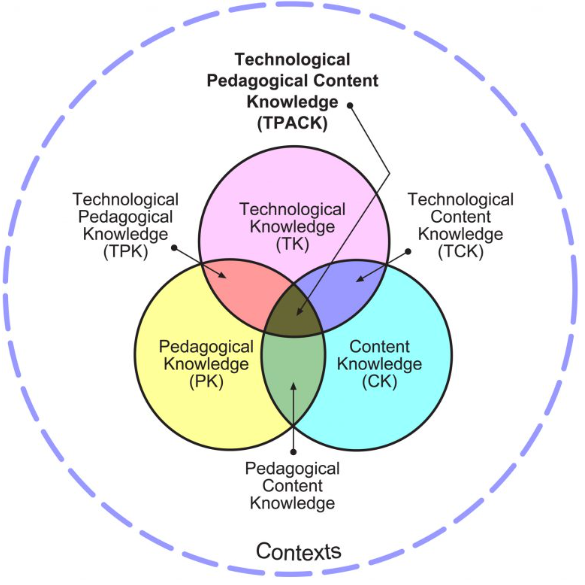
ePortfolios inherently align with the TPACK framework, requiring PSTs to demonstrate competencies in all three domains. The technological knowledge component is evident in PSTs’ ability to navigate digital platforms, incorporate multimedia elements, and leverage cloud-based tools to document their learning journey. Pedagogical knowledge is reflected in how PSTs use ePortfolios to critically analyse their instructional strategies, assess learners’ engagement, and refine their TPs. Content knowledge emerges through the structured presentation of subject-specific materials and reflections, which allow PSTs to articulate their expertise in particular disciplines.
Furthermore, the TPACK framework underscores the need for meaningful technology integration rather than merely adopting digital tools. Research suggests that while PSTs may be adept at using technology for personal purposes, they often struggle with integrating it effectively into their instructional practices (Chai et al., 2013). By embedding ePortfolios within teacher education programs, institutions can provide structured opportunities for PSTs to develop their TPACK competencies, enhancing their ability to design technology-rich learning environments.
SRL Theory
The SRL Theory (Zimmerman, 2000) emphasises the role of self-directed learning, goal setting, and metacognition in academic and professional development (see Figure 2).
Figure 2
Self-regulated learning theory
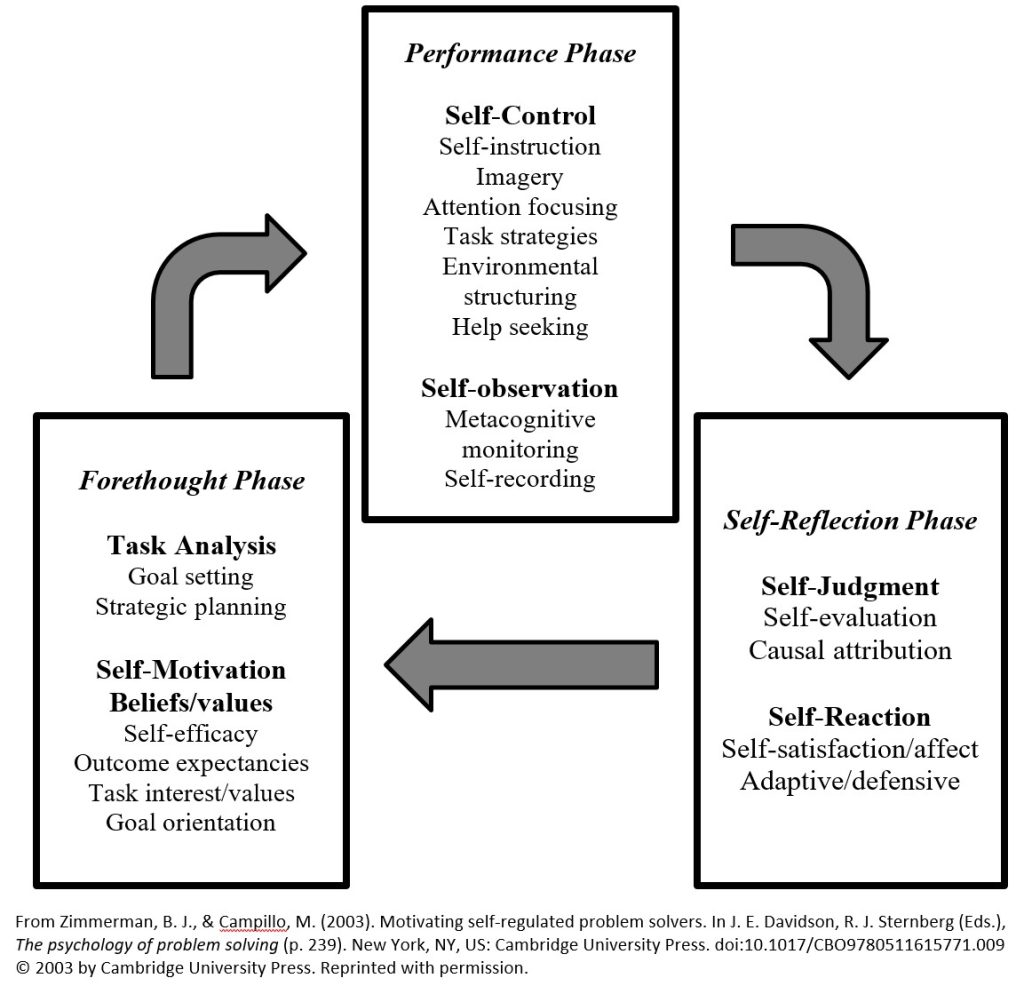
ePortfolios align with SRL principles by enabling PSTs to take ownership of their knowledge, track their progress, and make informed decisions about their professional growth (Figure 2). Zimmerman’s (2000) SRL consists of three phases: forethought, performance, and self-reflection. In the forethought phase, PSTs set specific learning objectives, such as improving classroom management strategies or developing differentiated instructional methods. ePortfolios support this phase by allowing PSTs to define their teaching goals and curate resources that align with their aspirations. In the performance phase, PSTs engage in teaching activities, document their instructional practices, and receive feedback from mentors and peers. This stage highlights the interactive and collaborative nature of ePortfolios, as they provide a platform for formative assessment and peer review. The self-reflection phase involves analysing one’s performance, assessing the effectiveness of different teaching approaches, and making strategic adjustments for future improvement.
ePortfolios contribute to self-regulation by promoting metacognitive awareness, enabling PSTs to evaluate their competencies critically and take proactive steps toward professional enhancement. Studies suggest that students who engage in SRL through ePortfolios demonstrate higher motivation, engagement, and accountability in their learning processes (Ciesielkiewicz et al., 2024). Thus, integrating SRL theory into ePortfolio design ensures that PSTs develop the necessary skills to become autonomous, reflective, and adaptive educators.
The TPACK guided the design of digital features supporting pedagogical documentation, and SRL shaped the system’s goal-setting, progress tracking, and feedback functionalities. These frameworks also informed the analysis of participant feedback, particularly regarding reflective depth, self-regulation, and digital engagement.
METHODOLOGY
This study employed a DBR methodology to iteratively design, develop, and refine a digital e-portfolio for pre-service teacher education. DBR is a suitable approach for technology-enhanced educational interventions as it involves multiple cycles of design, implementation, evaluation, and revision in authentic learning contexts. This methodology ensures both theoretical grounding and practical relevance by investigating “learning ecologies” (Hoadley & Campos, 2022).
The DBR process for developing the MyEPortfolio platform was conducted through four iterative phases. The analysis and exploration phase entailed identifying gaps in existing TP documentation and reviewing relevant theoretical frameworks, notably TPACK and SRL. Data was gathered through a consultation with a TPEs and a focus group with PSTs, which informed the initial problem definition and design requirements. In the design and development phase, these insights guided the creation of a functional prototype that integrated structured reflection templates, assessment rubrics, and digital literacy supports. The implementation and testing phase involved pilot deployment with PSTs and expert reviews with TPEs, enabling evaluation of the prototype within authentic learning contexts. Finally, the evaluation and refinement phase employed thematic analysis of feedback from both PSTs and experts to iteratively enhance the platform’s features and refine the accompanying implementation guide, thereby ensuring alignment with pedagogical intent and user needs.
Research Context
The research was conducted within a Bachelor of Education program at a University of Technology in South Africa. The MyEPortfolio platform was piloted during the TP module, a compulsory course where PSTs document and reflect on their school-based learning experiences. The digital e-portfolio was introduced as an alternative to the traditional physical TP file. The intention was to provide PSTs with a more dynamic, accessible, and reflective space for documenting their competencies, incorporating digital media, and receiving structured feedback.
Participants
A purposive sampling strategy was employed to recruit participants with direct experience with the TP process and engagement with the MyEPortfolio platform. The sample was comprised of two distinct groups: pre-service teachers and TP experts.
A total of 30 PSTs enrolled in their 2nd, 3rd, and 4th years of a Bachelor of Education program at a University of Technology in South Africa volunteered to participate. These participants had completed at least one school-based teaching placement and were introduced to the MyEPortfolio platform during a digital orientation workshop. First-year PSTs were intentionally excluded from the sample due to their limited exposure to TP and insufficient familiarity with professional teaching documentation.
Two TP experts (TPEs) were also included to enrich the study with their perspectives. The experts are experienced university lecturers involved in supervising and assessing PSTs, providing critical insight into current practices, challenges with traditional TP files, and the relevance of a digital e-portfolio platform for administrative efficiency and pedagogical quality. The TPEs also served as a reviewer of the MyEPortfolio prototype, assessing its alignment with assessment expectations and institutional needs and its potential for broader implementation.
Participation in the study was entirely voluntary. All individuals were provided with detailed information regarding the purpose and process of the study, and written informed consent was obtained to ensure ethical compliance. Confidentiality and anonymity were strictly upheld throughout the data collection and reporting phases, ensuring the integrity of participant contributions.
Data Collection
This study employed a multi-method data collection strategy to comprehensively understand the MyEPortfolio platform’s design, usability, and pedagogical value. Three primary data sources were gathered during the DBR process: a needs analysis, an expert interview with a TP expert, and usability feedback from PSTs.
First, a needs analysis was conducted during the Analysis and Exploration phase to identify design requirements and guide the development of the implementation framework. This involved a focus group with PSTs and an interview with a TPEs.
Second, a semi-structured expert interview was conducted online via Microsoft Teams with two TPEs. The interview focused on the feasibility, alignment, and potential of implementing MyEPortfolio within current TP systems. TheTPEs also reviewed the platform prototype and provided critical feedback on assessment integration, workflow efficiency, and anticipated barriers.
Third, usability testing was conducted with a convenience sample of 30 PSTs across three academic levels (2nd, 3rd, and 4th years). Following a live demonstration of the MyEPortfolio prototype, PSTs navigated the platform independently and completed a structured evaluation questionnaire that assessed perceived ease of use, relevance of features (e.g., reflection templates, artifact uploads, progress tracking), and areas for improvement. Open-ended responses captured qualitative reflections, while post-session debriefs allowed additional informal feedback on their experiences.
The triangulation of these data sources, analysis, expert insights, and user feedback, ensured that the MyEPortfolio design and implementation guide was grounded in theory and shaped by the lived experiences and needs of those directly involved in teacher preparation.
Data Analysis
This study employed qualitative analysis methods to interpret data drawn from three primary sources: (1) a PSTs needs survey, (2) interview with two TPEs coded TPE01 sand TPE02, and (3) usability feedback gathered from PSTs following their interaction with the MyEPortfolio platform. All datasets were analysed using thematic analysis, guided by Braun and Clarke’s (2023) six-phase framework. These phases included: (1) familiarisation with the data through repeated reading and memorising; (2) generating initial codes by identifying meaningful units related to design, usability, pedagogy, and implementation; (3) searching for patterns and connections across codes to develop initial themes; (4) reviewing themes to ensure internal coherence and alignment across sources; (5) defining and naming themes to capture their core meanings; and (6) producing the final analytical narrative, supported by verbatim quotes and literature integration.
The literature review was coded inductively to identify prevailing theoretical and practical perspectives on ePortfolio design and implementation in teacher education. The expert interview and PST feedback were analysed deductively and inductively, using both a priori codes informed by the theoretical frameworks TPACK and SRL and emergent codes from participant responses. The triangulation of these data sources strengthened the credibility of the findings and provided a nuanced understanding of the platform’s strengths, areas for improvement, and potential for institutional integration.
Expert Interview and PST Feedback
Data from the TPEs interview were transcribed and coded manually. Key themes included assessment alignment, institutional readiness, and shifting from traditional documentation to digital portfolios. The expert’s feedback offered strategic insights into how the MyEPortfolio platform could enhance continuity, reduce administrative workload, and support evidence-based mentoring.
PST feedback, collected via structured questionnaires and post-session reflections, was analysed to surface user perceptions of usability, confidence with digital tools, and engagement with reflective processes. Their responses were coded and grouped into themes such as “Platform Usability and Navigation,” “Value of Structured Reflection,” “Digital Skill Gaps,” and “Desire for Interactive Features.”
Theoretical Framework Alignment
Throughout the analysis process, the identified themes were interpreted through the lens of the study’s guiding theoretical frameworks. TPACK was used to understand how PSTs described the interaction of technology, pedagogy, and content using MyEPortfolio. SRL theory helped evaluate how the ePortfolio supported reflective cycles, from concrete experience to active experimentation. Furthermore, SRL theory guided the interpretation of data related to SRL behaviours, particularly goal-setting, self-monitoring, and feedback use.
Triangulating findings across the literature, expert insight, and PST experiences ensured depth and credibility, allowing the study to address theoretical alignment and practical implementation.
Ethical Consideration
This study adhered to ethical research principles and was approved by the Faculty Ethics Committee of the participating university. All participants, including PSTs and the TP experts, were provided with detailed information about the study’s aims, procedures, and their rights as participants. Informed consent was obtained from all participants prior to data collection. Participation was entirely voluntary, and individuals were informed that they could withdraw from the study at any point without any penalty or academic consequence.
To safeguard the privacy and anonymity of participants, pseudonyms were used in all reporting, and no identifying personal information was disclosed. Data collected during the study, including audio recordings, digital responses, and observation notes, were stored securely on password-protected systems accessible only to the research team.
FINDINGS AND DISCUSSION
Following the development of the initial prototype, it underwent an expert review phase involving TP experts and PSTs. The themes reflect how the MyEPortfolio platform addresses identified gaps in TP documentation and supports reflective pedagogy, digital literacy, and professional growth.
MyEPortfolio Platform Design and Functionality
The study’s ePortfolio interface was designed to be compatible with both web and mobile applications. The main menu consists of a “Dashboard,” “MyEPortfolio,” “My Artefacts,” and “Reflections,” with the flexibility to add more sections based on institutional requirements. A dedicated section showcases learning achievements, covering skills, competencies, feedback, and assessment reports. The main activity page, “MyePortfolio,” allows users to create new portfolios and manage active portfolios and drafts, which can be archived or shared. Each portfolio entry displays key information, such as the portfolio type, last updated date, and total artefacts, and indicates whether it is publicly or privately accessible. A “recent activity” feed is also displayed in chronological order.
Multimedia tools are integrated into the design to make the ePortfolio more engaging, allowing PSTs to use video recording platforms, cloud storage, and professional design software to enhance their portfolios (Bower, 2019; Mantulenko, 2020). They can create video lesson reflections, infographic summaries, and interactive digital presentations to make their ePortfolios more dynamic and informative. This section discusses the key findings from the expert review, PST feedback, and literature synthesis. The themes reflect how the MyEPortfolio platform addresses identified gaps in TP documentation and supports reflective pedagogy, digital literacy, and professional growth.
Enhancing Reflective Practice Through Structured Design
Using MyEPortfolio significantly enhances the depth and quality of reflective practice among PSTs. PST401 noted, “The reflection templates and prompts seem helpful for guiding my thinking,” Several others similarly reported that structured prompts helped them move beyond surface-level observations to more critical, theory informed reflections. Studies have shown that reflective ePortfolios improve metacognitive awareness and pedagogical reasoning (Hamdan & Yassine-Hamdan, 2022; Segaran & Hasim, 2021), particularly when designed around frameworks like TPACK and SRL embedded in practice-based modules. While this benefit is clear, its success assumes that PSTs are provided with adequate training in reflection and are not simply completing prompts to satisfy assessment requirements. Without meaningful engagement or mentor support, the reflective process may become mechanical rather than developmental.
Digital Literacy and Usability in Practice
The MyEPortfolio platform supports the development of digital literacy among PSTs while highlighting areas where scaffolding and support remain necessary. Many PSTs described the platform as user-friendly and praised its layout for simplifying the documentation of their teaching experiences. PST201A shared, “I love the idea of having everything in one place… my current files are a mess, and this looks so organised.” This sentiment suggests that MyEPortfolio offers an intuitive structure that fosters digital confidence and engagement. The justification is that structured, easy-to-navigate digital tools help bridge the gap between everyday digital use and purposeful educational technology integration. This aligns with the TPACK framework, particularly its emphasis on developing technological, pedagogical, and content knowledge. When PSTs use digital platforms like MyEPortfolio to engage in reflective TP, they simultaneously develop the digital competencies needed in 21st-century classrooms.
These findings are consistent with existing research that links ePortfolio engagement with increased confidence in using educational technology (Muslimin et al., 2023; Zuba Prokopetz, 2022). However, not all PSTs were equally comfortable. Some participants, such as PST200A module, expressed uncertainty around uploading media files and using multimedia tools, suggesting a digital divide that persists even within digitally native student groups. This highlights the need for targeted digital skills training and “how-to” guidance within the platform to ensure equitable access and practical use. PSTs could become disengaged or underutilise the platform’s capabilities without this support (Yeboah, 2022).
Improving Assessment Efficiency and Transparency
One of the significant advantages of MyEPortfolio lies in its ability to improve assessment efficiency and transparency in TP documentation. Feedback from TPE01 module provided compelling support for this assertion, as he described the existing paper-based process as a “tedious affair” and emphasised that the platform allows teacher educators to access PSTs’ real-time updates, enabling earlier and more targeted feedback, sometimes even before physical classroom visits. This suggests that digital portfolios streamline administrative review and extend the pedagogical support window, allowing for more continuous, formative assessment. The logic underlying this argument is that increased visibility into PSTs’ TP enables mentors to intervene earlier and more effectively, enhancing the overall feedback cycle. This is further supported by SRL theory, which posits that timely and specific feedback promotes reflective action and professional growth (Zimmerman, 2000), and by empirical research on digital feedback systems in teacher education (Hui et al., 2024).
Additionally, TPE02 module observed that MyEPortfolio could reduce “flimsy excuses” for non-compliance, indicating that the platform fosters greater accountability and professionalism among PSTs. This highlights the broader behavioural influence of digital platforms not only on assessment logistics but also on PSTs motivation and engagement. While the benefits are evident, the platform’s effectiveness may depend on consistent internet access and user training, which suggests the need for ongoing support and infrastructure considerations during implementation (Tarimo & Kavishe, 2017).
Platform Design Principles and Future Potential
The effectiveness of the MyEPortfolio platform lies in its foundation on three interrelated design principles: accessibility, usability, and pedagogical alignment. These principles emerged through iterative feedback from PSTs and teaching experts, who emphasised the importance of mobile compatibility, structured reflection, and a visually intuitive interface. As noted by multiple users, features like reflection prompts, simple navigation, and progress indicators enhanced their engagement and ease of use. The rationale behind this approach is that when digital learning tools are intentionally designed around users’ cognitive, technical, and pedagogical needs, they are more likely to be adopted, sustained, and meaningful in practice. This is particularly true in low-resource environments where equitable access and intuitive design are essential for inclusion. Drawing on TPACK and SRL, the design of MyEPortfolio ensures that the platform does not function as a static repository but as an active learning and reflection space. The effectiveness of the MyEPortfolio platform lies in its foundation on three interrelated design principles: accessibility, usability, and pedagogical alignment.
These principles emerged through iterative feedback from PSTs and TP experts, who emphasised the importance of mobile compatibility, structured reflection, and a visually intuitive interface. As noted by multiple users, features like reflection prompts, simple navigation, and progress indicators enhanced their engagement and ease of use. The rationale behind this approach is that when digital learning tools are intentionally designed around users’ cognitive, technical, and pedagogical needs, they are more likely to be adopted, sustained, and meaningful in practice. This is particularly true in low-resource environments where equitable access and intuitive design are essential for inclusion. Drawing on TPACK and SRL, the design of MyEPortfolio ensures that the platform does not function as a static repository, but as an active learning and reflection space.
Figure 3 shows PSTs’ feedback on the evaluation of the MyEPortfolio prototype. PSTs demonstrated strong agreement regarding the helpfulness of reflection templates, the support for documenting professional growth over time, and the clarity of assessment rubrics, ultimately expressing confidence in the MyEPortfolio’s ability to enhance their teaching competencies.
Figure 3
Feedback on MyEportfolio Prototype Design and Functionality
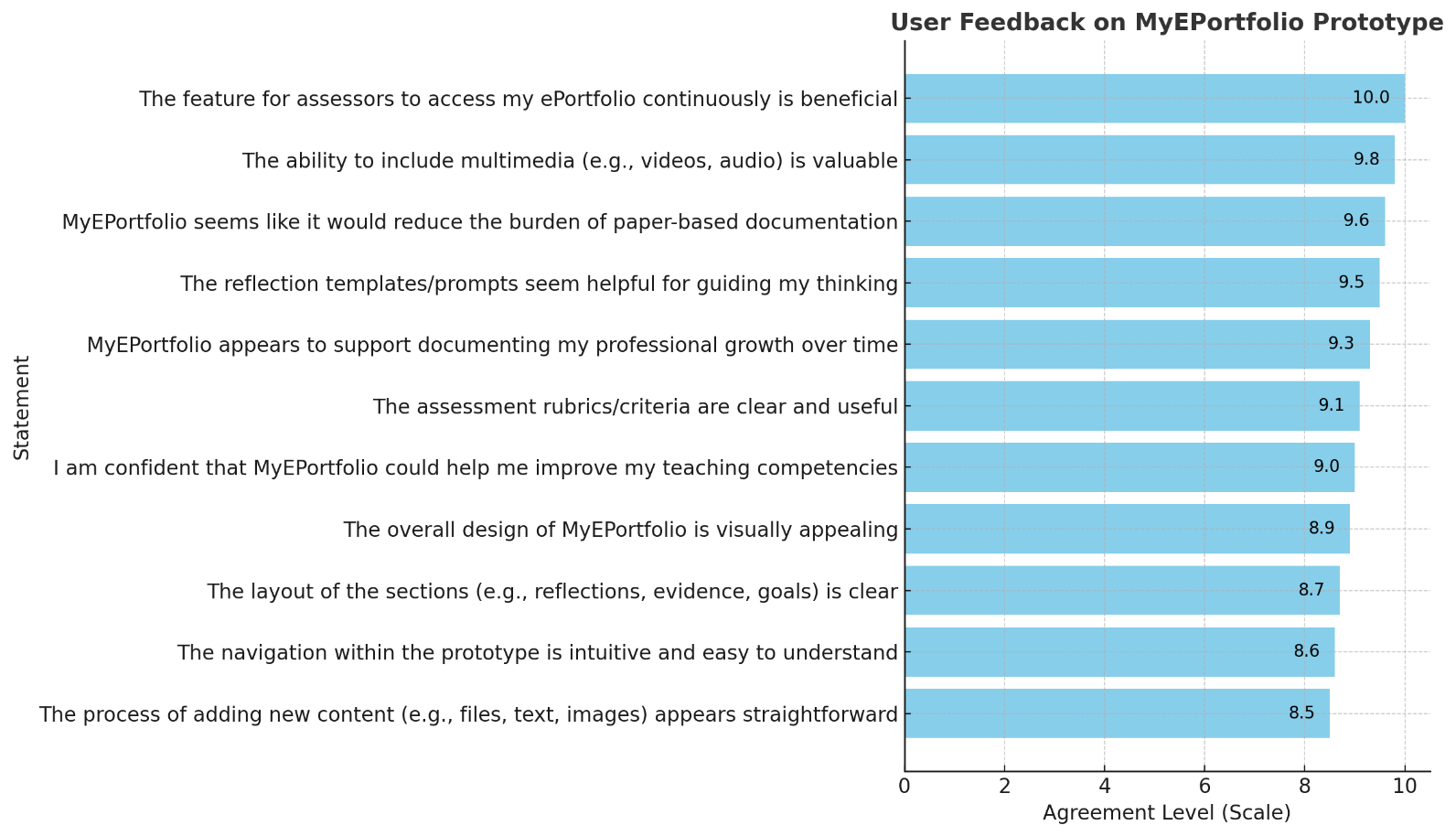
Despite these positive findings, some challenges affecting practical feasibility were identified. Although most PSTs could navigate the prototype easily, a few participants anticipated challenges in embedding multimedia elements, such as videos and images, into their MyEPortfolio. This issue was mainly due to a lack of prior experience with the technical aspects of digital portfolios, highlighting a need for improved technical support. Furthermore, some participants desired more interactive features like peer feedback or collaborative elements to enhance engagement and provide opportunities for shared learning, indicating areas for future enhancements to social and pedagogical feasibility. This design approach is echoed in the literature, where studies emphasise that ePortfolios are most impactful when embedded in pedagogical theory, informed by real user needs, and iteratively refined (Hoadley & Campos, 2022; Mogas et al., 2023). Incorporating multimedia tools, cloud access, and plans for AI-driven personalisation and LMS integration reinforces the platform’s potential to grow with technological demands.
However, this design success assumes that users have consistent device access and receive adequate training to utilise platform features fully. Without institutional support for onboarding and technical troubleshooting, even the most well-designed tools may fail to achieve their intended impact. Therefore, sustained user-centred refinement and infrastructure support will be crucial for long-term success and scalability.
Barriers and Challenges: Connectivity, Confidence, and Support
While the MyEPortfolio platform offers clear pedagogical and administrative advantages, its successful implementation is constrained by infrastructural and digital competence barriers. Participants identified inconsistent internet access, unfamiliarity with uploading media, and the need for more interactive and collaborative features as significant limitations. For example, PST200A mentioned challenges in recording and uploading media, while TPE01 acknowledged that PSTs often “…blame the system…” when connectivity and lack of skill issues hinder engagement. The reasoning here is that digital tools, no matter how well-designed, require supportive infrastructure, contextual alignment, and user readiness to be effective. The presence of robust features does not guarantee adoption if users cannot access them reliably or are not confident in their use. This insight aligns with research on the digital divide in education, highlighting disparities in access, device quality, and digital literacy as key barriers to equitable participation (Zuba Prokopetz, 2022; Sulistiani et al., 2024).
Moreover, these challenges affect more than usability; they impact student motivation, participation, and reflective quality. Without reliable access, even motivated PSTs may fall behind in documenting their experiences or engaging with feedback (Yeboah, 2022). Therefore, these structural and technical barriers pose risks to both the pedagogical value and scalability of the platform. However, these challenges are not insurmountable. They underscore the importance of integrating ongoing technical support, orientation sessions, and offline access options within future versions of MyEPortfolio. By adopting a responsive, user-centred development approach consistent with the iterative spirit of DBR, the platform can evolve to address these limitations and expand its reach.
PST202 expressed her relief at digitalising the TP process, mentioning that it was costly for PSTs to print many documents, often in colour, to “impress” their assessors. “This TP cost us, everything which we use during TP is keeping documents, and most are printed; that is a cost … to print one colour page it costs not less than R2…” TPE01, the first expert to be interviewed, expressed strong support for the move towards a digital ePortfolio system, acknowledging that “letting go of the past or whatever, as you know, there needs to be growth and room for improvement and familiarisation and stepping out of your comfort zone.” He views the designed system as actively facilitating this necessary shift. He emphasised the importance of overcoming resistance to change, stating, “Let’s not hide behind the Internet, and let’s not hide behind ‘I didn’t know.'” He believes the system will reduce for non-compliance, encouraging greater accountability from PSTs. PST303 expressed his desire to have an automated reminder on the progress of their activities to help them stay on track with the portfolio. “The MyEPortfolio must generate a progress report or maybe a ‘progress bar’ on every activity.” PST200A hinted, “They must be a ‘How to do’ especially on using and uploading media and self-recording…more engaging…” . PSTs can use video recording platforms, cloud storage, and professional design software to enhance their portfolios. They can also apply various techniques, such as creating video lesson reflections, infographic summaries, and interactive digital presentations, to make their ePortfolios more dynamic and informative.
Barriers and Challenges: Connectivity, Confidence, and Support
While the MyEPortfolio platform offers clear pedagogical and administrative advantages, its successful implementation is constrained by infrastructural and digital competence barriers. Participants identified inconsistent internet access, unfamiliarity with uploading media, and the need for more interactive and collaborative features as significant limitations. For example, PST200A mentioned challenges in recording and uploading media, while TPE01 acknowledged that PSTs often “blame the system” when connectivity and lack of skill issues hinder engagement.
The reasoning is that even the most well-designed the platform can only be effective when supported infrastructure capacity, contextual alignment, and user readiness. The presence of robust features does not guarantee adoption if users cannot access them reliably or are not confident in their use. This insight aligns with research on the digital divide in education, highlighting disparities in access, device quality, and digital literacy as key barriers to equitable participation (Zuba Prokopetz, 2022; Sulistiani et al., 2024).
Moreover, these challenges affect more than usability; they impact student motivation, participation, and reflective quality. Without reliable access, even motivated PSTs may fall behind in documenting their experiences or engaging with feedback (Serwornoo et al., 2024). Therefore, these structural and technical barriers pose risks to both the pedagogical value and scalability of the platform.
However, these challenges are not insurmountable. They underscore the importance of integrating ongoing technical support, orientation sessions, and offline access options within future versions of MyEPortfolio. By adopting a responsive, user-centred development approach consistent with the iterative spirit of DBR, the platform can evolve to address these limitations and expand its reach.
PST202 expressed her relief at digitalising the TP. She mentioned that TP is costly for PSTs because they had to print many documents, in most cases in colour, to ‘impress’ their assessors. “This TP cost us, everything which we use during TP is keeping documents, and most are printed, that is a cost … to print one colour page it costs not less than R2…”
TPE01, being the first expert to be interviewed, expressed strong support for the move towards a digital ePortfolio system, acknowledging that “letting go of the past or what, as you know, there needs to be growth and room for improvement and familiarisation and stepping out of your comfort zone.” He views the designed system as actively facilitating this necessary shift. He emphasised the importance of overcoming resistance to change, stating, “Let’s not hide behind the Internet and let’s not hide behind, I didn’t know.” He believes the system will reduce “flimsy excuses” for non-compliance, encouraging greater accountability from PSTs. PST303 expressed his desire to have an automated reminder on the progress of their activities to help them (PSTs) stay on track with the portfolio. “The MyEPortfolio must generate a progress report or maybe a ‘progress bar’ on every activity.” PST200A hinted “They must be a ‘How to do’ especially on using and uploading media and self-recording…”
IMPLICATIONS FOR TEACHER EDUCATION PROGRAMS
Integrating MyEPortfolio into teacher education programs can significantly transform how higher education institutions assess, develop, and support the professional growth of PSTs. The findings from this study demonstrate that a structured, digital portfolio platform not only enhances reflective practice and assessment efficiency but also supports the development of digital pedagogical competencies aligned with 21st-century teaching standards. The core justification is that institutionalizing such a tool provides a scalable, evidence-based approach to improving TP documentation, mentoring, and performance monitoring. Backed by frameworks such as TPACK and SRL, MyEPortfolio offers a theoretically grounded model that can inform national teacher education policy and institutional guidelines on digital pedagogy and professional development. The platform’s structured templates, real-time feedback, and multimedia capabilities align with policy goals around digital transformation, continuous assessment, and quality assurance in teacher training. While adoption requires institutional commitment to infrastructure, teacher educators’ training, and integration with the institutional LMS, the findings suggest that MyEPortfolio can serve as a blueprint for other institutions seeking to embed reflective, data-driven, and digitally literate practices into their teacher preparation frameworks.
CONCLUSION AND FUTURE RESEARCH DIRECTIONS
This study addresses a significant gap in the literature by moving beyond the general advocacy for ePortfolios to provide a structured, evidence-based methodology for their design and implementation. By employing a DBR approach, this paper details the iterative development of MyEPortfolio, a contextually relevant digital platform for PSTs in a South African university. The key contribution lies not merely in reinforcing the known benefits of ePortfolios, but in offering a practical blueprint grounded in TPACK and SRL theories for how higher education institutions can effectively design such tools to enhance reflective practice, digital literacy, and assessment efficiency. The findings provide a clear model for bridging the gap between theoretical frameworks and practical application, highlighting the critical role of user-centred design in low-resource environments. The study’s insights on persistent challenges, such as the digital divide and the need for institutional support, further inform a realistic pathway for the scalable and sustainable integration of digital platforms into teacher education policy and practice. Finally, this research provides a valuable roadmap for fostering a new generation of digitally competent and professionally reflective educators.
REFERENCES
Arsene, M. K., & Pascal, N. R. (2024). Digital Divide and its Implications for Education in the Post-covid-19 Era in Sub-Saharan Africa. Innovation and Education, 6, 108–132. https://doi.org/10.1163/25248502-bja00007
Bower, M. (2019). Technology-mediated learning theory. British Journal of Educational Technology, 50(3), 1035–1048. https://doi.org/10.1111/bjet.12771
Chai, C. S., Hwee, J., Koh, L., & Tsai, C.-C. (2013). A Review of Technological Pedagogical Content Knowledge. Journal of Educational Technology & Society, 16(2), 31–51. https://doi.org/10.2307/jeductechsoci.16.2.31
Ciesielkiewicz, M., Bonilla, C. F., & Santos, M. (2024). The impact of service learning supported by the ePortfolio on the development of professional competencies. Teaching Education, 35(3), 293–310. https://doi.org/10.1080/10476210.2023.2281396
Esteban Jr., A. M., & Cruz, M. J. P. (2021). Digital Divide in Times of Pandemic among Teacher Education Students. OALib, 08(04), 1–12. https://doi.org/10.4236/oalib.1107323
Faloye, S. T., & Ajayi, N. (2022). Understanding the impact of the digital divide on South African students in higher educational institutions. African Journal of Science, Technology, Innovation and Development, 14(7), 1734–1744. https://doi.org/10.1080/20421338.2021.1983118
Feridouni-Solimani, A., & Ahmed-Mohamed, K. (2024). The Impact of Collaborative ePortfolios on Academic Learning in a University Setting. Journal of Technology and Science Education, 14(2), 553–568. https://doi.org/10.3926/jotse.2150
Ford, J. D., & Crawford, D. (2024). Integrating Professional Preparedness ePortfolios Within an Undergraduate Engineering Curriculum. IEEE Transactions on Professional Communication, 67(2), 246–259. https://doi.org/10.1109/TPC.2024.3387582
Hoadley, C., & Campos, F. C. (2022). Design-based research: What it is and why it matters to studying online learning. Educational Psychologist, 57(3), 207–220. https://doi.org/10.1080/00461520.2022.2079128
Majola, M. X. (2025). A Proposed Framework For E-portfolio Use to Enhance Teaching and Learning: Process E-portfolio. International Journal of Educational Methodology, 11(1), 63–79. https://doi.org/10.12973/ijem.11.1.63
Mantulenko, V. V. (2020). Effective ways of digital media usage in school education. Revista Amazonia Investiga, 9(30). https://doi.org/10.34069/ai/2020.30.06.14
Mishra, P., & Koehler, M. J. (2006). Technological Pedagogical Content Knowledge: A Framework for Teacher Knowledge. Teachers College Record, 108(6), 1017–1054.
Mogas, J., Cea Álvarez, A. M., & Pazos-Justo, C. (2023). The Contribution of Digital Portfolios to Higher Education Students’ Autonomy and Digital Competence. Education Sciences, 13(8). https://doi.org/10.3390/educsci13080829
Roco, M., & Barberà, E. (2022). ePortfolio to promote networked learning: an experience in the Latin American context. International Journal of Educational Technology in Higher Education, 19(1). https://doi.org/10.1186/s41239-022-00336-8
Roos, L., Trasberg, K., Eller, D., & Kalk, K. (2022). The role of ePortfolios in supporting vocational teacher students’ learning. Eesti Haridusteaduste Ajakiri. Estonian Journal of Education, 10(1), 90–117. https://doi.org/10.12697/eha.2022.10.1.05
Segaran, M. K., & Hasim, Z. (2021). Self-Regulated Learning Through EPortfolio: A Meta-Analysis. Malaysian Journal of Learning and Instruction, 18(1), 131–156. https://doi.org/10.32890/MJLI2021.18.1.6
Serwornoo, M. Y. W., Danso, S., Azanu, B., Semarco, S. K. M., & Aidoo, E. A. K. (2024). Use of Digital Platforms Among University Students: A Systematic Literature Review. Qeios, 6(7). https://doi.org/10.32388/sqkgt5.2
Taptamat, N., Slade, C., Bowker, S., & Brown Wilson, C. (2024). ePortfolio-based Professional Development: Insights from a Southeast Asian Online Educators’ Community of Practice. Journal of University Teaching and Learning Practice. https://doi.org/10.53761/tets3y82
Tindall-Ford, S., Waters, K., & Johnson, N. F. (2010). An evaluation of a web-based ePortfolio system in an Australian pre-service teacher education program. International Journal of Learning, 17(4), 297–308. https://doi.org/10.18848/1447-9494/cgp/v17i04/47000
Torres, J. T., & Mckinley, M. C. (2023). From Review to Practice: Implementing ePortfolio Research in Professional Identity Formation. International Journal of EPortfolio 2023, 13(1), 1–9. http://www.theijep.com
TPACK. (2012). Using the TPACK image.Date retrieved October 24, 2025 https://tpack.org/tpack-image/
Yeboah, R. (2022). COVID-19 and tertiary students’ knowledge, usage and challenges of using online learning platforms. Cogent Education, 9(1). https://doi.org/10.1080/2331186X.2022.2135257
Zimmerman, B.J., & Campillo, M. (2003). Motivating self-regulated problem solvers. In J.E. Davidson, R.J. Sternberg (Eds.). The psychology of problem solving. Cambridge University Press.
Zimmerman, B. J. (1989). A Social Cognitive View of Self-Regulated Academic Learning. In Journal of Educational Psychology (Vol. 81, Issue 3).
Zimmerman, B. J. (2000). Self-Efficacy: An Essential Motive to Learn. Contemporary Educational Psychology, 25(1), 82–91. https://doi.org/10.1006/ceps.1999.1016
Zuba Prokopetz, R. (2022). ePortfolio Pedagogy: Stimulating a Shift in Mindset. The Open/Technology in Education, Society, and Scholarship Association Journal, 2(1), 1–19. https://doi.org/10.18357/otessaj.2022.2.1.27
AUTHOR
Dr Nyarai Tunjera is an educational technologist, researcher, and innovator dedicated to transforming teaching and learning through technology. Holding a PhD in Educational Technology, she bridges the worlds of Computer Science and Education, with expertise in digital pedagogy, AI integration, and ePortfolio design. Her work focuses on empowering pre-service and in-service teachers to leverage technology for impactful, inclusive education, with a strong commitment to advancing girls’ and women’s participation in STEM. Dr Tunjera has contributed to international research collaborations, authored scholarly publications, and led curriculum design projects in cybersecurity, 21st-century ICT integration, and digital citizenship. She is passionate about equipping educators with the knowledge and tools to navigate the digital era confidently, fostering innovation, resilience, and lifelong learning. Guided by a vision of equitable access to quality education, she continues to drive initiatives that merge pedagogy, technology, and social impact for global change.
Email: nztunjera@gmail.com