34 ePortfolios as Catalysts for Self-Directed Learning in Higher Education
Mncedisi Christian Maphalala and Ntombikayise Nkosi,
University of South Africa
ABSTRACT
The use of ePortfolios in higher education has garnered significant interest in promoting self-directed learning (SDL), empowering students to take charge of their educational experiences. The study examines the transformative potential of ePortfolios through a systematic literature review (SLR) of studies published between 2014 and 2024. The PRISMA framework guided the review process, which ensured a comprehensive selection and evaluation of relevant literature. The selected studies were analysed using thematic analysis, focusing on trends, methodologies, and findings related to implementing ePortfolios in higher education settings. The findings indicate that ePortfolios enhance SDL by promoting reflective practices, goal-setting, and personalised learning paths. Additionally, they facilitate formative assessment and foster the digital literacy skills essential for lifelong learning. However, challenges such as technological issues, inadequate institutional support, and varying levels of student engagement were also identified. The study highlights the need for strategic implementation and supportive institutional policies to maximise the effectiveness of ePortfolios in promoting SDL. The findings provide valuable insights for academics, policymakers, and researchers who aim to enhance teaching and learning in the digital age.
Keywords: ePortfolios; Self-Directed Learning (SDL); Student Engagement; Distance; Student Autonomy; Higher Education; Digital Pedagogy
INTRODUCTION
Self-directed learning (SDL) is a multifaceted process in which individuals proactively identify their learning needs, set goals, locate resources, implement strategies, and assess their progress, independently or with external support (Knowles, 1980). In the context of higher education, SDL is essential as it equips students with the ability to become independent students capable of navigating the rapidly changing demands of the 21st-century knowledge-driven economy. Rather than being a rigid concept, SDL is dynamic and encompasses various interpretations. Kerka (1994) cautions against overly simplistic definitions, emphasising its evolving nature. Knowles (1980) describes SDL as a student-driven process that includes recognising educational needs, establishing objectives, finding suitable resources, applying learning methods, and evaluating outcomes, with or without assistance. This approach transitions students from reliance on instructors to becoming self-motivated students who actively manage their educational experiences. Unlike traditional pedagogy, which is lecturer-centered, SDL is rooted in andragogy, focusing on fostering student autonomy and incorporating personal experiences into the educational process. Ajani and Maphalala (2023) describe SDL as an engaged process where students take responsibility for each stage of their learning journey. Similarly, Zarabanda (2019) and Morris and Rohs (2021) emphasise the importance of students taking charge of planning, executing, and reflecting on their learning activities.
The significance of SDL lies in its potential to develop essential skills such as autonomy, reflective practice, goal-setting, and lifelong learning (Maphalala et al., 2021; Msekelwa, 2023; Ajani & Maphalala, 2023). These skills are increasingly valued in an educational landscape that emphasises critical thinking, adaptability, and continuous skill development to meet the needs of global markets (Dishon & Gilead, 2021; OECD, 2018). Higher education institutions are tasked with preparing students for a rapidly evolving workforce, and SDL is a fundamental component of this preparation. Developing SDL skills enables students to take ownership of their learning, fostering deeper engagement and resilience in the face of complex challenges (Seevaratnam et al., 2023). As 21st-century education demands shift towards student-centred approaches, SDL becomes integral in cultivating independent, self-regulated students equipped to thrive in a knowledge-driven economy (Li et al., 2023; Orn, 2022).
ePortfolios are digital tools that allow individuals to document, reflect upon, and showcase their learning experiences and achievements. Defined by Mapundu & Musara (2019) as a digitised collection of artefacts, resources, and accomplishments representing an individual or group of students’ work that serves multiple purposes in higher education. They facilitate reflective practice and personalised learning pathways and provide a means for assessment and feedback. The evolution of ePortfolios has been marked by their growing adoption in higher education institutions to support student learning and professional development (Farrell, 2020). Initially used primarily for assessment purposes, modern ePortfolios integrate multimedia elements, such as videos, audio recordings, and interactive content, to create rich representations of learning experiences. This multimedia integration enables students to curate and present their work in dynamic, engaging ways that align with contemporary digital literacy expectations (Kokkinos, 2024). Key features of ePortfolios include multimedia integration, supporting diverse content formats to enhance engagement; personalised learning pathways, allowing students to tailor their learning journeys; and assessment and feedback tools, enabling continuous formative and summative evaluation (Chang & Kabilan, 2024).
ePortfolios play a significant role in fostering SDL by providing a platform for reflective practice, self-assessment, and goal tracking. Through regular reflection on their learning experiences, students can develop a deeper understanding of their progress, identify areas for improvement, and set future learning objectives (Silver et al., 2023). ePortfolios encourage metacognitive practices, enabling students to become more aware of their learning strategies and outcomes, thus enhancing their SDL capabilities (Lam, 2024). The theoretical foundations of ePortfolios align closely with SDL principles, particularly through constructivist learning theory, which posits that students construct knowledge through experiences and reflection (Al-Wossabi, 2024). Additionally, metacognition, or the awareness and regulation of one’s cognitive processes, is a critical component of SDL supported by ePortfolios. Studies have shown that integrating ePortfolios in higher education enhances SDL by fostering greater student autonomy, critical reflection, and goal setting (Kiffer et al., 2021; Lee & Bonk, 2024). These findings highlight the potential of ePortfolios to serve as powerful tools for promoting lifelong learning and professional growth.
Despite the recognised benefits of ePortfolios in supporting SDL, there remain gaps in the literature regarding their effectiveness, particularly in higher education contexts. While existing studies provide anecdotal and qualitative insights, there is a need for empirical evidence to determine the impact of ePortfolios on students’ ability to engage in SDL effectively (Kiffer et al., 2021). This study aims to address these gaps by examining how ePortfolios contribute to SDL development in higher education settings. Given the increasing integration of digital tools in educational environments, it is crucial to understand their role in fostering autonomous learning and skill acquisition (Haleem et al., 2022). Furthermore, as institutions seek to enhance student engagement and success, evaluating the effectiveness of ePortfolios in promoting SDL becomes a timely and relevant research endeavour. By exploring the relationship between ePortfolios and SDL, this study seeks to provide actionable insights for educators, policymakers, and students, contributing to advancing digital learning strategies in higher education.
Despite the growing adoption of ePortfolios in higher education, there is limited empirical evidence detailing their effectiveness in cultivating self-directed learning (SDL), particularly within diverse institutional contexts. Most existing studies offer anecdotal or descriptive insights without a consolidated understanding of best practices or common challenges. This study addresses this gap by systematically reviewing recent empirical literature to explore how ePortfolios contribute to SDL. It aims to identify recurring themes, evaluate the quality of evidence, and offer practical recommendations for educators and institutions seeking to enhance student autonomy through digital platforms.
THEORETICAL FRAMEWORK
This study adopts a constructivist learning theory (CLT), which provides a theoretical framework to understand and address the research problem. CLT, grounded in the work of Piaget (1970) and Vygotsky (1978), posits that students actively construct knowledge through experience, reflection, and social interaction. This theory aligns with the four key principles of self-directed learning, as both advocate for student autonomy, reflective practice, and collaborative engagement. It clarifies how ePortfolios support reflective practices, goal setting, and autonomy, which are fundamental to SDL (Mudau & Modise, 2022).
The four key principles of CLT relevant to this study are:
- Scaffolding: Guided support that enables students to achieve more than they could independently.
- Zone of Proximal Development (ZPD): The space between what a student can do alone and what they can achieve with assistance.
- Knowledge Construction: Active integration of new knowledge with prior understanding.
- Social Learning: Emphasis on collaboration and interaction in the learning process.
These principles provide a strong foundation for analysing how ePortfolios facilitate self-directed learning in higher education environments.
RESEARCH METHODOLOGY
This study explores the role of ePortfolios in SDL in higher education through a systematic literature review of empirical SDL studies published between 2014 and 2024. The review follows the PRISMA (Preferred Reporting Items for Systematic Reviews and Meta-Analyses) framework, ensuring a transparent and rigorous selection and evaluation of relevant literature (Moher et al., 2009). Synthesis of existing research aims to identify key trends, methodologies, and effective strategies for enhancing SDL through ePortfolios.
The review process was conducted in three key phases: searching, screening, and analysis.
Phase 1: Searching
To ensure comprehensive coverage, multiple academic databases, including Scopus, Web of Science, ERIC, and Google Scholar, were searched using targeted keywords such as self-directed learning with ePortfolios, ePortfolio strategies in higher education, and barriers to SDL using ePortfolios. Boolean operators were employed to refine search results, and the selection was restricted to peer-reviewed empirical studies published in English between 2014 and 2024.
Phase 2: Screening
Studies were included if they focused on the role of ePortfolios in facilitating SDL within higher education settings, particularly strategies to enhance student autonomy, engagement, and learning outcomes. Exclusion criteria eliminated theoretical papers and studies unrelated to SDL or ePortfolios. After removing duplicates, the search initially identified 1,200 articles, which were refined to 950 unique studies. Following a relevance assessment, 150 articles were shortlisted for full-text review.
Phase 3: Analysis
The 150 full-text articles were reviewed for relevance, methodological rigour, and direct engagement with both ePortfolios and self-directed learning in higher education. Inclusion criteria focused on empirical studies that examined outcomes related to reflection, feedback, student autonomy, or digital competency through ePortfolio use. Articles were excluded if they lacked empirical data, focused solely on K–12 education, or addressed ePortfolios without connecting them to SDL. Ultimately, 11 high-quality, peer-reviewed studies were selected for in-depth thematic analysis, ensuring that findings were grounded in robust and relevant evidence.
Figure 1
Prisma Flow Diagram for Systematic Literature Review
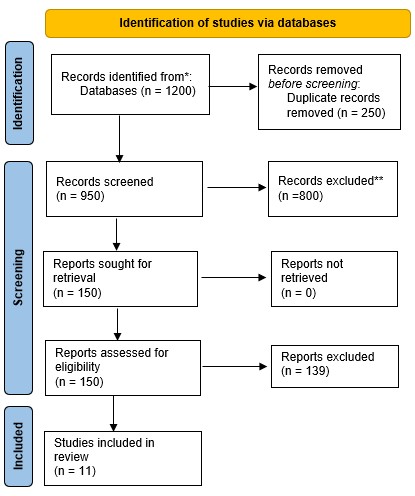
The PRISMA flow diagram visually represents the systematic review process, tracking the progression from the initial search to the final selection of studies while annotating key themes for added clarity.
PRESENTATION OF FINDINGS
Themes were developed through an inductive thematic analysis process. The 11 selected studies were carefully reviewed and coded for recurring concepts, practices, and outcomes related to ePortfolios and SDL. Initial codes were grouped into categories, which were further refined into five overarching themes. These themes represent the central ways in which ePortfolios facilitate SDL in higher education contexts, as evidenced across the reviewed studies. Following the systematic literature review, Table 1 below lists the key findings of ePortfolios as catalysts for self-directed learning in higher education.
Table 1
Key findings of ePortfolios as catalysts for self-directed learning in higher education (created by Authors)
|
Theme
|
Author(s)
|
Findings
|
|
Reflective Practices and Personal Development |
Ajani & Maphalala (2023); Li et al. (2023); Msekelwa (2023 |
Reflection via ePortfolios improved metacognition and student self-efficacy |
|
Personalised Learning and Digital Literacy |
Kokkinos (2024); Lee & Bonk (2024); Yadav (2024) |
ePortfolios allowed for student autonomy and the development of digital skills. |
|
Integration of Formative Assessment and Feedback |
Lam (2024); Chang & Kabilan (2024); Al-Wossabi (2024 |
Continuous feedback gaps in ePortfolios fostered SDL and academic growth. |
|
Overcoming Barriers to ePortfolio Integration |
Patel & Singh (2024); Lam (2023) |
Institutional support was critical for implementation; training improved engagement. |
|
Enhancing Collaborative and Community-Based Learning |
Lloyd et al. (2023); Lee & Kim (2021) |
ePortfolios encouraged peer interaction and community-building in learning |
|
|
|
|
As part of the systematic literature review, five key themes emerged that illustrate how ePortfolios function as catalysts for self-directed learning (SDL) in higher education. These themes include:(1) reflective practices and personal development, (2) personalised learning and digital literacy, (3) integration of formative assessment and feedback, (4) overcoming barriers to ePortfolio integration, and (5) enhancing collaborative and community-based learning. The themes collectively highlight the pedagogical potential of ePortfolios to support metacognition, learner autonomy, feedback loops, institutional alignment, and peer engagement.
FINDINGS AND DATA ANALYSIS
This study explored the impact of ePortfolios on self-directed learning (SDL) in higher education by synthesising key themes identified in the literature. The findings emphasise the transformative potential of ePortfolios in promoting reflection, goal setting, personalised learning, formative assessment, digital literacy, collaboration, and addressing the challenges involved in their implementation.
Theme 1: Reflective Practices and Personal Development
The reviewed studies revealed that ePortfolios play a significant role in promoting reflective thinking and metacognitive development among students. Ajani & Maphalala (2023) found that students used ePortfolios to critically assess their learning progress. Moreover, set meaningful goals, which increased their academic self-efficacy. Li et al. (2023) similarly reported that students engaged more actively in reflective cycles when using ePortfolios to track their development. Msekelwa (2023) observed that guided reflection within ePortfolios helped students become more aware of their learning strengths and areas for improvement, supporting personal and academic growth. These findings illustrate how ePortfolios serve as practical tools for developing self-awareness and independent learning behaviours. From a theoretical perspective, this aligns with SDL principles that advocate student autonomy and goal setting (Knowles, 1980) and with CLT, which supports reflection as a key process in constructing knowledge (Zimmerman & Schunk, 2019). ePortfolios facilitate structured, student-led reflection, enabling deeper engagement and sustained personal development through iterative learning cycles.
Theme 2: Personalised Learning and Digital Literacy
The studies reviewed demonstrated that ePortfolios contribute to personalised learning by allowing students to select and showcase artefacts aligned with their academic and career interests. Kokkinos (2024) reported that students were more engaged when they could design their learning narratives using multimedia content. Lee & Bonk (2024) found that this autonomy fostered greater motivation and ownership of learning. Yadav (2024) noted that the digital nature of ePortfolios also advanced students’ proficiency with digital tools, fostering essential 21st-century competencies. These findings highlight how ePortfolios support students in customising their educational paths and acquiring digital literacy. This directly supports SDL’s emphasis on student agency and self-management. CLT complements these observations by proposing that personalised, scaffolded experiences such as those offered by ePortfolio environments allow students to actively construct knowledge in meaningful, contextualised ways (Piaget, 1970; Vygotsky, 1978).
Theme 3: Integration of Formative Assessment and Feedback
Formative assessment was a recurring benefit across studies using ePortfolios. Lam (2024) showed that students benefited from continuous feedback loops embedded in their ePortfolios, allowing them to revise their work over time. Chang & Kabilan (2024) and Al-Wossabi (2024) reported improvements in academic performance and self-regulation when students received timely, targeted feedback through ePortfolios. These systems also encouraged peer-to-peer feedback, creating additional learning opportunities through collaborative review. These findings reflect how ePortfolios can serve as platforms for responsive, ongoing assessment that fosters learning improvement. While SDL encourages students to evaluate their own progress, it is through structured feedback in ePortfolios that students apply these skills effectively. The scaffolding provided by formative feedback aligns closely with CLT’s concepts of guided learning and the Zone of Proximal Development (ZPD), where students benefit from timely support as they develop new competencies (Vygotsky, 1978).
Theme 4: Overcoming Barriers to ePortfolio Integration
The implementation of ePortfolios across institutions is often challenged by infrastructural, technical, and pedagogical barriers. Patel & Singh (2024) highlighted that without training and support, both educators and students struggled with ePortfolio adoption. Lam (2023) found that limited digital access and a lack of institutional readiness negatively affected engagement. However, both studies noted improved adoption rates where institutions provided structured support, including digital literacy workshops and staff development programs. These findings suggest that effective ePortfolio integration is contingent upon institutional scaffolding mirroring CLT’s emphasis on guided learning environments. While SDL depends on student autonomy, it cannot flourish without adequate support structures. Institutions must ensure equitable access to technology, promote academic readiness, and offer continuous professional development to bridge gaps and foster meaningful engagement with ePortfolios.
Theme 5: Enhancing Collaborative and Community-Based Learning
Several studies highlighted the collaborative potential of ePortfolios. Lloyd et al. (2023) observed that peer interaction through ePortfolio platforms enhanced student engagement and created a sense of academic community. Lee & Kim (2021) found that students developed stronger interpersonal and teamwork skills through co-created content and peer-review activities. Patel & Singh (2024) reported that institutional initiatives such as group reflections and mentorship programs further encouraged community-based learning. These results indicate that ePortfolios are effective tools for promoting collaboration, especially in digital and hybrid learning environments. From a theoretical standpoint, CLT stresses that knowledge is socially constructed, and Vygotsky’s ZPD framework confirms the value of peer guidance and academic discourse. Andragogy also supports this collaborative emphasis, asserting that adult students thrive in settings that promote interaction, shared reflection, and experiential learning (Knowles, 1980)
DISCUSSION
This study aimed to explore how ePortfolios support the development of self-directed learning (SDL) among students in higher education. Through a systematic literature review of 11 empirical studies published between 2014 and 2024, five key themes were identified: reflective practices and personal development, personalised learning and digital literacy, integration of formative assessment and feedback, overcoming barriers to ePortfolio integration and enhancing collaborative and community-based learning. These findings offer insights into the affordances of ePortfolios in promoting student autonomy and engagement within digital learning environments. Firstly, the reviewed literature consistently showed that ePortfolios serve as powerful tools for fostering reflection and metacognitive growth. Students who engaged in regular reflection through ePortfolio entries developed a clearer understanding of their learning goals, progress, and areas for improvement (Ajani & Maphalala, 2023; Msekelwa, 2023). This supports the theoretical underpinnings of SDL, which emphasise goal-setting and self-monitoring (Knowles, 1980), and aligns with CLT, which views reflection as integral to knowledge construction (Zimmerman & Schunk, 2019).
Secondly, ePortfolios were found to enable highly personalised learning experiences. Students were able to tailor their ePortfolio content to align with academic and professional objectives, increasing ownership and motivation (Lee & Bonk, 2024; Kokkinos, 2024). The use of multimedia, interactive design, and flexible structuring helped students develop digital literacy while also engaging more meaningfully with course content. This supports SDL’s focus on student autonomy and is consistent with CLT’s emphasis on active, individualised knowledge construction in digitally mediated contexts (Vygotsky, 1978; Piaget, 1970).
Thirdly, formative assessment and feedback emerged as a central feature of ePortfolio integration. Students benefited from both instructor and peer feedback, which encouraged iterative learning and performance improvement (Lam, 2024; Al-Wossabi, 2024). These findings illustrate the practical application of scaffolding, a core tenet of CLT, where timely, structured support helps students progress toward independent mastery. The feedback mechanisms embedded in ePortfolios also strengthened students’ self-regulatory skills, a critical component of SDL.
Despite these benefits, the reviewed literature also identified several barriers to effective ePortfolio adoption. These included inconsistent institutional support, insufficient digital infrastructure, and a lack of training for both students and academics (Patel & Singh, 2024; Lam, 2023). However, when institutions provided robust onboarding, mentorship programs, and technical support, ePortfolio use was significantly more impactful. This reflects the interdependence between SDL and institutional structures. While SDL emphasises student autonomy, such is fostered within environments that provide equitable access and structured support (Farrell, 2020; Kiffer et al., 2021).
ePortfolios were shown to enhance collaborative and community-based learning. When used in group settings, ePortfolios facilitated peer interaction, knowledge-sharing, and a sense of academic identity (Lloyd et al., 2023; Lee & Kim, 2021). These collaborative elements are aligned with CLT’s emphasis on social learning and with andragogical principles that recognise the value of shared, experience-driven learning in adult education (Knowles, 1980). These findings affirm the transformative potential of ePortfolios in supporting SDL in higher education. While theoretical frameworks such as SDL and CLT offer valuable lenses, the empirical highlights that the effectiveness of ePortfolios depends on thoughtful implementation, institutional alignment, and sustained support. Future practice should prioritise integrated ePortfolio strategies that are not only pedagogically sound but also technologically accessible and adaptable to the diverse needs of students.
IMPLICATIONS FOR FUTURE PRACTICE
The findings of this study highlight several important implications for the future practice of integrating ePortfolios into educational settings. Institutions must invest in robust technological infrastructure to ensure successful implementation and provide ongoing support to address barriers such as digital access and technical challenges (Patel & Singh, 2024). This includes offering user-friendly platforms, digital literacy training, and continuous technical support for both students and academics. Furthermore, Patel & Singh assert that academic development is another critical area, with a focus on training educators to effectively guide students through reflective practices, goal-setting, and formative assessments, ensuring that they are equipped to provide the necessary scaffolding in alignment with CLT. Additionally, as Lam (2024) advises, it is vital to promote activities while offering structured support to help students reflect, set goals, and assess their progress. Institutions should also foster collaborative learning by incorporating peer review systems, interdisciplinary group projects, and academic-led discussions, as these features encourage social interaction and knowledge co-construction (Lloyd et al., 2023; Lee & Kim, 2021). To enhance students’ digital competencies, institutions must integrate digital literacy training into curricula and provide opportunities for students to develop their skills using ePortfolio platforms. Incorporating AI-driven feedback tools can further personalise the learning experience by offering timely, data-driven insights that support continuous improvement (Jegede, 2024). Moreover, addressing access issues to ensure equitable participation in ePortfolio activities is critical, and institutions must ensure that all students have access to the necessary technology and resources. Finally, ePortfolios can be seen as tools for fostering lifelong learning, and institutions should encourage students to use them as ongoing records of their academic and professional journeys, enabling them to document achievements and set future goals. By combining these strategies, institutions can create inclusive, engaging, and supportive learning environments where students develop essential skills for both academic success and professional readiness.
CONCLUSION
ePortfolios represent more than just a digital tool; they are transformative platforms that align with the principles of Constructivist Learning Theory to foster deeper engagement, critical reflection, and personal growth in higher education. By facilitating self-directed learning, these platforms empower students to become active participants in their education, driving their motivation, autonomy, and lifelong learning habits. However, the true potential of ePortfolios can only be realised when institutions embrace the challenges of integration, address technological barriers, provide academic development, and ensure equitable access for all students. As higher education evolves in a rapidly changing world, ePortfolios stand as a beacon for personalised, collaborative, and reflective learning. However, they also raise the question: in a digital age where learning is increasingly individualised, how can we maintain the balance between technology-driven education and the essential human connections that nurture collaboration, empathy, and shared knowledge? This is the challenge that educators and institutions must navigate as they continue to refine and expand the role of ePortfolios in shaping the future of learning.
REFERENCES
Ajani, O. A., & Maphalala, M. C. (2023). Online learning environments in higher education: Nexus between self-directed learning and learning attainment in students’ online learning engagement. International Journal of Social Science Research and Review, 6(11), 349-367. https://doi.org/10.47814/ijssrr.v6i11.1767
Al-Wossabi, S. A. N. (2024). Advancing self-directed learning in the Saudi EFL higher education: A call to further action. International Journal of Learning, Teaching and Educational Research, 23(8), 38-56. https://doi.org/10.26803/ijlter.23.8.3
Chang, S. L., & Kabilan, M. K. (2024). Using social media as ePortfolios to support learning in higher education: A literature analysis. Journal of Computing in Higher Education, 36(1), 1-28. https://doi.org/10.1007/s12528-022-09344-z
Dishon, G., & Gilead, T. (2021). Adaptability and its discontents: 21st-century skills and the preparation for an unpredictable future. British Journal of Educational Studies, 69(4), 393-413. https://doi.org/10.1080/00071005.2020.1829545
Farrell, O. (2020). From portafoglio to ePortfolio: The evolution of portfolio in higher education. Journal of Interactive Media in Education, 1(19), 1-14. https://doi.org/10.5334/jime.574
Haleem, A., Javaid, M., Qadri, M. A., & Suman, R. (2022). Understanding the role of digital technologies in education: A review. Sustainable Operations and Computers, 3, 275-285. https://doi.org/10.1016/j.susoc.2022.05.004
Jegede, O. O. (2024). Artificial intelligence and English language learning: Exploring the roles of AI-driven tools in personalizing learning and providing instant feedback. Universal Library of Languages and Literatures, 1(2).
Kerka, S. (1994). Self-directed learning: Myths and realities. ERIC Clearinghouse on Adult, Career, and Vocational Education.
Kiffer, S., Bertrand, E., Eneau, J., Gilliot, J. M., & Lameul, G. (2021). Enhancing students’ autonomy with ePortfolios and open student models: A literature review. Education Thinking, 1(1), 1-9. https://hal.science/hal-03167146v1
Knowles, M. S. (1980). The modern practice of adult education: From pedagogy to andragogy (2nd ed.). New York: Cambridge Books. https://pdfs.semanticscholar.org/8948/296248bbf58415cbd21b36a3e4b37b9c08b1.pdf
Kokkinos, L. (2024). Revolutionizing education: The dynamic intersection of technology and learning. Educational Research (IJMCER), 6(1), 26-32.
Lam, R. (2023). ePortfolios: What we know, what we don’t, and what we need to know. RELC Journal, 54(1), 208-215. https://doi.org/10.1177/0033688220974102
Lam, R. (2024). Understanding the usefulness of ePortfolios: Linking artefacts, reflection, and validation. International Review of Applied Linguistics in Language Teaching, 62(2), 405-428. https://doi.org/10.1515/iral-2022-0052
Lee, H., & Bonk, C. J. (2024). Fostering self-directed learning competencies among preservice teachers through reflective practice and technology-mediated collaborative learning. Technology, Pedagogy and Education, 1-17. https://doi.org/10.1080/1475939X.2024.2362853
Lee, H., & Kim, S. (2021). Collaborative learning in ePortfolios: Bridging individual and group-based approaches. Computers & Education, 172, 104-114.
Li, Y., Sangsawang, T., & Vipahasna, K. (2023). Utilizing the Delphi technique to develop a self-regulated learning model. Journal of Applied Data Sciences, 4(3), 254-263. https://doi.org/10.47738/jads.v4i3.124
Lloyd, B. P., Carter, E. W., Hine, M. C., et al. (2023). Student perspectives on implementation and impact of positive behavioral interventions and supports (PBIS) in their middle schools. Journal of Positive Behavior Interventions, 25(2), 131-144. https://doi.org/10.1177/10983007221082961
Maphalala, M. C., Mkhasibe, R. G., & Mncube, D. W. (2021). Online learning as a catalyst for self-directed learning in universities during the COVID-19 pandemic. Research in Social Sciences and Technology, 6(2), 233-248.
Mapundu, M., & Musara, M. (2019). ePortfolios as a tool to enhance student learning experience and entrepreneurial skills. South African Journal of Higher Education, 33(6), 191-214. https://doi.org/10.20853/33-6-2990
Morris, T. H., & Rohs, M. (2021). The potential for digital technology to support self-directed learning in the formal education of children: A scoping review. Interactive Learning Environments. https://doi.org/10.1080/10494820.2020.1870501
Mudau, P. K., & Modise, M. M. (2022). Using ePortfolios for active student engagement in the ODeL environment. Journal of Information Technology Education: Research, 21, 425-438. https://doi.org/10.28945/5012
Msekelwa, P. Z. (2023). Beyond the borders: Global collaboration in open distance education through virtual exchanges. Journal of Knowledge Learning and Science Technology, 2(2), 1-13. https://doi.org/10.60087/jklst.vol2.n2.p12
OECD. (2018). The future of education and skills: Education 2030. OECD Publishing.
Orn, L. (2022). Effects of using self-directed learning to foster lifelong learning attitudes of functional literacy facilitators. International Journal of Adult Education, 44(2), 57-73. https://doi.org/10.58837/CHULA.THE.2022.264
Patel, S., & Singh, P. (2024). Overcoming challenges in ePortfolio implementation: A multi-institutional study. International Journal of Educational Leadership, 29(1), 78-92.
Piaget, J. (1970). Science of education and the psychology of the child. New York: Orion Press.
Seevaratnam, V., Gannaway, D., & Lodge, J. (2023). Design thinking-learning and lifelong learning for employability in the 21st century. Journal of Teaching and Learning for Graduate Employability, 14(1), 182-201. https://doi.org/10.21153/jtlge2023vol14no1art1631
Silver, N., Kaplan, M., LaVaque-Manty, D., & Meizlish, D. (Eds.). (2023). Using reflection and metacognition to improve student learning: Across the disciplines, across the academy. Taylor & Francis.
Vygotsky, L. S. (1978). Mind in society: The development of higher psychological processes. Harvard University Press.
Yadav, S. (2024). Designing effective ePortfolios for authentic assessment: Encouraging reflection and promoting student ownership. In Cases on Authentic Assessment in Higher Education (pp. 235-258). IGI Global. https://doi.org/10.4018/979-8-3693-1001-4.ch011
Zarabanda, D. E. B. (2019). ICT and its purpose in the pedagogical practice. Research in Social Sciences and Technology, 4(2), 83-95. https://doi.org/10.46303/ressat.04.02.6
Zimmerman, B. J., & Schunk, D. H. (2019). Self-regulated learning and academic achievement: Theoretical perspectives. Educational Psychology Review, 31(1), 23-40.
AUTHORS
Dr. Ntombikayise Nkosi is a Senior Lecturer in Sociology at the University of South Africa (UNISA), based in the Department of Educational Foundations, College of Education. She holds a Doctorate in Education (Social Justice in Education) from the University of KwaZulu-Natal. Her career spans leadership roles in higher education and the public sector, including Deputy Chief Education Specialist at the Gauteng Department of Education and Head of Academics at Rosebank College. She also served as principal and in various management roles within the KwaZulu-Natal Department of Education. Dr. Nkosi is a Women in Research (WiR) grant recipient and leads the Women in Leadership and Management (WiLM) project. Her research focuses on gender in education and community-based participatory research. She supervises postgraduate students and has presented and published widely. A committed advocate for gender equity, she works with communities to address leadership challenges and promote inclusive educational practices.
Email: nkosin1@unisa.ac.za
Prof. Mncedisi Christian Maphalala is a Full Professor in the Department of Curriculum and Instructional Studies at UNISA’s College of Education. He holds a Doctorate in Curriculum Studies from the University of Zululand. His academic career spans over 19 years, including roles as Dean of Education at the University of Zululand, Director of CELT at Durban University of Technology, and Research Professor at North-West University. He has also served as an institutional researcher at Wits and held various leadership roles in the KZN Department of Education. Prof. Maphalala is an NRF C2-rated researcher with extensive publications in peer-reviewed journals, edited volumes, and conference proceedings. He has led large-scale commissioned research projects for SAIDE, HSRC, and CHE, and served on the Umalusi Research Forum. His research interests include teacher education, self-directed learning, blended learning, curriculum studies, and the Scholarship of Teaching and Learning. He supervises master’s and doctoral students.
Email: emaphamc@unisa.ac.za