
10 Chapter 9 –Trade Credit
Learning Objectives
LEARNING GOALS
Upon completion of this chapter, you should understand:
- the definition of trade credit and its specific characteristics.
- the role of the credit manager.
- what a credit policy is and what’s typically included.
- what’s included in a credit application.
- how the five Cs of analysis apply to trade credit.
- the advantages and disadvantages of trade credit.
Trade Credit
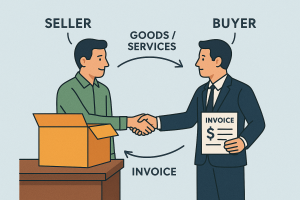
Trade credit is a business-to-business agreement where one can purchase supplies and goods as needed without paying cash up front. Usually, a business agrees to repayment terms of 30, 60, or 90 days, which is documented on an invoice (Kagan, 2021). Trade credit allows for a business to receive a revenue stream and then collect funds to cover the cost of goods sold. Trade credit is a form of credit with no interest and is considered unsecured. It is important that lenders handling trade-credit accounts seek to maximize sales at an acceptable level of risk (minimize the bad debts), maintain accounts receivable turnover (collect cash), and control expenses overall.
Characteristics of Trade Credit
- Trade credit analysis seeks to determine risk and weigh it against the overall needs of the seller.
- There are few customers; 75% of sales are generated by 25% of customers.
- It is more personal; there is one on one contact with customers.
- One or two large customers can have a big impact on a seller.
- It is unsecured.
- It is very short term.
- It is self-liquidating.
Credit Managers and Their Role in Trade Credit

In these types of businesses, the role of the credit manager is to oversee the function of trade credit, and, in a sense, accounts receivable. The responsibilities of the credit manager are to evaluate new and recurring applicants and assess them for creditworthiness, while also balancing the business credit risk for all the business’s customer accounts. Credit managers are often responsible for initiating collections when a customer fails to pay (Sidor, 2016).
Trade Credit Analysis
When granting credit, a credit manager has to make determinations between customers who will pay and customers who will not pay (CFI Team, 2020). This is a challenging position for the credit manager to be in, given that the debt is unsecured. The credit manager has to make the best decision possible at the time. The credit manager needs to have good communication with the sales team to ensure they are up to date on which customers are paying and which aren’t. A credit manager can look at a number of different sources of information to assist them in making informed decisions and reducing risk.
|
Credit Policy

A business should have established a credit policy. Developing and enforcing a credit policy are risk management tools that protect a business from customers that can’t meet payment deadlines on time (or ever.) Credit policies will outline the credit department’s governing principles for how trade credit is handled. As the credit policy has a direct impact on sales, it is also considered a marketing tool for the business.
Typically, a credit policy should include the following (adapted from Dun & Bradstreet, 2022):
- What is the mission of the credit policy? The mission statement of a credit policy should align with the company’s mission statement. An example from Dun & Bradstreet, “The credit department defines the requirements for establishing trade credit for new customers and maintaining credit lines and limits for active accounts and returning customers with appropriate payment terms. The credit department also strives to offer optional payment methods to facilitate sales to customers with sub-optimal credit histories.”
- What are the goals of the policy? This may be common sense, but one key goal should be that the company will collect on the extended credit. Another goal could be that the company will keep the percentage of past due accounts below a certain target. Overall, these goals should be in alignment with the overall business goals.
- Who has specific credit responsibilities? Roles and responsibilities should be clearly defined. Having authority and responsibilities clearly stated will create efficiencies and reduce redundancies. For example, a policy could dictate that credit managers are solely responsible for assessments and approvals. This will help to minimize collections and will also align with corporate financial goals (e.g., a “pre-check” from sales will not expedite the order).
- How is credit evaluated? This is where a business can establish the level of risk they are willing to take on. A policy that accepts higher risks to achieve higher sales can see larger bad debts occurring and increased costs due to financing receivables. A policy which is risk averse to minimize bad debts can see high credit department costs because of more thorough investigations and, ultimately, lower sales.
- How are collections handled? The collections process should be documented and followed for each customer. This will ensure consistency and, ultimately, help the business achieve the goal of collecting funds owed. Consequences for customers who are not meeting the terms of their agreements should be made clear and included in the invoice that is provided to customers.
- What are the terms of sale? Deciding on the terms of sale will depend on the products/services that a business provides. Consider the competitors’ terms of sale when establishing the terms of sale; this can have a direct impact on a business’s sales.
Click the following link to further review Dun & Bradstreet’s Sample Credit Policy.
Once a credit policy has been established, a business should ensure that proper training and documentation of procedures exist to reduce any confusion among employees. Having a process in place allows for periodic review and helps determine how successful the policy is.
Credit Application

Much like a credit application in a consumer credit situation, trade credit requires the collection of information. This is so the credit manager can be better informed when they are granting or extending credit. The following information is needed in a basic trade credit application.
Contact Information. This will include the company’s name, names of the business owners, and the address for billing and shipping. This should also include the accounts payables/receivables contact information.
Bank References. Bank references are easier to obtain if the customer uploads their bank’s information along with their credit application. If they do not provide this upload, the credit manager will need to get a signed agreement from the customer to send to the bank to release this information. Customers may hesitate to provide this information due to privacy concerns. A business should incorporate proper security for the collection of sensitive information.
Trade References. Trade references can be difficult to obtain but do help with determining the customer’s repayment history with other businesses. In some instances, the customer can provide their utility or credit card bills. Some businesses may use a credit report.
Financial Information. A customer should provide their financials so the creditor manager can do a quick review of the financial viability of the customer’s business. Depending on the policies of the business granting the trade credit, unaudited financials may be acceptable.
Terms and Conditions. Terms and conditions should include the penalties and late fees that can be applied for non-payment. It is advisable to have a lawyer review this section to ensure the application/agreement can be enforced.
The Five Cs Analysis and Trade Credit

Similar to consumer (Chapter 3) and commercial credit (Chapter 8), the analysis of the five Cs is required with trade credit. This analysis helps the credit manager determine if they will grant or extend credit.
- Character. During a credit application interview, a credit manager will be looking at a customer’s repayment history and their willingness to provide information. For on-site interviews, a credit manager (or sales representative) should make observations about the management and staff, review comments from other suppliers, and ask for the names of suppliers an applicant didn’t mention.
- Capacity. Capacity looks at a customer’s ability to meet credit obligations out of operating cash flows. Specifically, it addresses working capital, margins, and business knowledge. For on-site interviews, a credit manager (or sales representative) would observe customer traffic, inventory levels, clientele, and comments from other suppliers.
- Capital. This looks at a customer’s financial reserves (i.e., long-term financing and equity). In an on-site interview, a credit manager (or sales representative) would make note of the condition of premises, levels of inventory, and equipment.
- Collateral. Collateral, as discussed previously, is a pledged asset in case of default. In trade credit, a credit manager can ask for collateral by securing a note or by asking for a corporate or personal guarantee (Dun & Bradstreet, 2022). A business can also carry trade credit insurance to mitigate losses from bad debts.
- Conditions. The credit manager will look at general economic conditions and review any industry conditions or problems.
It is important to note that trade credit and a company’s credit policy is only as good as their collection policy. Click the following link to review Dun & Bradstreet’s Strategies for a More Effective Collections Policy.
Advantages and Disadvantages


References
CFI Team. (2020, June 17). Trade Credit. CFI Education Inc. https://corporatefinanceinstitute.com/resources/knowledge/other/what-is-trade-credit/
Chen, J. (2020, May 28). Business-to-Business (B2B). Investopedia. https://www.investopedia.com/terms/b/btob.asp
Dun & Bradstreet. (n.d.). How to Write a Business Credit Policy. The Dun & Bradstreet, Inc. Retrieved June 27, 2022. https://www.dnb.com/resources/how-to-write-a-business-credit-policy.html
Kagan, J. (2021, May 28). Trade Credit. Investopedia. https://www.investopedia.com/terms/t/trade-credit.asp
Sidor, G. (2016, January 19). Understanding Trade Credit for Small Businesses. The Dun & Bradstreet Companies of Canada ULC. https://www.dnb.com/ca-en/perspectives/finance-credit-risk/what-is-trade-credit-and-how-can-it-help-your-business.html
Woodruff, J. (2019, January 28). The Advantages & Disadvantages of Trade Credit. Chron. https://smallbusiness.chron.com/advantages-disadvantages-trade-credit-22938.html
Media Attributions
- beb90328-2b21-49e0-9f6b-cddc77fb2a39
- image (39)
- image (40)
- image (41)
- image (42)
- ChatGPT Image Jun 26, 2025, 03_28_55 PM