
Peltigera neckeri Hepp ex Müll. Arg., 1862
| Common name | Black Saddle Lichen |
|---|---|
| Code | PELTNEC |
| Field Characters | Medium sized leafy bipartite cyanolichen. Thalli composed of shallowly lobed, rosettiform or overlapping colonies. Upper surface plane with upturned lobe tips, mostly lacking pruina, and never tomentose. Cortex typically shiny, grey to brownish-grey when dry, blue-grey to dark grey when wet. Lower cortex lacking, lower surface covered in a variable, contrasting network of narrow to broad veins and interstices, with abundant rhizines. Apothecia black, tightly folded like a hotdog bun, more rarely saddle-shaped. Vegetative propagules lacking. |
| Similar species |
Peltigera elisabethae: typically with abundant lobules, apothecia flat and plate-like with a red-brown disc, and rhizines forming concentric rings below.
Peltigera collina: a much rarer species in Alberta with smaller thalli that typically have sorediate margins. Peltigera collina is most common on the boles of large Populus in old, wet forests, but it can also be found on rock in similar forests. |
| Ecology | Typically on soil, mosses, logs, or tree bases in white spruce, deciduous, swamp and mixedwood forests. Present in foothills, mountain, boreal, and shield sites, sparse in the parkland and grassland. |
| Chemistry | Not investigated. |
| Molecular support |
High, represented by a single well-supported molecular clade. |
| Links | |
| Gallery |
-
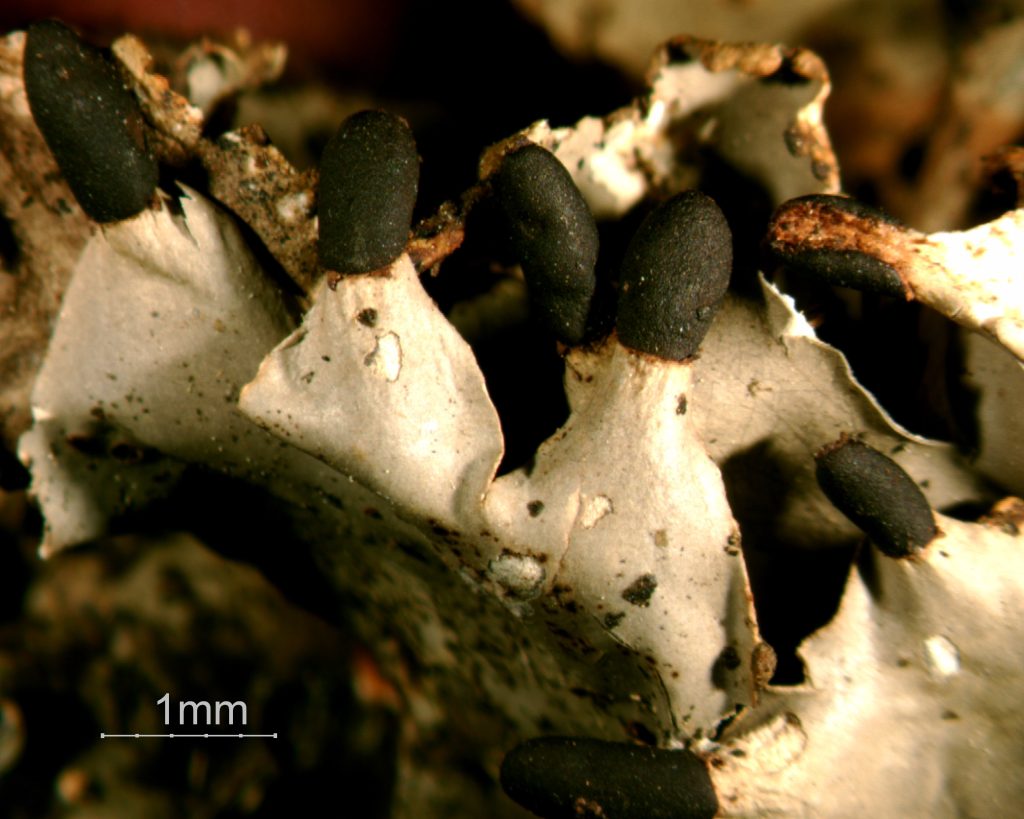
- Peltigera neckeri apothecia, ALTA collection
-
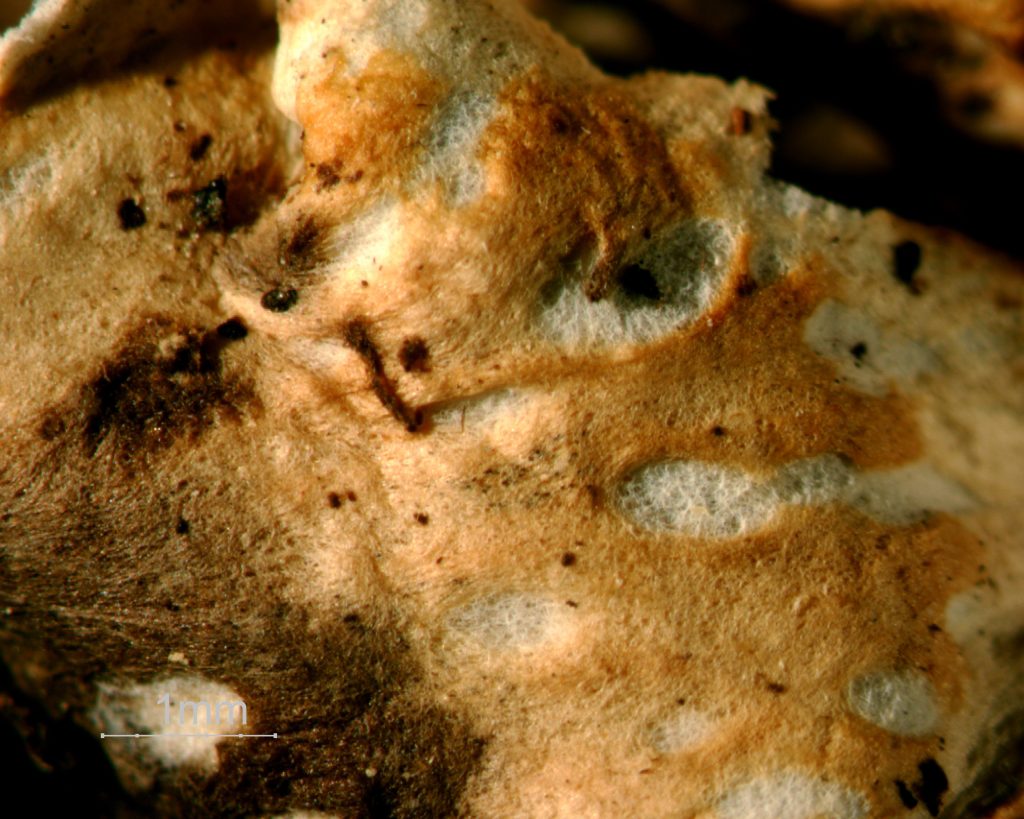
- Peltigera neckeri lower cortex, ALTA collection
-
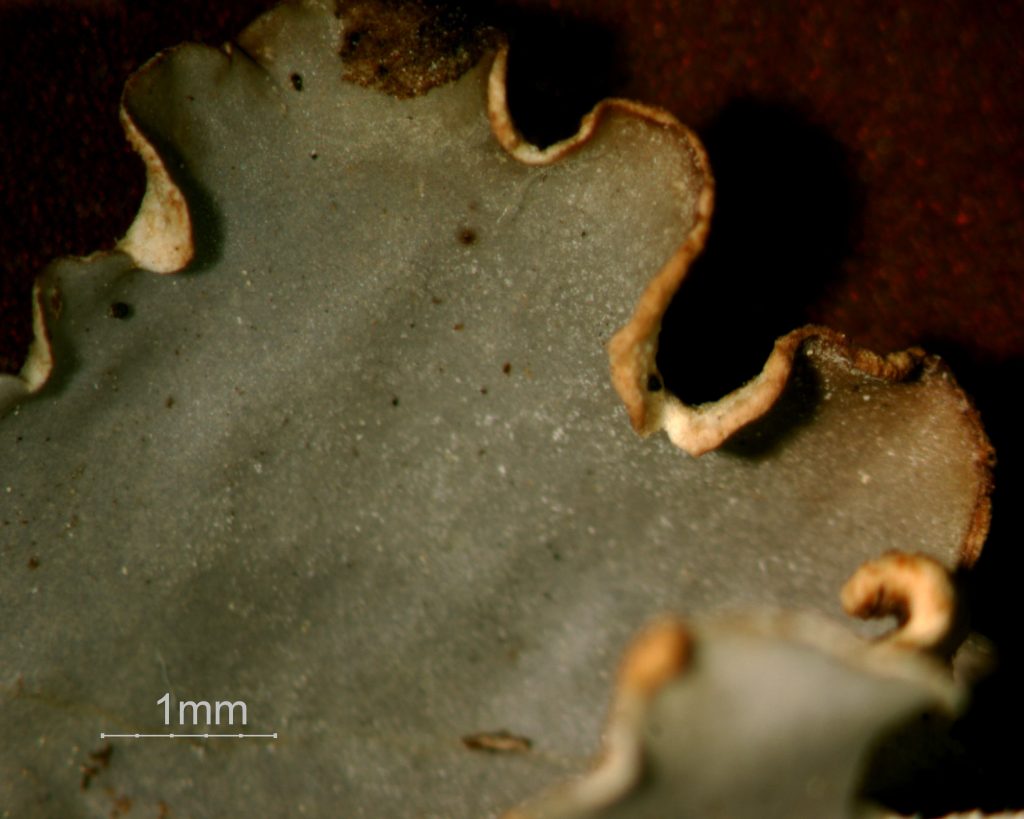
- Peltigera neckeri upper cortex, ALTA collection
-
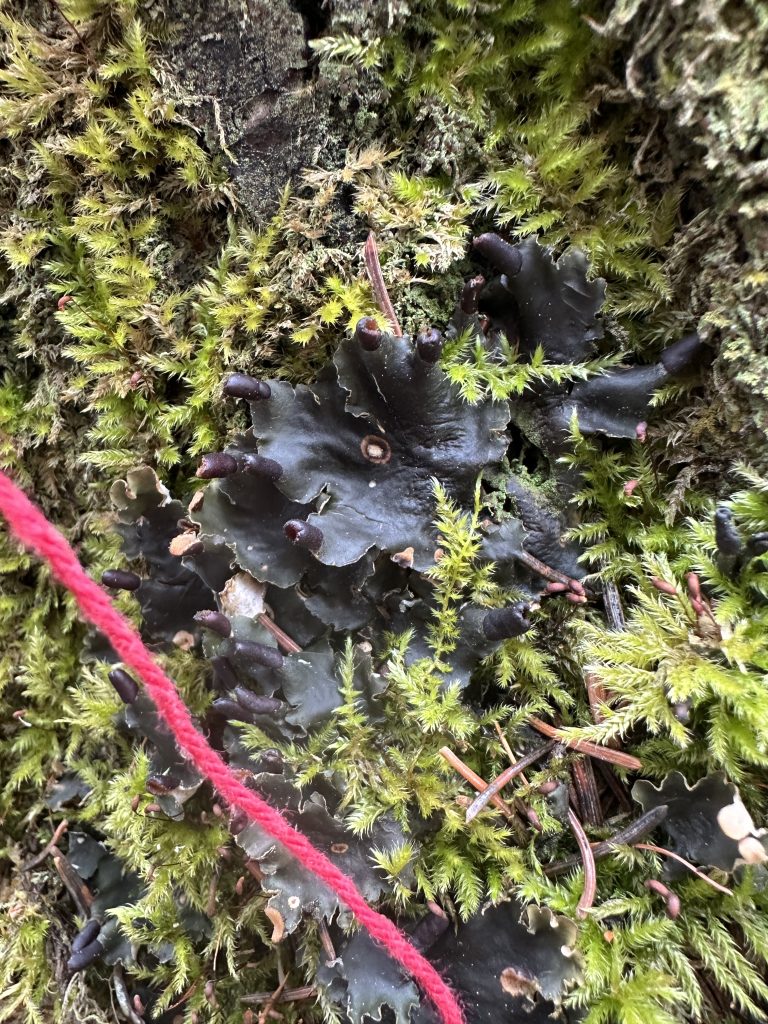
- Peltigera neckeri colony, Lac la Biche region, AB
-
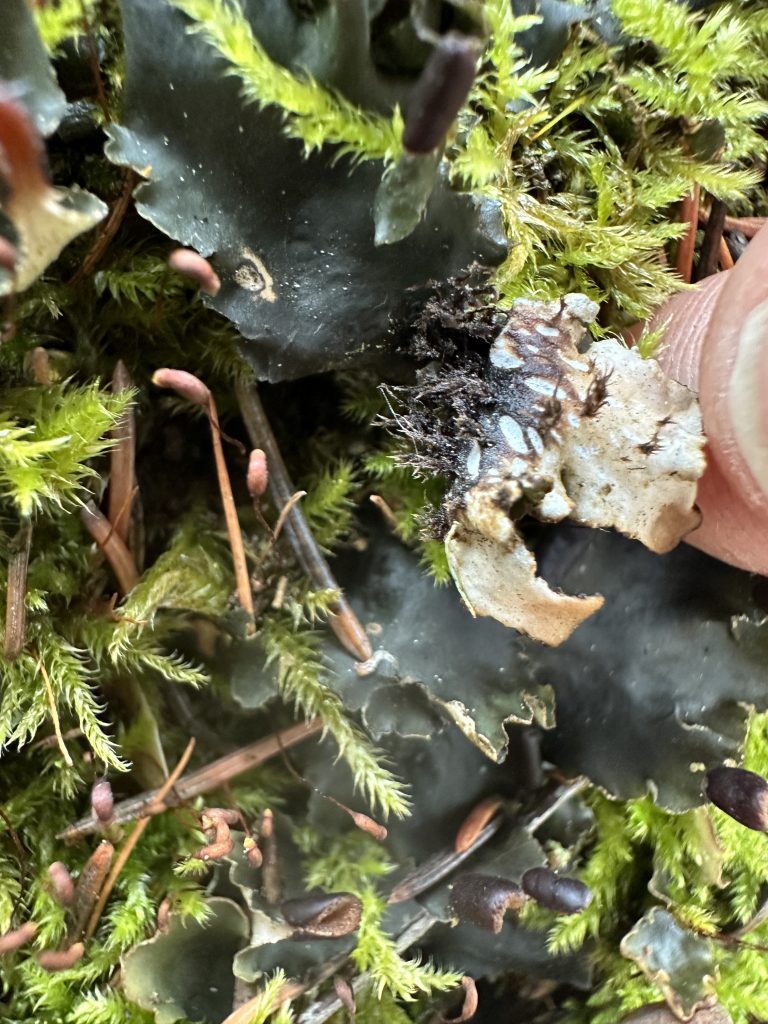
- Peltigera neckeri colony, Lac la Biche region, AB
-
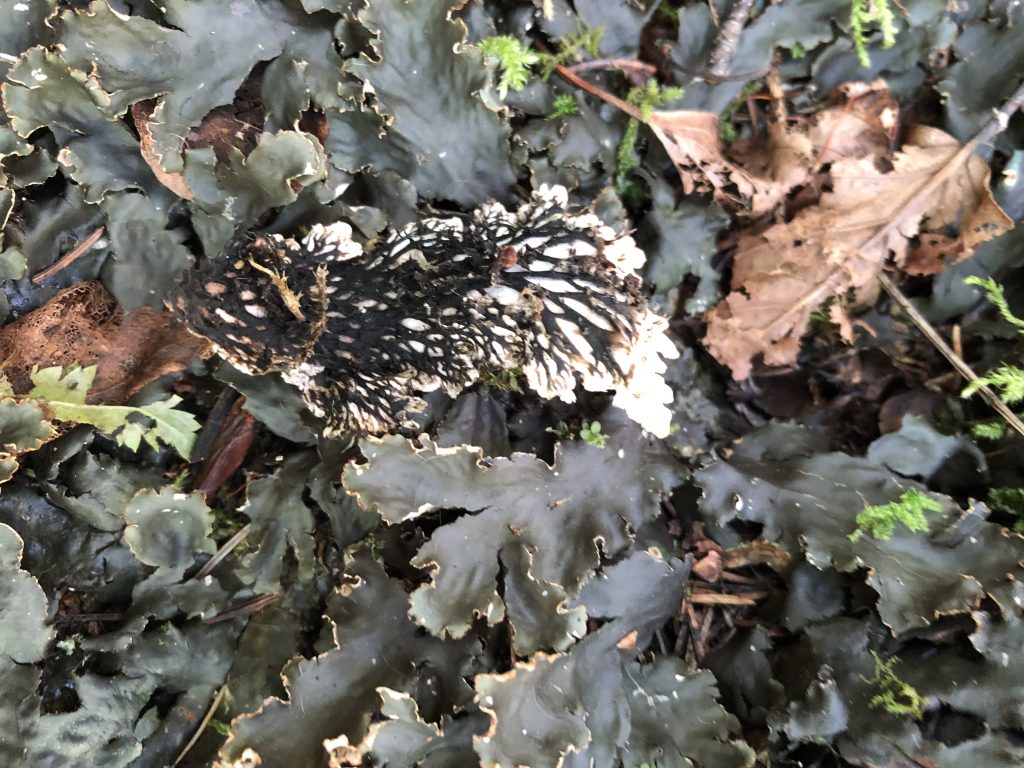
- Peltigera neckeri colony, Edmonton, AB
-
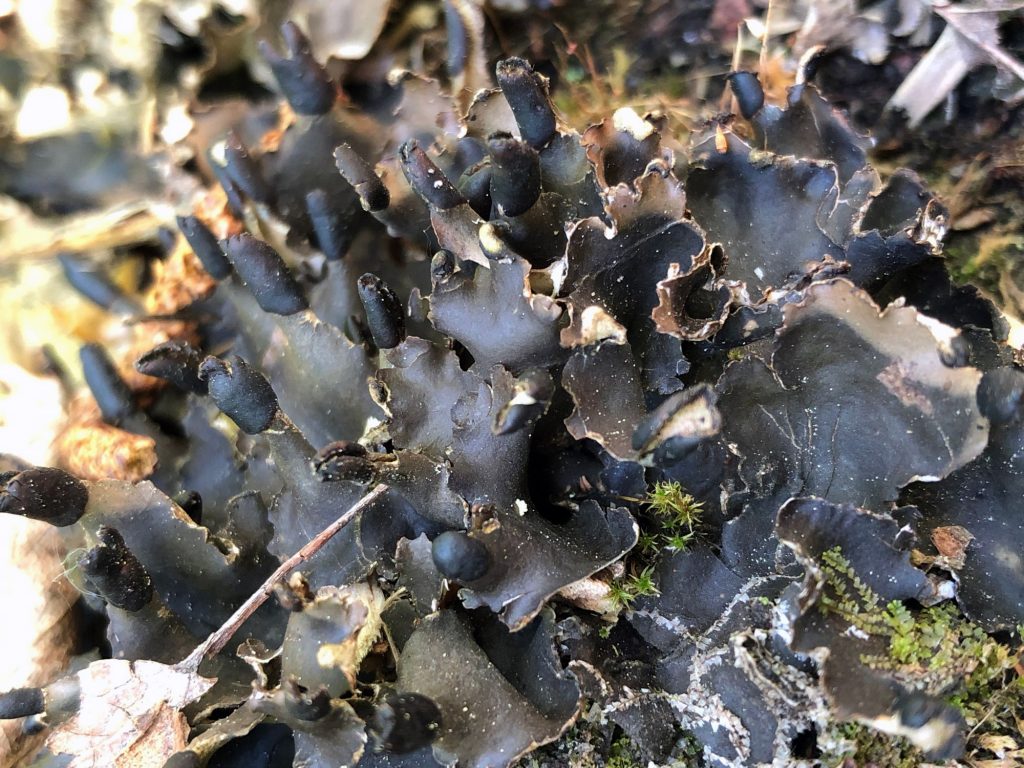
- Peltigera neckeri colony, Edmonton, AB
-
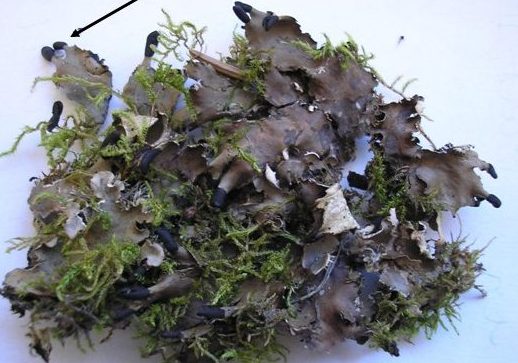
- Peltigera neckeri colony, ABMI Collection