
Usnea dasopoga (Ach.) Nyl., 1876
| Common name | Fishbone Beard | Code: USNEDAS
|
|---|---|---|
| Field Characters | Fruticose hair-like chlorolichen. Yellow-green and erect, subpendant to pendant. Branches papillate, foveoles (depressions in the thallus) absent to few. Small branch-like structures called fibrils few to numerous, occasionally arranging in a fishbone-like pattern. Bases blackened and “rooting” into the substrate. Branches thickest near the base. Central cord thick, medulla moderately thin (Medulla/cortex = 1.90 ± 0.61; axis/medulla = 2.65 ± 1.42 (Clerc and Naciri 2021)). Isidia few to numerous over the thallus. Soralia small and dotted around the stem, occasionally enlarging. Pycnidia not observed and apothecia rarely present. | |
| Similar species |
Usnea scabrata: has foveoles, a much smaller central cord (axis), and the base is narrowed unlike the wide, blackened, root-like base of U. dasopoga. U. scabrata medulla/cortex = 5.67 ± 2.12; axis/medulla = 1.10 ± 0.44 (Clerc and Naciri 2021).
Note: The relative width of the cortex, medulla, and axis of U. scabrata and U. dasopoga are compared using ratios measured in longitudinal cross-sections made in-place on a branch near the base of the thallus. The important ratios are: the average width of the medulla/average width of the cortex (M/C) and the width of the axis/the average width medulla (A/M) (Clerc and Naciri 2021). For more notes on Usnea sectioning methods, see the Usnea parent page. |
|
| Ecology | Common on deciduous and coniferous trees, possibly rare in boreal zone. Saxicolous on siliceous rocks in coastal areas outside of Alberta. | |
| Chemistry | Cortex KC+ yellow, K- or K+ pale yellow, C-, UV- (usnic acid). Medulla K+ yellow to red, PD+ yellow to red (salazinic and protocetraric acid) or K-, PD-, KC+ red, C+ red (alectorialic acid). | |
| Molecular support |
Moderate at the species level. In a multi-locus phylogeny, Lucking et al. (2020) found one supported monophyletic clade of U. dasopoga, but many accessions cluster with species traditionally described as otherwise. Phylogenetic and morphological analysis from Clerc & Naciri (2021) found evidence for at least two well delimited taxa of U. scabrata (syn. U. barbata) and U. dasopoga. | |
| Links | ||
| Gallery |
-
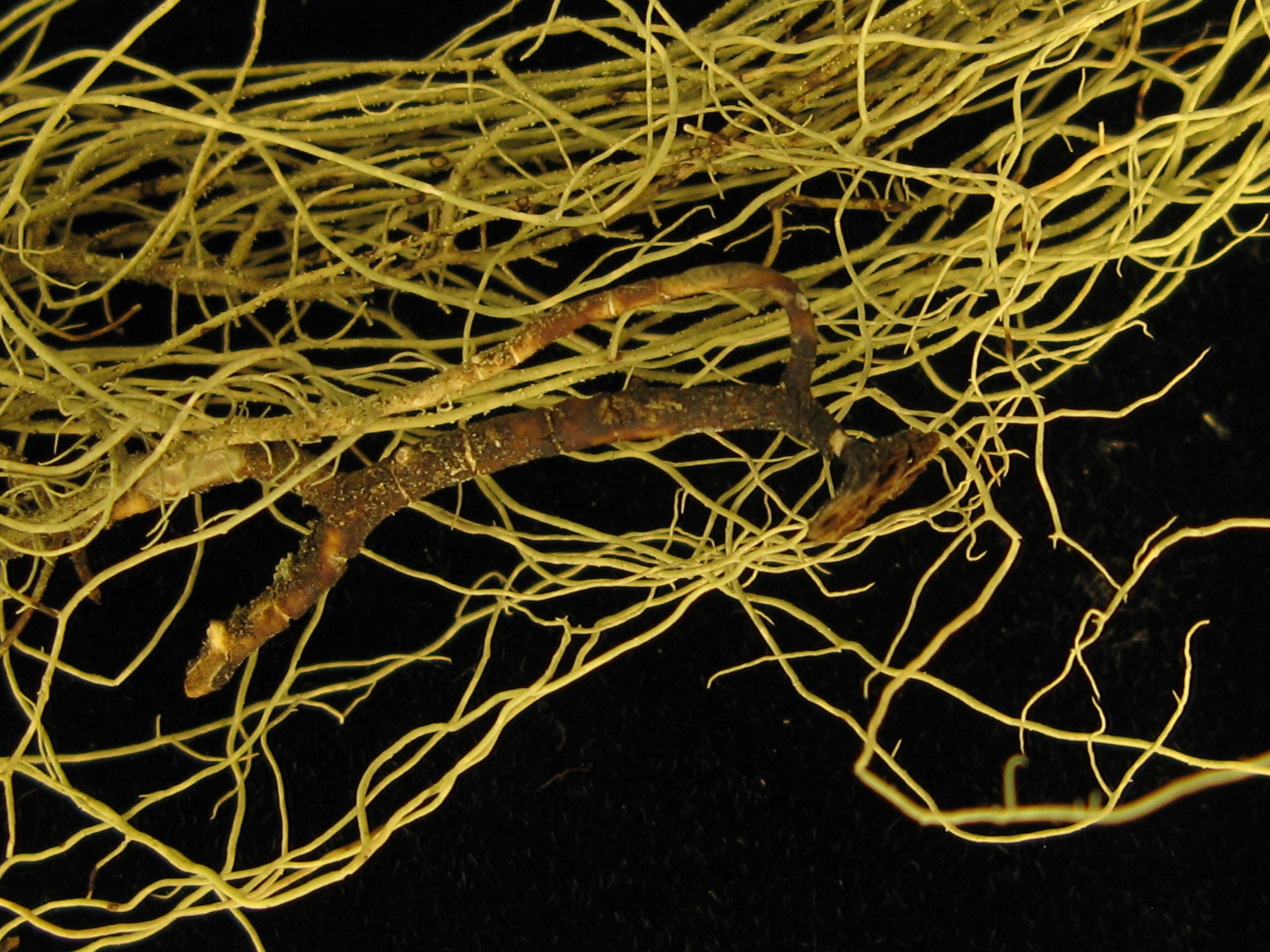
- Usnea dasopoga close up of branch. UBC Collection
-
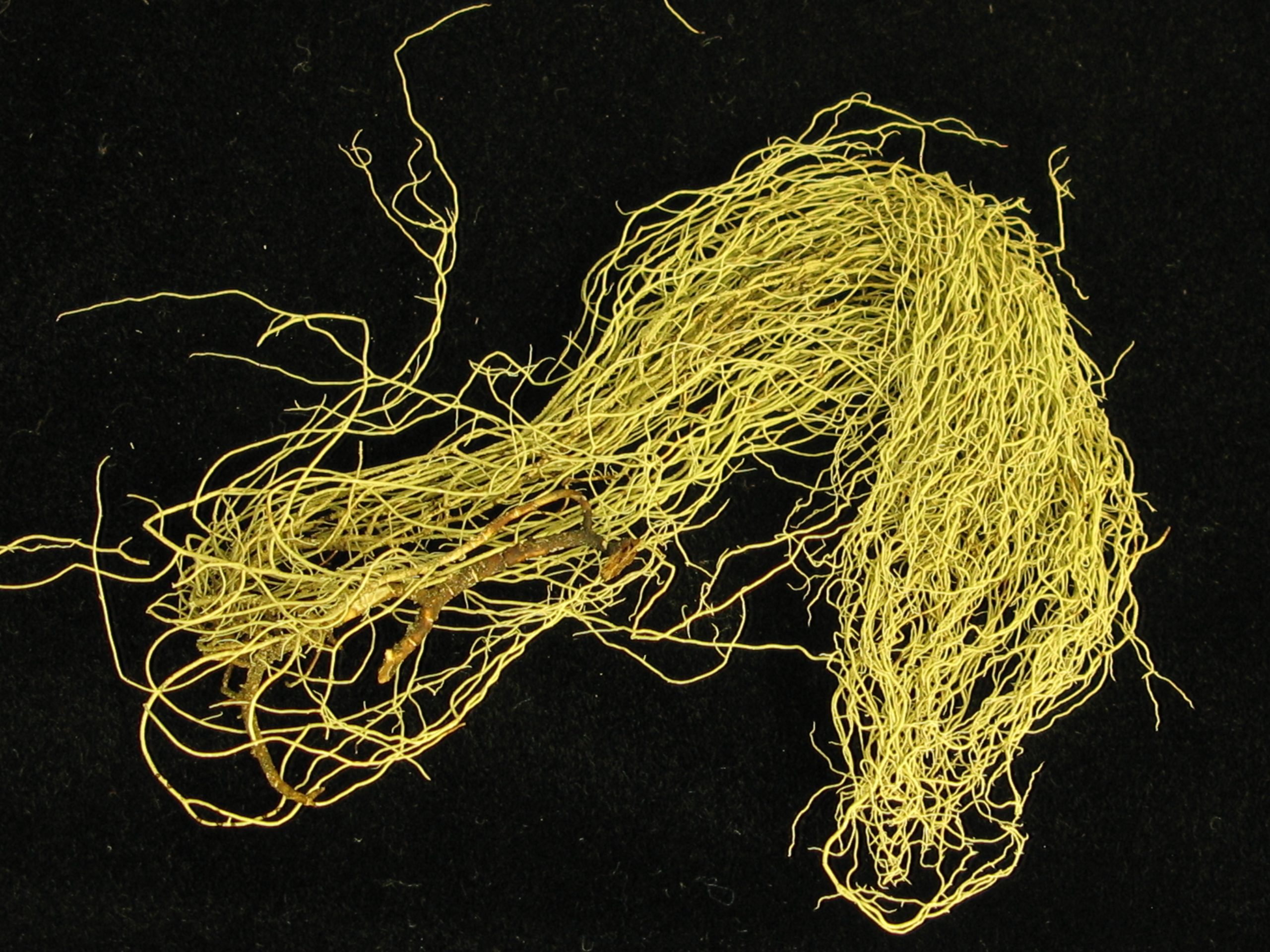
-
Usnea dasopoga form
. UBC Collection
-
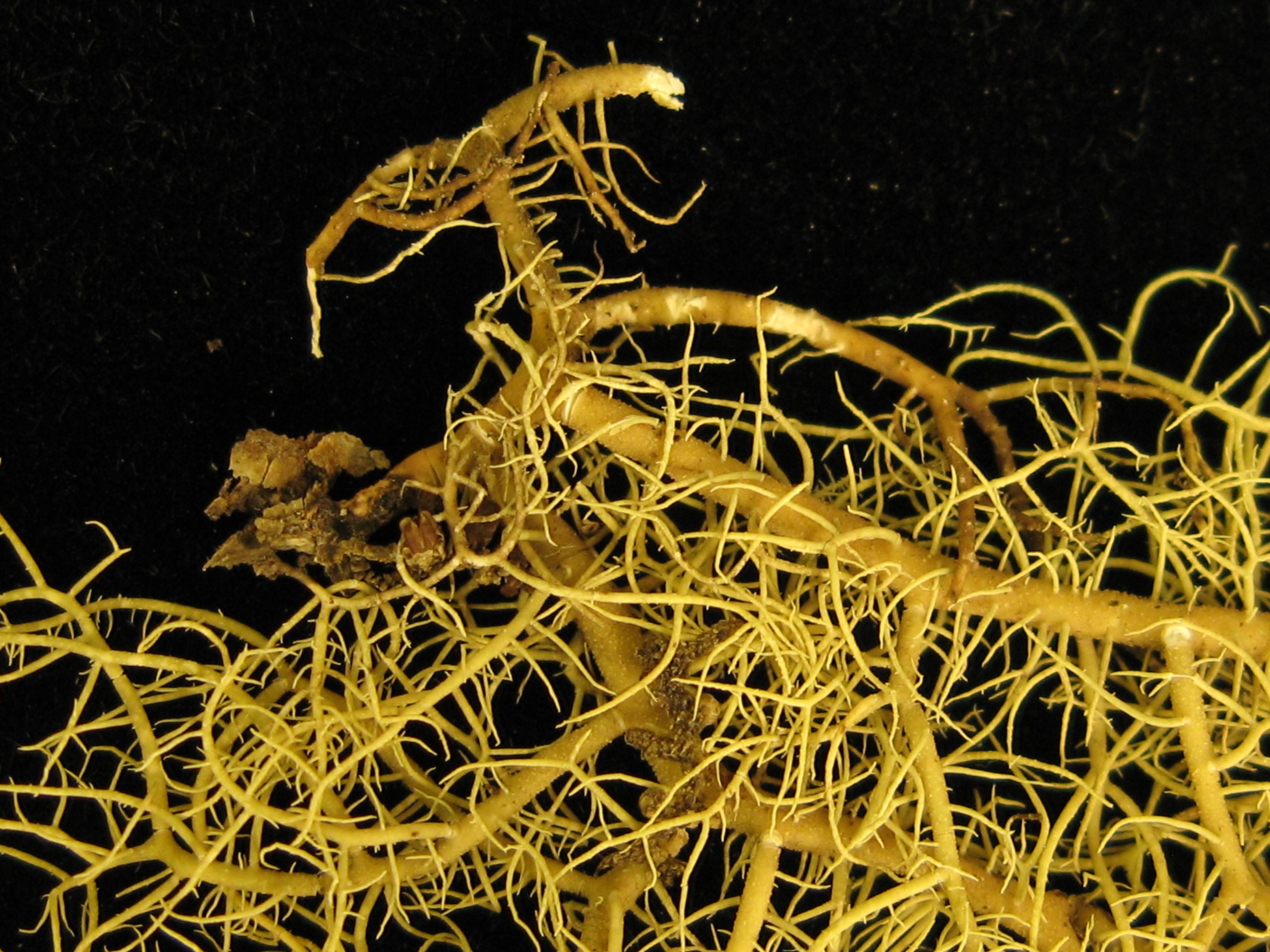
- Usnea dasopoga base. UBC Collection
-
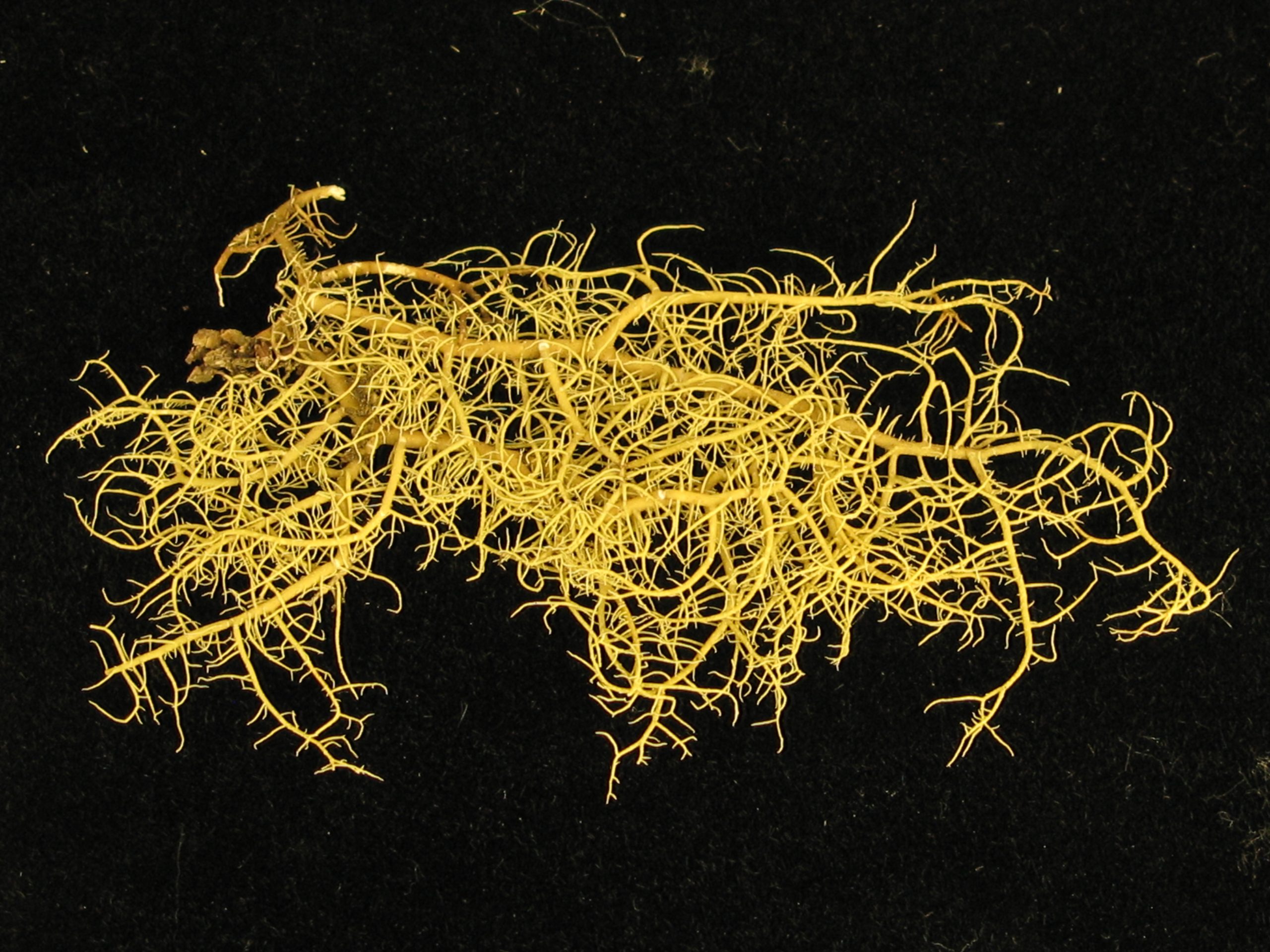
- Usnea dasopoga form. UBC Collection
-
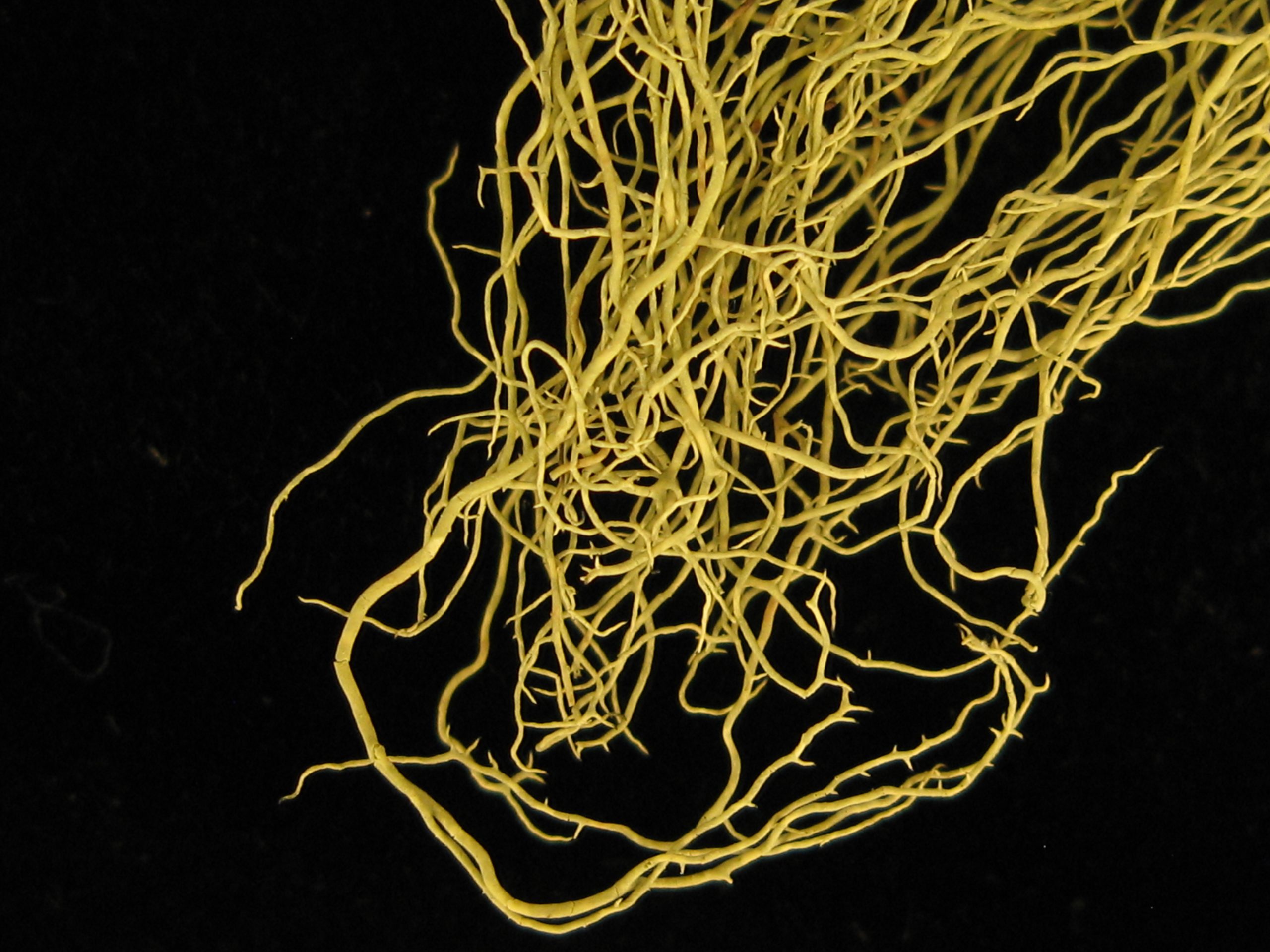
- Usnea dasopoga distal branches. UBC Collection
-
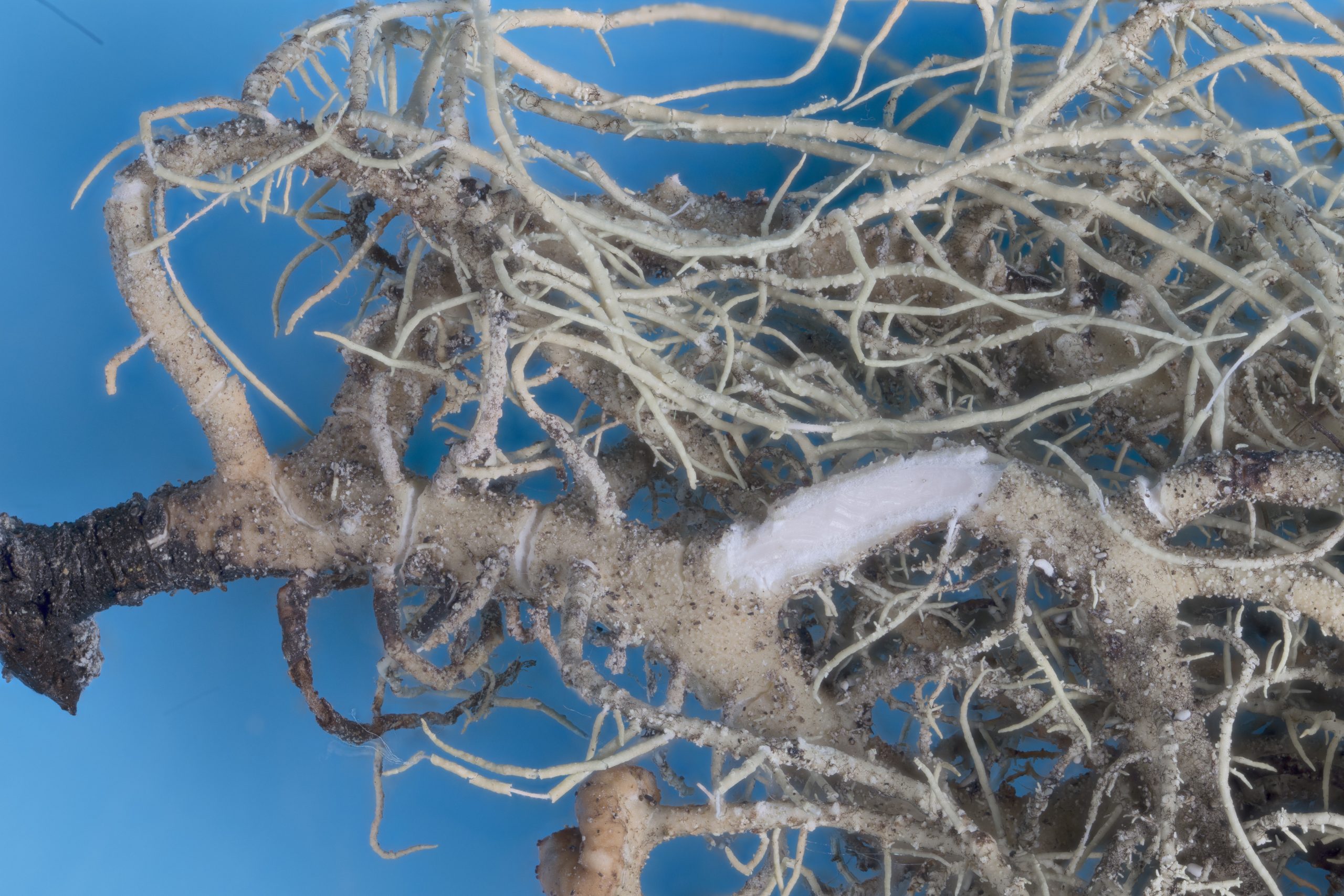
- Usnea dasopoga anotomical ratios. ABMI Collection
-
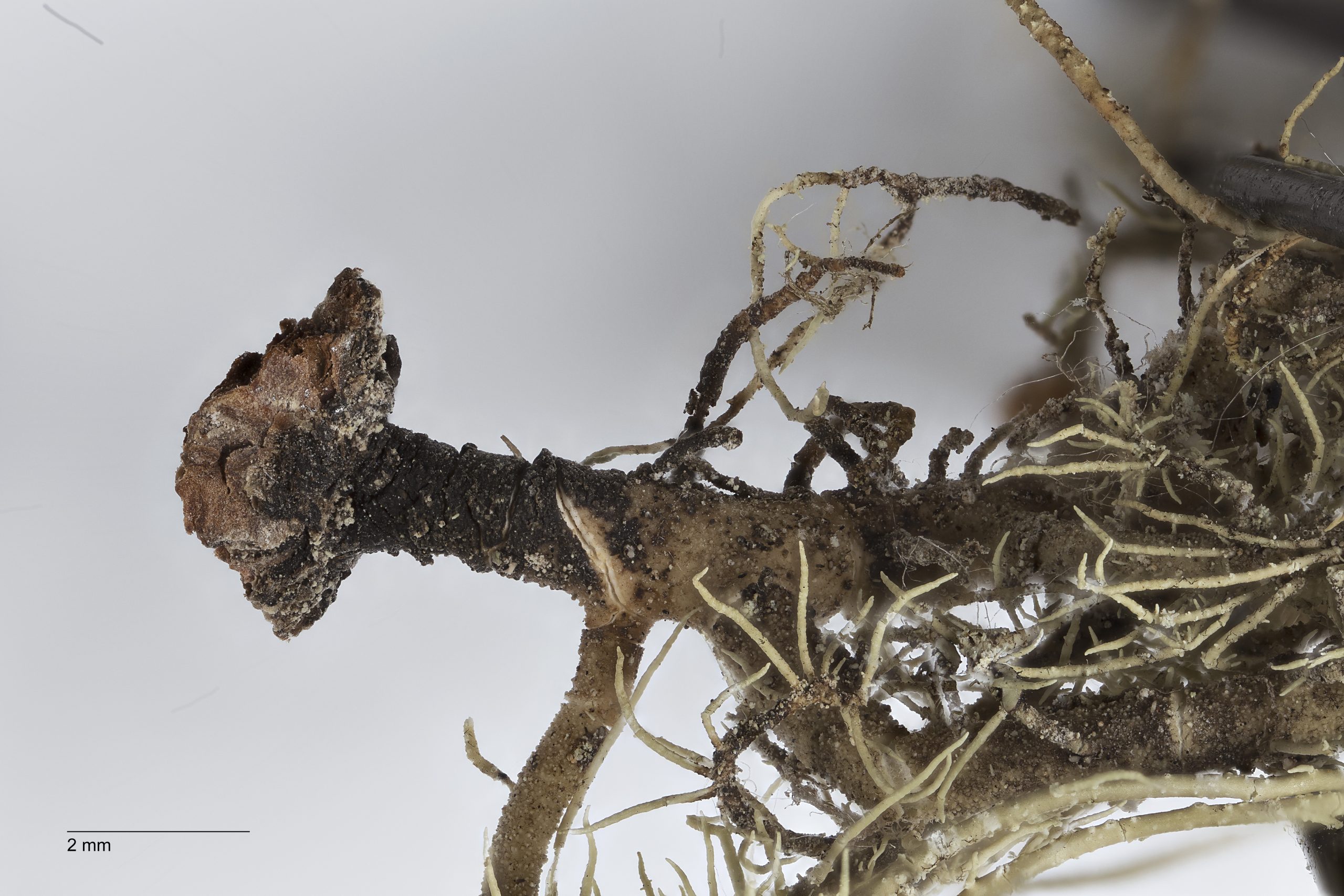
- Usnea dasopoga close up of base. ABMI Collection