
Usnea hirta (L.) F.H. Wigg., 1780
| Common name | Bristly Beard | Code: USNEHIR
|
|---|---|---|
| Field Characters | Fruticose, hair-like chlorolichen. Thallus typically shrubby, with pale yellow branches that diverge widely, but occasionally when well-developed becoming pendant in part. Cortex dull. Attached with a pale holdfast, not blackened like most other Usnea. Lacking papillae, often foveolate and angular. Lacking soredia, instead with punctiform soralia giving rise to isida. Fibrils often abundant. Tips of branches often melanotic and with black flecks throughout the cortex, presumably from a lichenicolous fungus. With an elastic central axis, and often loose, thick medulla, and thin, shiny cortex in section. | |
| Similar species |
Usnea scabrata: branches papillate and pendant, base blackened at attachment point. | |
| Ecology | Common epiphyte on conifers, and especially abundant in open treed wetlands and jackpine stands. Also found on downed wood. Common across the forested regions of Alberta, becoming sparse in the parkland and grassland regions. | |
| Chemistry | Cortex KC+ yellow, K- or K+ pale yellow, C-, PD-, UV- (usnic acid), all medullary spot tests negative. | |
| Molecular support |
Strong at the species level. In a multi-locus phylogeny, Lucking et al. (2020) found that species described as U. hirta formed a strongly-supported monophyletic clade, though accessions were from Europe only. | |
| Links | ||
| Gallery |
-
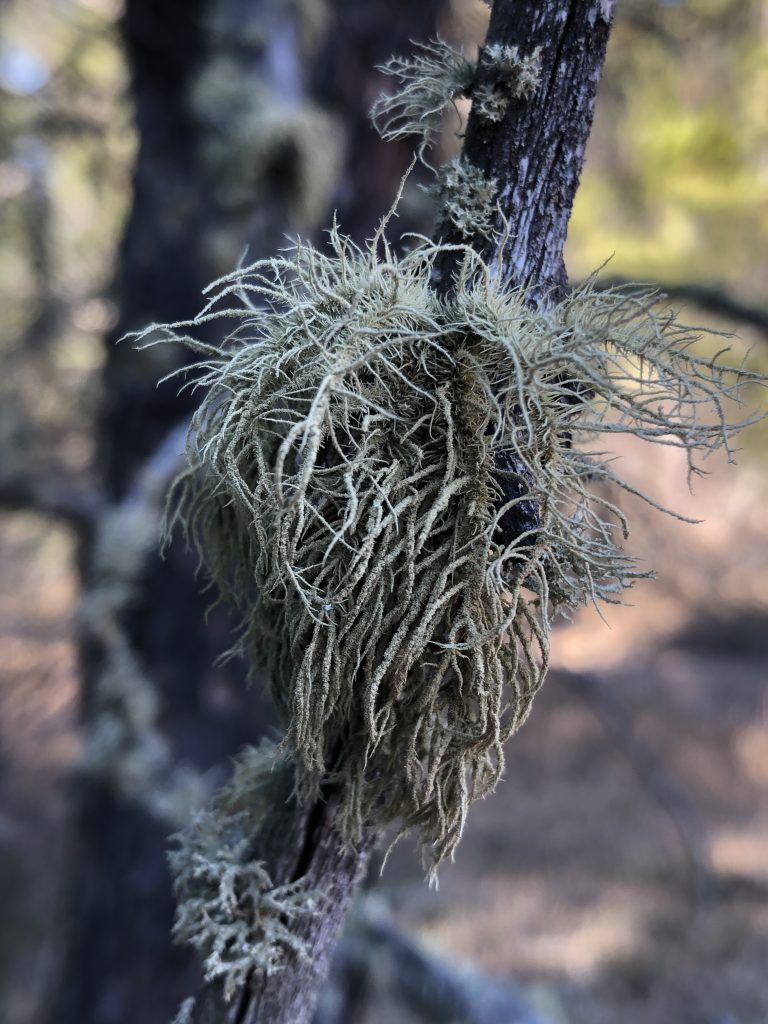
- Usnea hirta branches with dense isidia, Redwater Provincial Recreation Area, AB
-
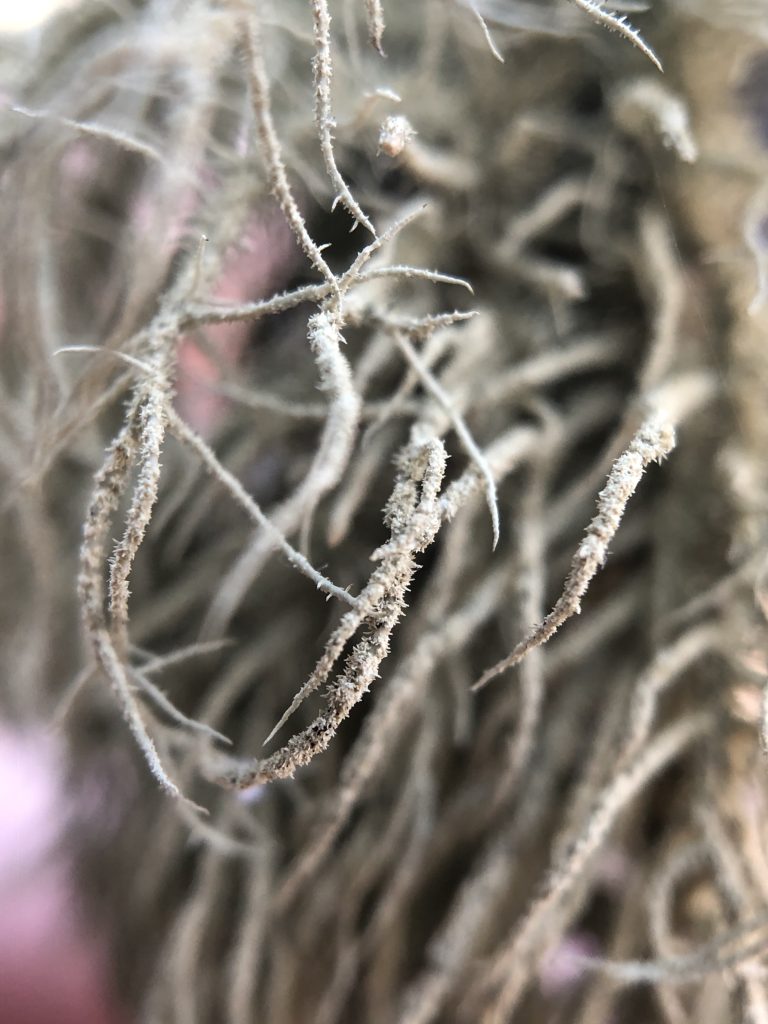
- Usnea hirta branches with dense isidia, Redwater Provincial Recreation Area, AB
-
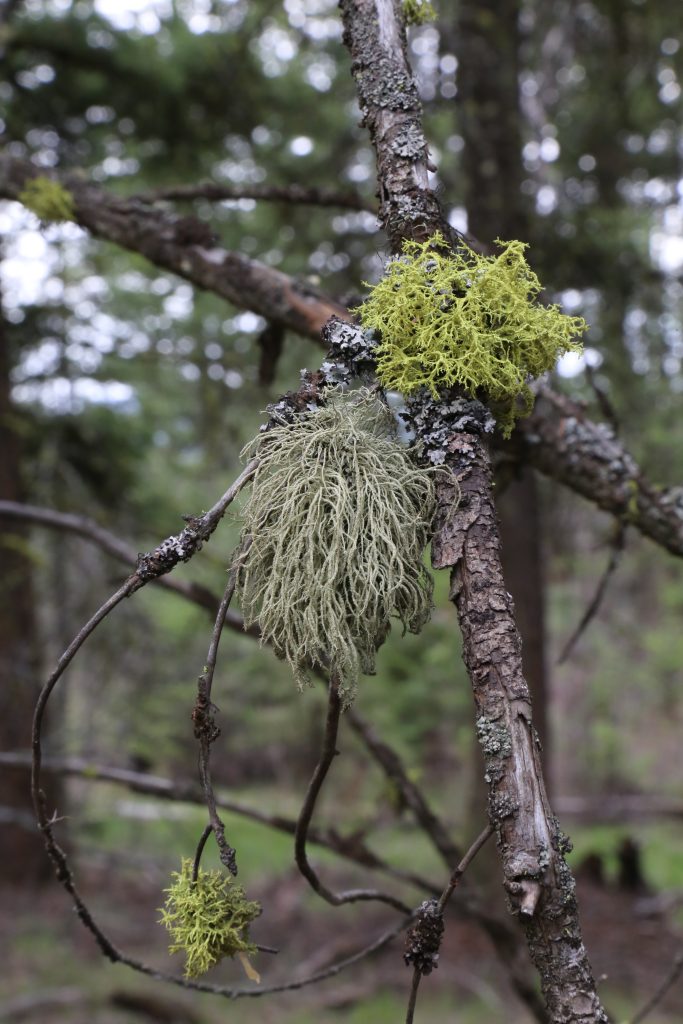
- Usnea hirta and Letharia vulpina s. lat., Kamloops, BC
-
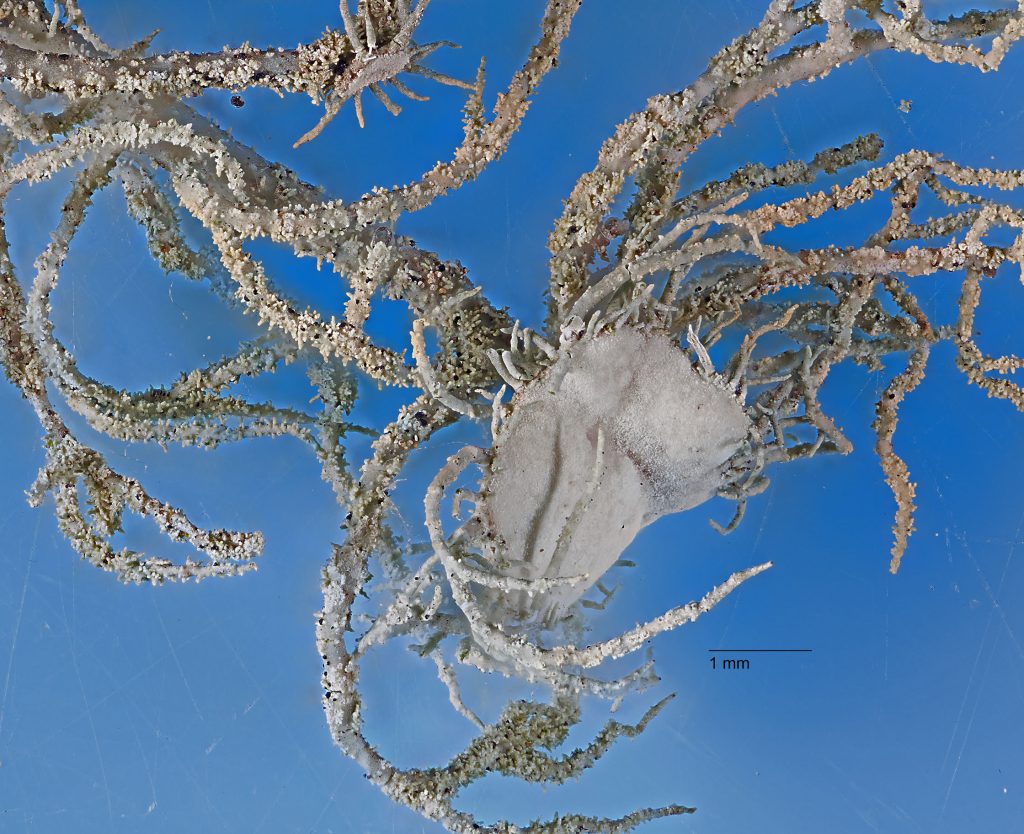
- Usnea hirta apothecium, ABMI collection
-
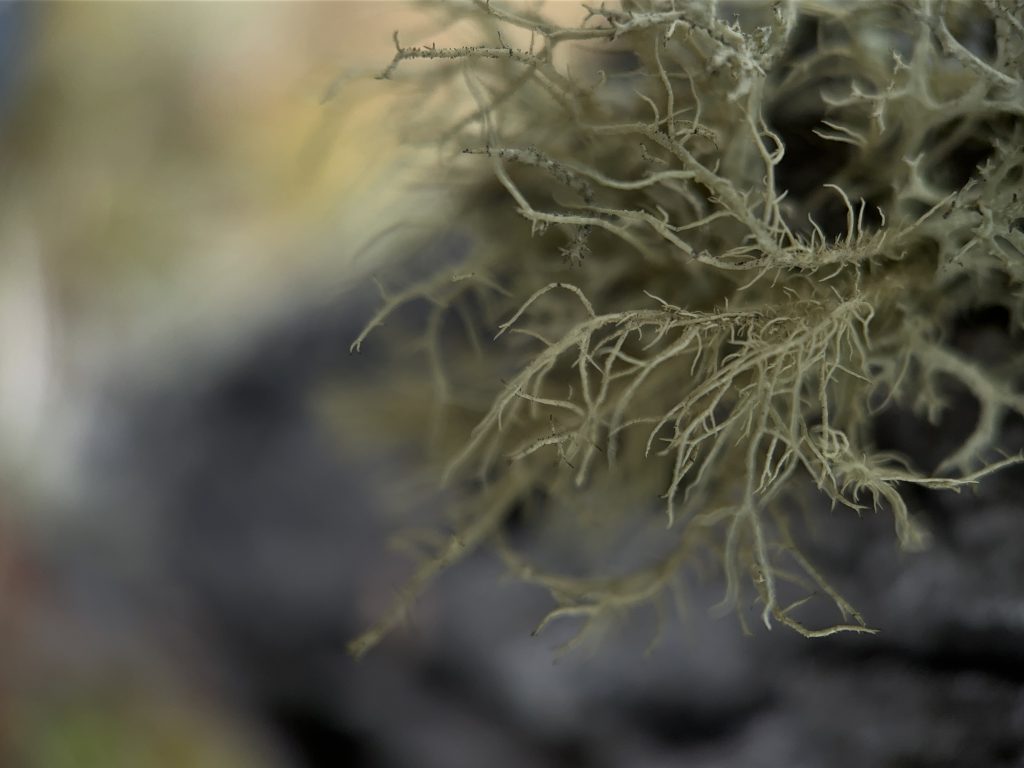
- Usnea hirta branches with fibrils and isidia, near Lac la Biche, AB
-
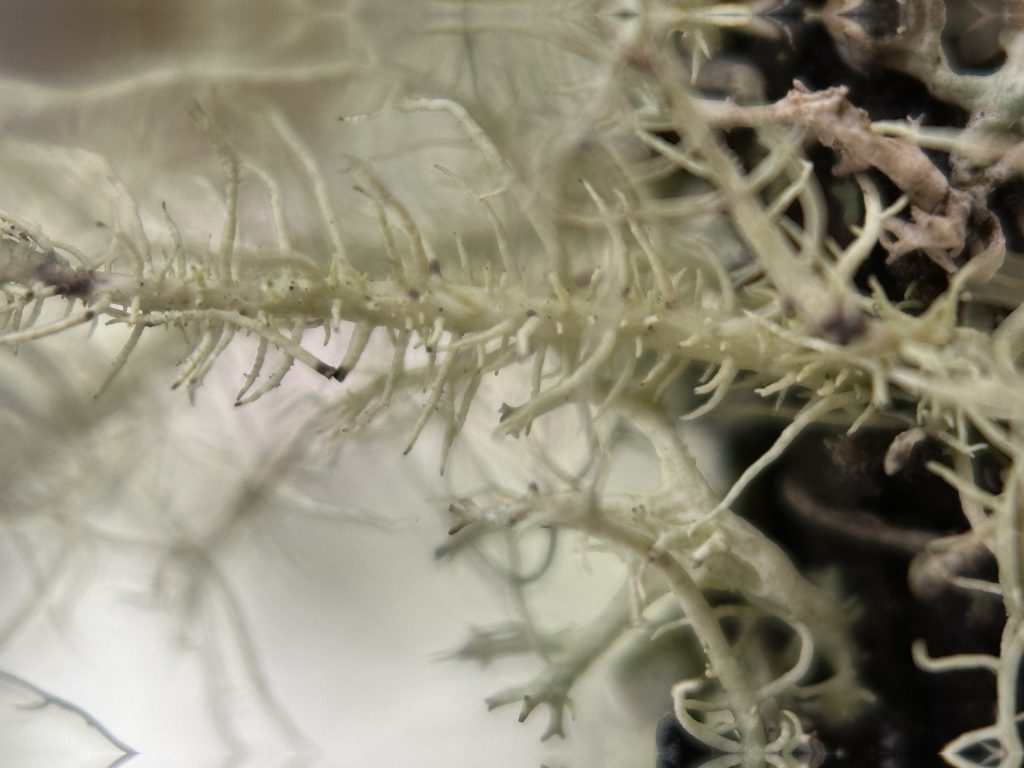
- Usnea hirta branches with fibrils and isidia, near Lac la Biche, AB
-
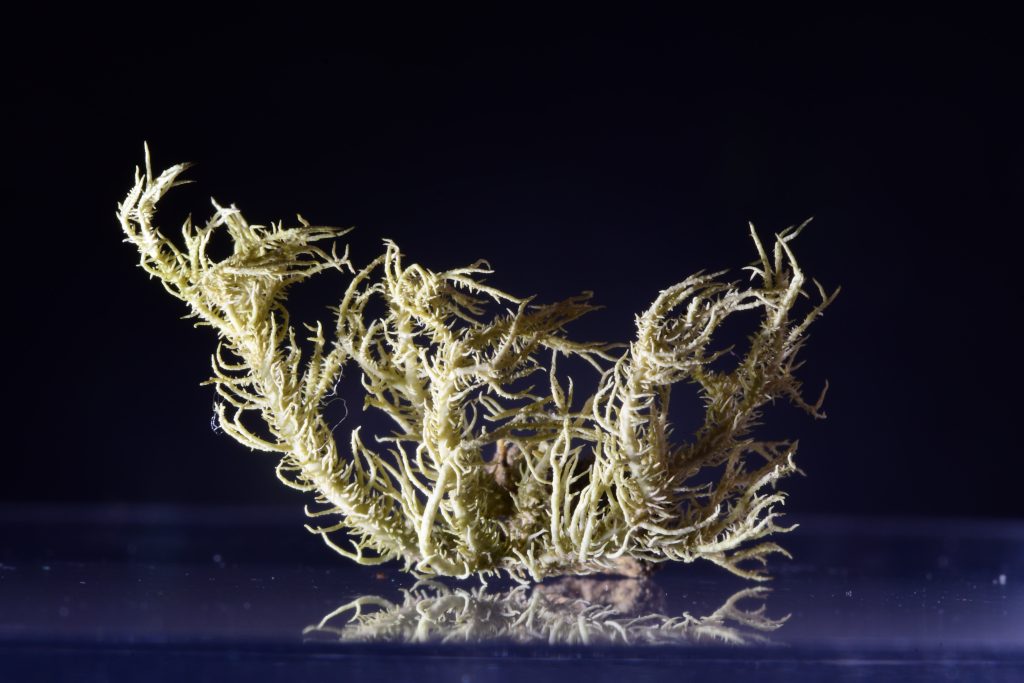
- Usnea hirta, ABMI collection