
Alectoria sarmentosa (Ach.) Ach., 1810
| Common name | Witch’s hair |
|---|---|
| Code |
ALECSAR |
| Field Characters | Fruticose, hair-like chlorolichen. Usnic yellow, often with melanotic segments, stiff, pendant. Branches angular to circular but not ribbon-like or flattened. Cortex thick and dull, with obvious linear pseudophellae that can be plane or slightly raised. Lacking soredia or isidia, commonly fertile. |
| Similar species |
Ramalina thrausta: cortex shiny, strands end in curled tips. |
| Ecology | Epiphytic, mainly on conifers in, occasionally on the ground in alpine/tundra environments. Most common in Alberta in the foothills and mountain sites, sparse in the boreal. |
| Chemistry | Cortex PD-, K-, KC+ oily yellow (usnic acid), medulla KC+ – or red (±alectoronic acid) |
| Molecular support |
|
| Links | |
| Gallery |
-
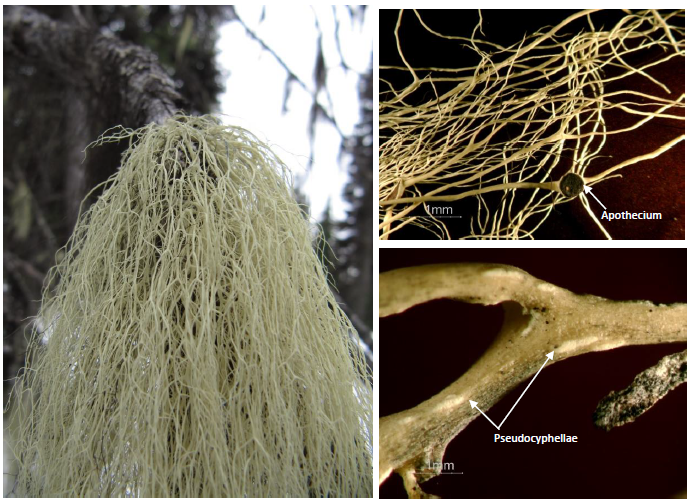
- Alectoria sarmentosa key features
-
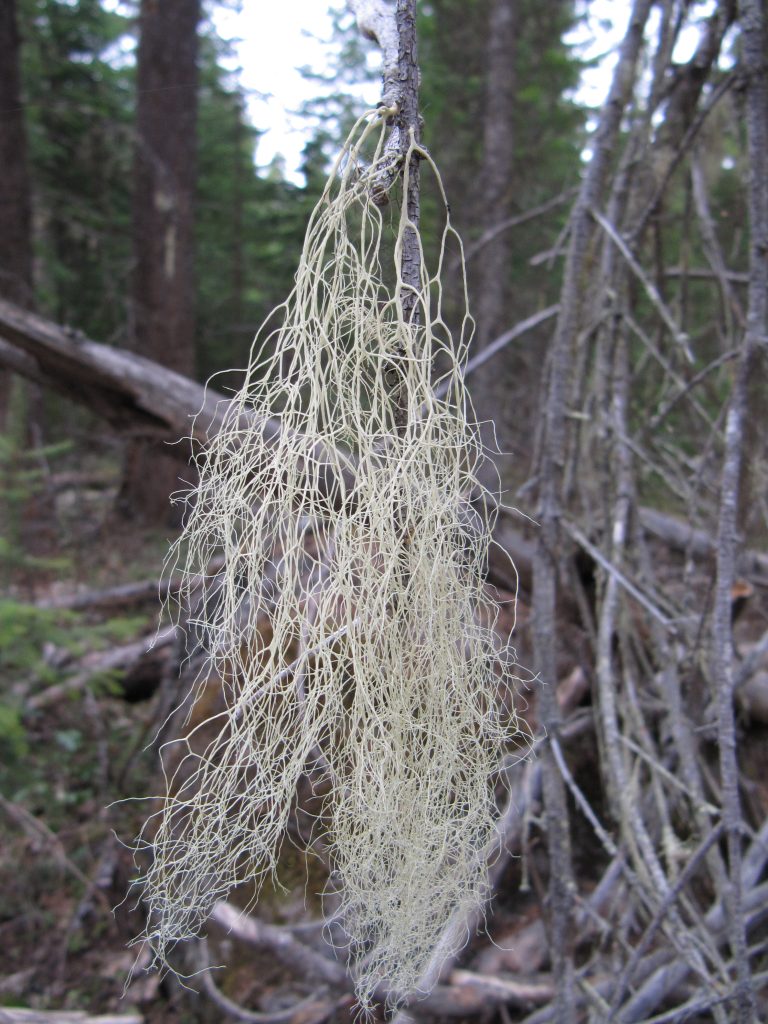
- Alectoria sarmentosa, Edgewood Blue near Clearwater, BC
-
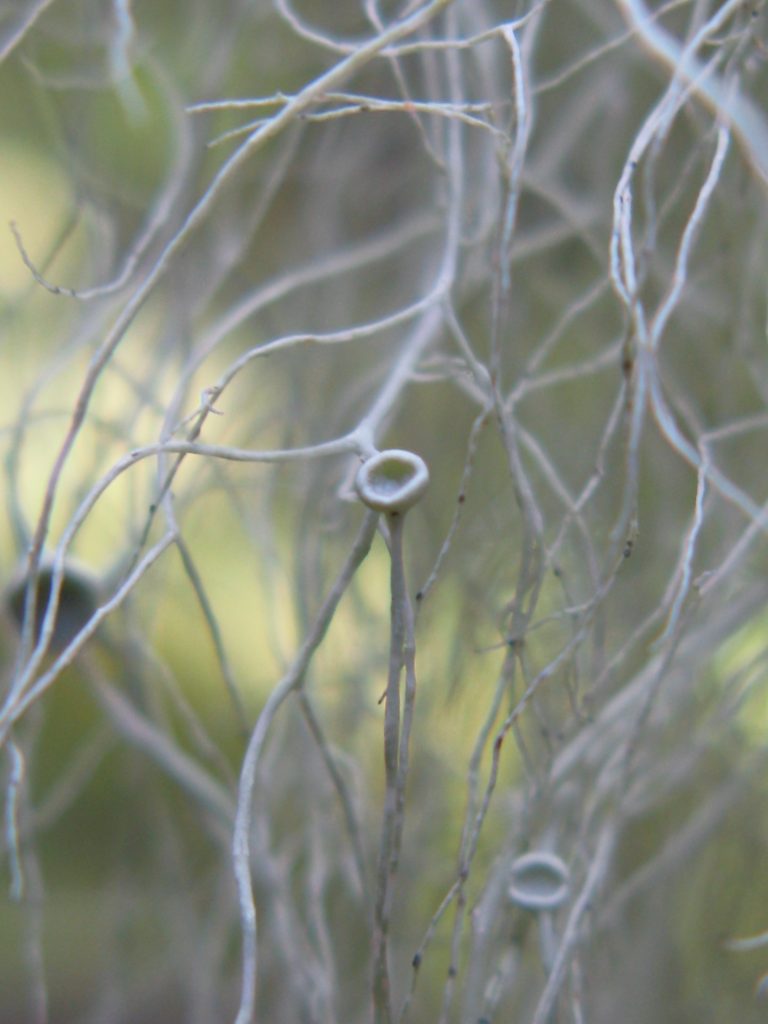
- Alectoria sarmentosa apothecia
-
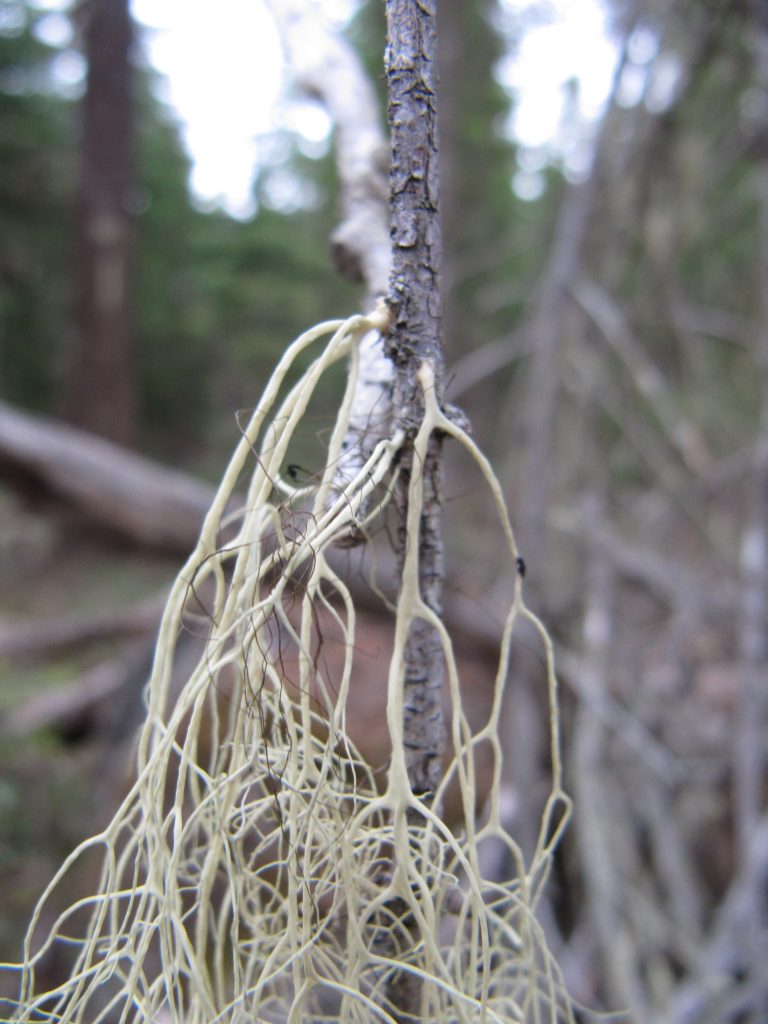
- Alectoria sarmentosa, Edgewood Blue near Clearwater, BC
definition
Fruticose: clearly 3-dimensional, one cortex surrounds thallus (but may be ecorticate), often branched, may resemble shrubs, hair or stick-pins; easily detached from substrate with very limited attachment points.
Chlorolichen (plural: chlorolichens): lichens where the dominant photosynthetic partner is a green alga like Trebouxia.
Pseudocyphellum (plural: pseudocyphellae): small irregular pits in the cortex through which the medulla shows. Pseudocyphellae translates to “false window” and they lack a ‘frame’ or lining of specialized cells found in true cyphellae.