2. Transdisciplinary Research and Collaboration
transdisciplinary : involving or relating to two or more different areas of study [REF]
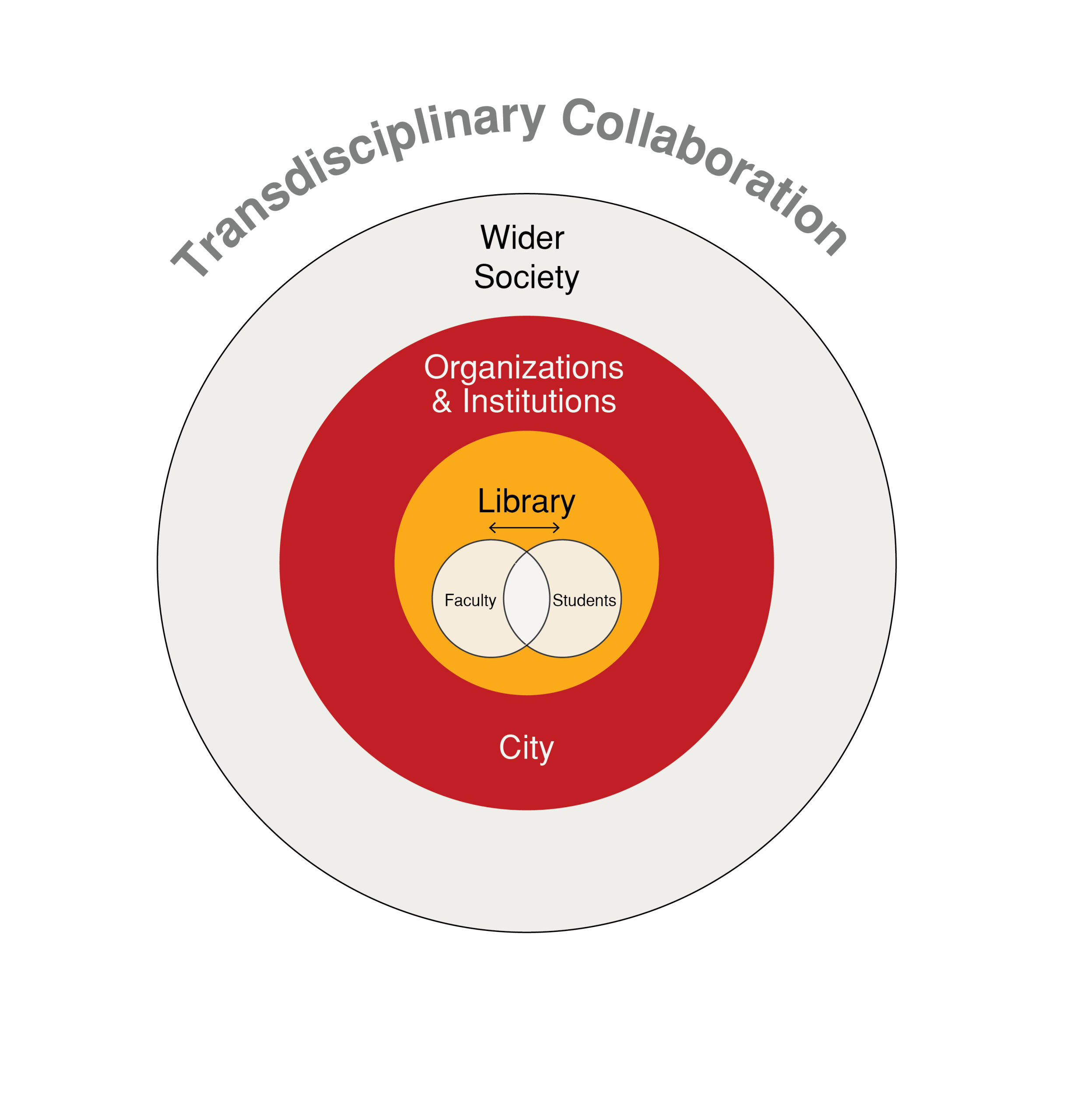
Transdisciplinary scholarship is directed towards a complex issue or problem, most often one with a social dimension. Because of the complexity of the issue or problem, it is best addressed by teams of researchers from multiple disciplines, usually representing at least two of the three major Tri-Council research areas (humanities and social sciences, natural sciences and engineering, health and medical sciences). To address the social dimension of the question, transdisciplinary research incorporates knowledges through theoretical or creative approaches to societal issues, and ideally by including societal actors who are implicated in the issue or problem in question [REF]
Transdiscisplinary AI Scholarship
Transdisciplinary scholarship is especially key in the context of AI because:
Complex Problems Need Holistic Solutions: AI intersects with nearly every aspect of society—education, healthcare, governance, and more. No single discipline has all the tools or perspectives to address the societal, technical, and ethical challenges AI presents. Transdisciplinary approaches bring together knowledge from across domains to develop holistic, context-sensitive solutions.
AI Raises Deep Ethical and Social Questions: Understanding and responding to issues like bias, surveillance, and data privacy requires insights from philosophy, law, sociology, psychology, and beyond—not just computer science. Transdisciplinary collaboration allows us to engage with the full potential of AI.
Learning and Teaching Must Evolve: AI is reshaping knowledge production and what it means to learn. Transdisciplinary scholarship is crucial in redesigning curricula, pedagogies, and assessment to prepare students not just to use AI, but to question, shape, and reimagine it.
Innovation Emerges at the Boundaries: Breakthroughs often occur where disciplines meet. AI-driven research can transform education—but only if experts from various fields co-create, critique, and guide its development. Transdisciplinary work fosters the creativity and critical thinking needed to develop AI responsibly and innovatively—and create new tools, frameworks and policies.
In short, transdisciplinary scholarship ensures that AI is not just technologically advanced, but also socially grounded, ethically informed, and human-centered.
Transdisciplinary AI Collaboration
As part of the AI in Higher Education Innovation Exchange, a transdisciplinary team came together to explore the use of AI in teaching and learning. The group included experts from education, design, technology, and libraries, as well as two graduate assistant researchers. Together, they invited the wider university community and other stakeholders to share experiences, reflect on practice, and develop their own AI-related case studies—a truly transdisciplinary approach to scholarship!